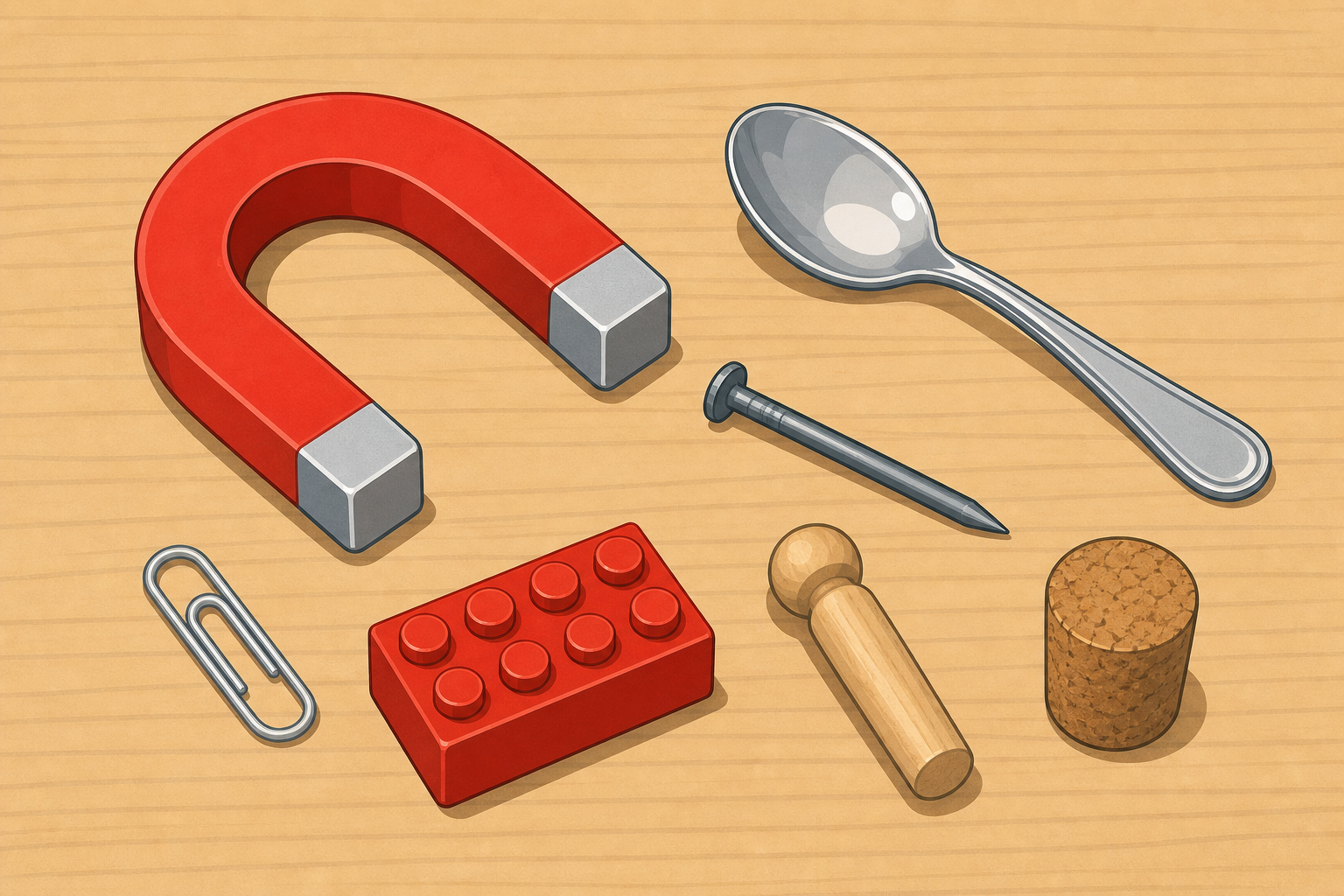
Listen: at the recycling centre, a big magnet swings over a pile of rubbish. Some things jump up. Some stay behind. Why do only some things stick?
Today we will test lots of things with our own magnets and sort them: the magnet pulls it, or it does not.
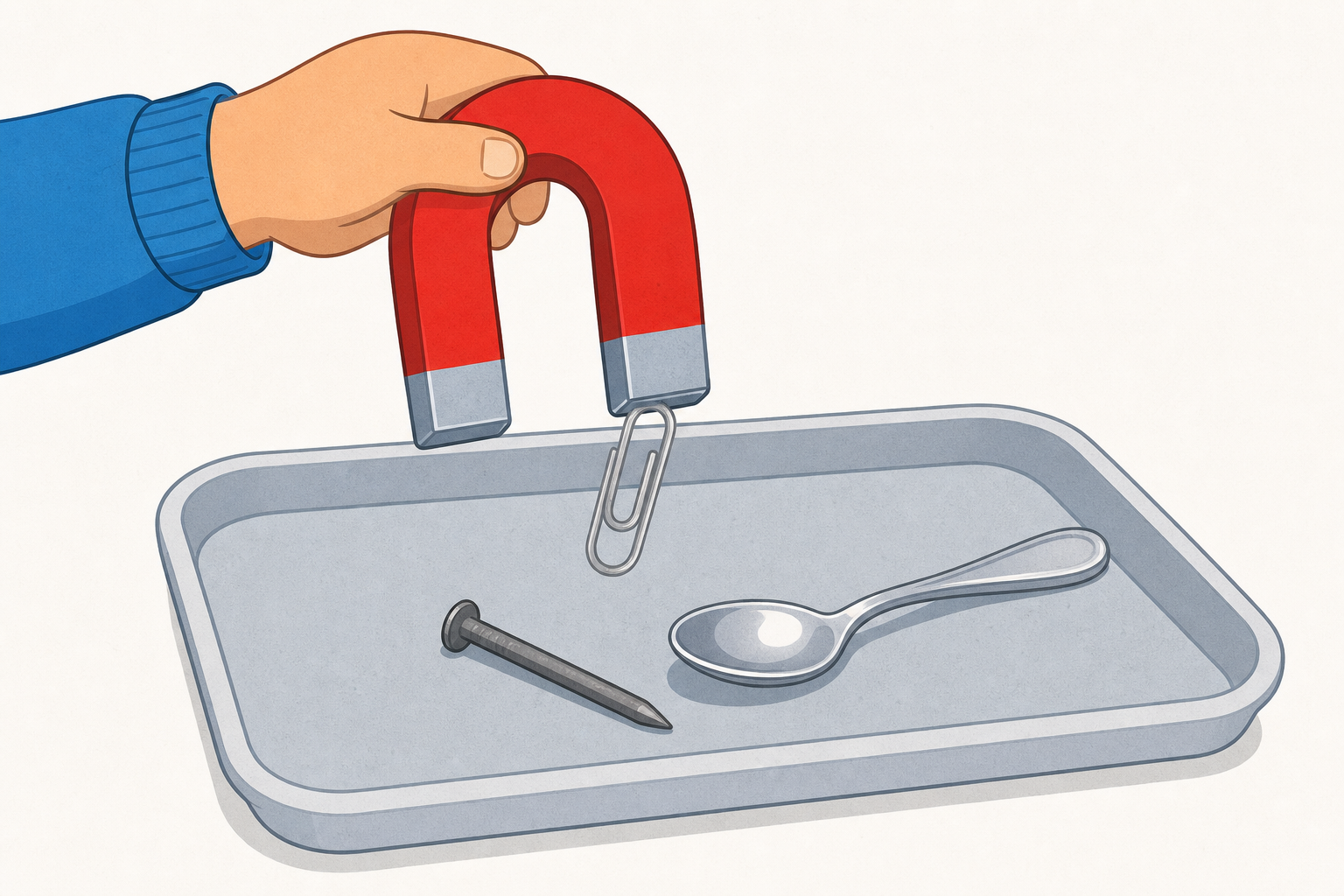
Keep this light. Hold up one chunky magnet and let it quietly pull a paperclip from your palm so the class sees the jump. Do not empty the full tray yet.
Who helps us: a recycling crew uses a big magnet to pull metal out of the rubbish so it can be reused. We will work like that crew, on a classroom scale.
Have the magnet trays ready on side tables, covered or out of reach until the explore step.
Today we sort in two ways: the magnet pulls it, or it does not.
Watch the object I hold up. Thumbs up if you think the magnet will pull it. Thumbs down if you think it will not. Guesses are the start of the fun, never wrong.
Hold up three or four objects one at a time (for example a paperclip, a wooden peg, a steel nail, a crayon). Class shows thumbs. Do not test yet. Trays stay covered until the next step — children only see the object in your hand.
Speak the two sort labels only. Do not put a full vocabulary list or the word metal on the board yet; children will notice metal after they have sorted with real magnets.
| Concept | Why it matters | Example |
|---|---|---|
| Magnetic — something a magnet pulls towards it | We sort by what the magnet really does, not by what we guess | A steel paperclip jumps to the magnet |
| Not magnetic — something a magnet does not pull | Lots of everyday things stay put, even if they look shiny | A wooden peg and a crayon do not move |
| Metal — a hard material many tools and coins are made from (teacher noticing word after the sort) | Many pulled things feel hard and shiny like metal; we still only know when we test | A steel paperclip is pulled; soft foil often is not |
One load-bearing idea for pupils today: we sort by whether the magnet pulls. "Many pulled things feel like metal" is a noticing later, not a third formal definition with exceptions in this beat.
Misconception to head off: children often say "all metal sticks" or "heavy things stick". Keep the rule simple: we only know after we test.
Model one full cycle out loud before groups start: I wonder about this nail. I think the magnet will pull it. I test… it sticks! So I put it in the magnetic hoop. I think… the magnet pulls the nail, so it is magnetic.
At your table, take one object at a time. Hold the chunky magnet near it. Does it pull? Keep magnets away from mouths. When you have tested, leave the object on the tray ready for sorting.
Short bursts at tables. Start with one shared demo object at each table so everyone sees the routine, then set a clear expectation: each child tests about three objects. Give a one-minute warning so turn-taking stays fair. Circulate and ask: What happened? Did it jump? Did nothing happen? Keep the pace lively; every child should get several genuine tests inside the six minutes.
Safety: chunky magnets only; never near mouths; count magnets back in. If a magnet is small enough to fit fully in a mouth, do not use it.
Differentiation: less confident children can work with you on two clear objects (paperclip and peg). Confident pairs can try a trickier one such as foil or a coin and say what they noticed.
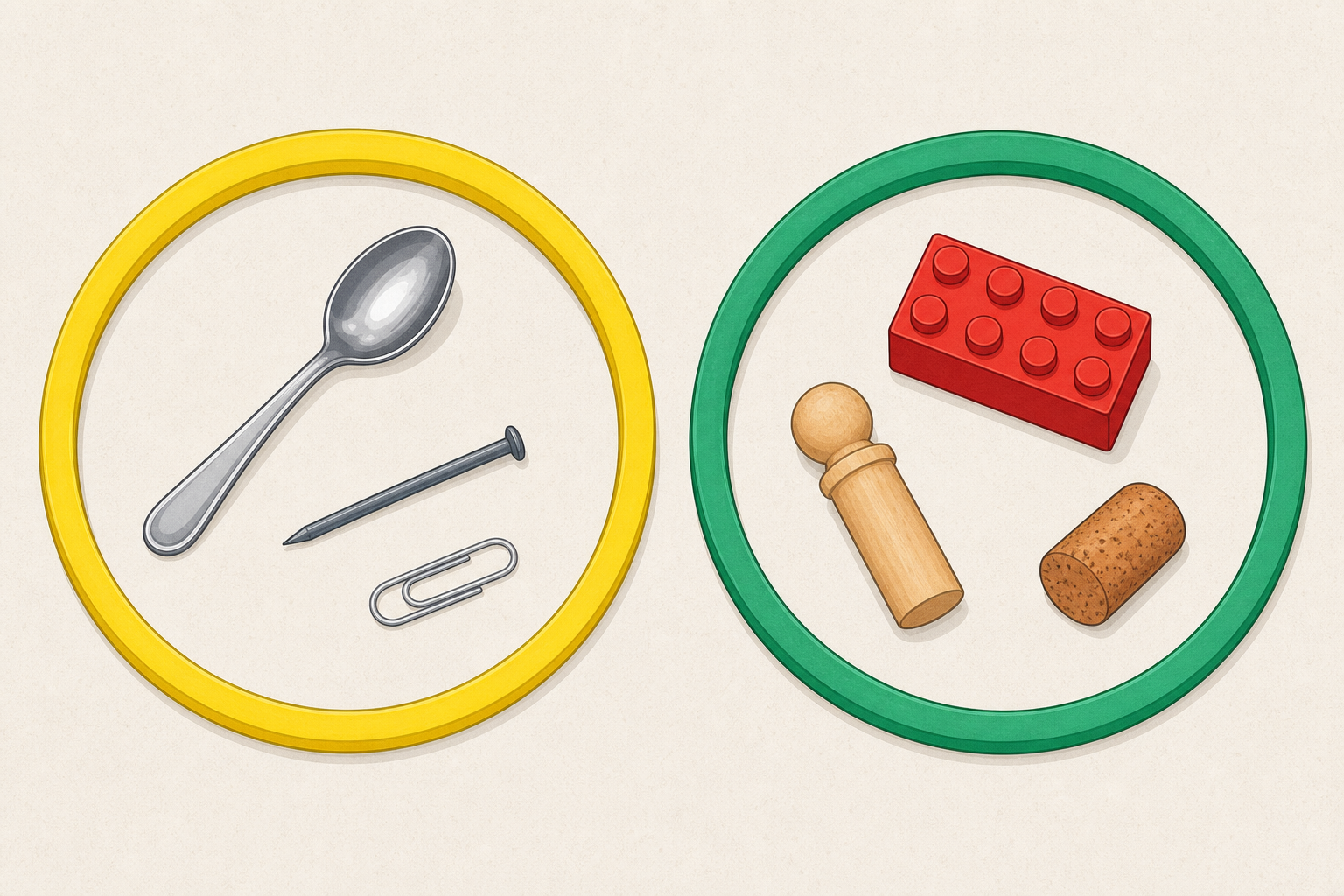
Now sort. One hoop is for things the magnet pulls. One hoop is for things it does not. Say the reason as you place each one: the magnet pulls it, or it does not.
Label the hoops clearly with picture cards if you have them: a magnet with a tick, and a magnet with a cross. Children move the dry, tested objects into the hoops.
Listen for the sorting reason said aloud. Gently revoice: Yes — the magnet pulled the paperclip, so it goes in the magnetic hoop.
If two groups disagree about the same kind of object (for example two different coins), retest together. Real magnets settle the argument.
Look at the hoop where the magnet pulled things. Look carefully and touch gently. Do many of them feel hard and shiny, a bit like a spoon or a nail?
When I say your name, tell the class one thing you notice.
Gather eyes on one group's magnetic hoop (or bring a few magnetic objects to the carpet). Use a quick whole-class share with named turns so nobody is stuck waiting for a talk partner. Ask children to look and gently touch. Draw out hard, shiny, cold-feeling things — paperclips, nails, some coins.
Must do: hold up the soft foil ball (or a drinks-can ring pull) in front of everyone and retest it briefly so the class sees a shiny thing the magnet does not pull. Infant-level message: many things the magnet pulls feel like metal, and we still only know for sure when we test. Do not turn this into a full third vocabulary lesson.
Key question: What is the same about lots of the things in the magnetic hoop?
You're previewing this lesson. Get full access to this lesson and hundreds more — each one ready to teach, with interactive activities, printable resources and pupil progress tracking built in.