1 - Getting Started ~5 mins
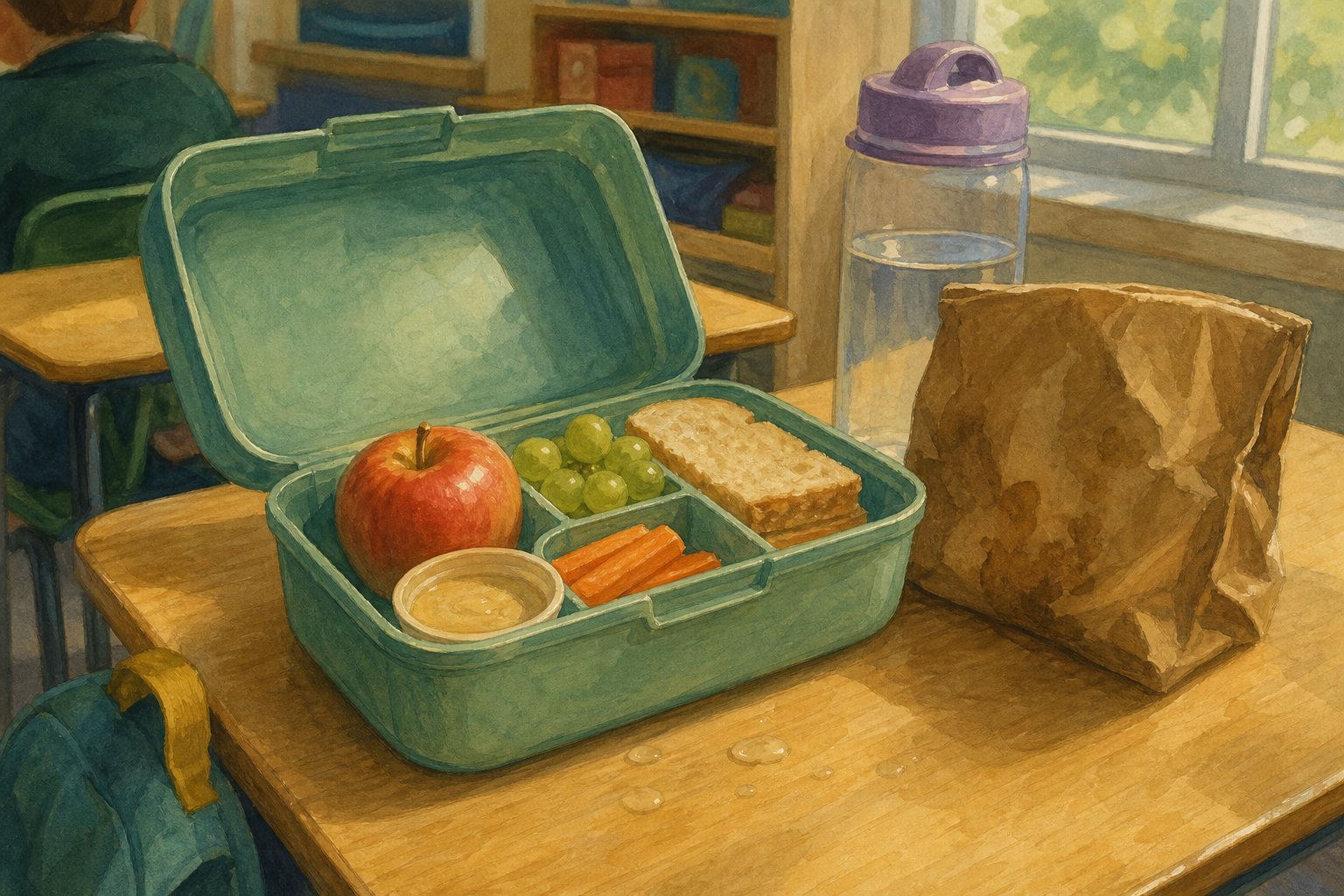 Imagine this: your lunch got wet in your bag after a rainy walk to school. Or an egg cracked on the way home from the shop. What went wrong?
Today each group gets a real job. You will test materials, find the properties that matter, and choose the best one with evidence.
Keep this light. Hold up one soggy paper bag or a cracked eggshell only if you have one ready; the question alone is enough. Do not hand out trays or name every test yet.
Ask: What do you think the bag or the wrap needed to do well? Collect two or three words (dry, strong, soft) and park them for the next step.
Before the lesson: print the Investigation Journal ComparisonTable page; print the provided job cards (each card already names the job and a fair-test starter); set out shared material trays; half-fill water trays for sandwich-job groups only; boil and cool eggs for egg-job groups if using hard-boiled; bag equal weights and set out one card bag shell or stiff card frame per handle-job group; have paper towels ready for spills.
2 - Properties That Matter ~6 mins
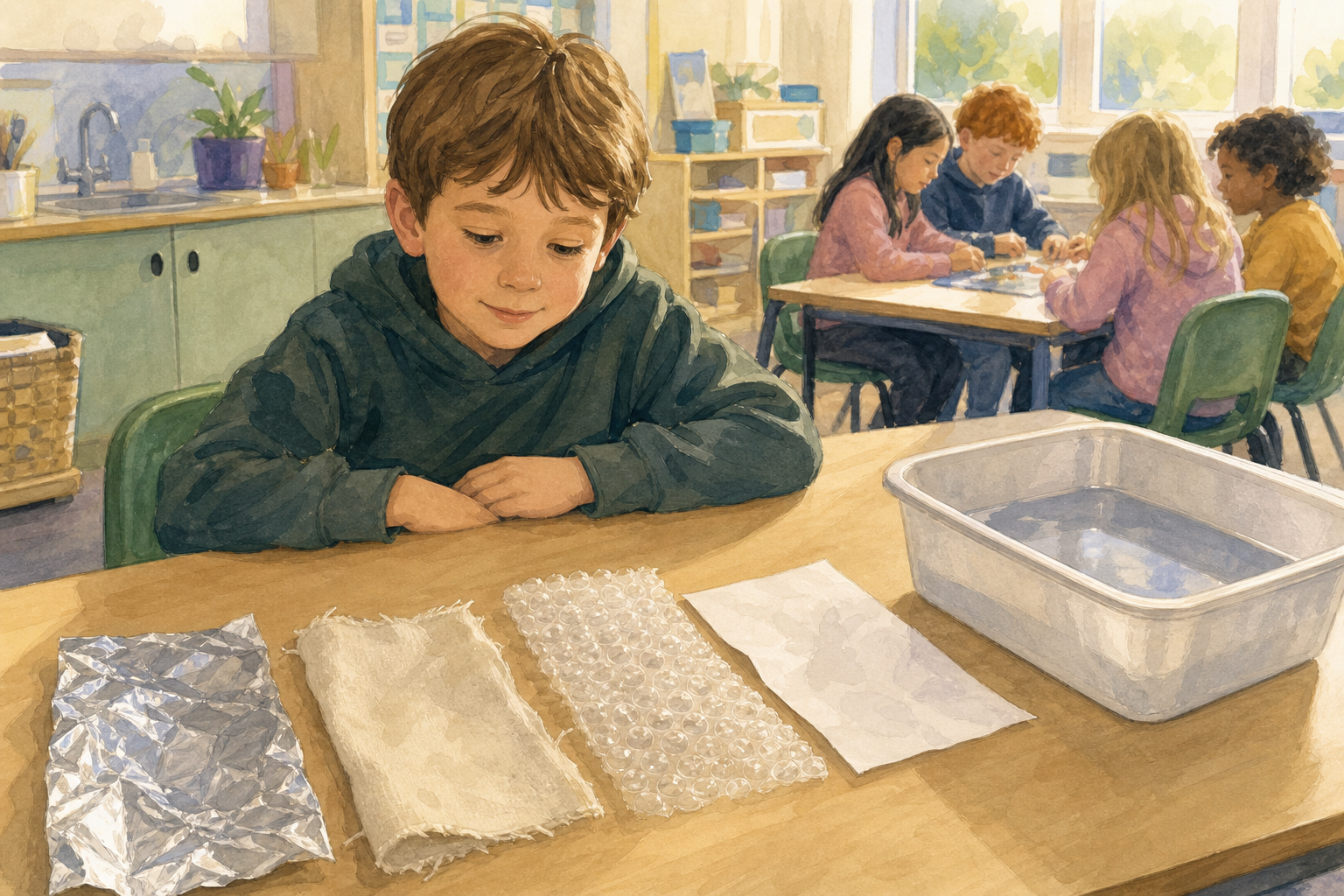 If the job is keep lunch dry, which property matters most: soft, strong, or waterproof?
A property is something true about a material that you can notice or test. A dry sandwich needs waterproof. A safe egg needs soft and cushioning. A bag handle needs strong.
A material is what a thing is made from. We match to the job when we choose a material because its properties fit what the job needs, not only because it looks nice.
Designers keep inventing new materials so everyday jobs like these get easier.
Project only the short board text. Lead with the keep-lunch-dry question, then fold in the three words as labels on the answers. Use the table below yourself.
| Concept | Why it matters | Example |
|---|---|---|
| Property — something true about a material that you can notice or test (strong, soft, stretchy, waterproof, tears easily) | Jobs fail when we ignore the property that matters, even if the material looks right | Kitchen towel feels soft but soaks up water, so it is a poor wrap for a wet day |
| Material — what an object is made from (paper, cloth, foil, plastic, card, string) | The same job can be done by different materials; we compare them fairly | A handle could be string, folded card or a strip of cloth |
| Match to the job — choose a material because its properties fit the job's needs | Good designers test and justify; they do not only pick what looks fancy | Bubble wrap cushions an egg; foil keeps drips off a sandwich better than paper |
Worked example (model aloud before groups start; one breath per job):
- Sandwich dry: I wonder which wrap keeps water out. I predict foil will beat paper because water beads on foil. I test by laying each sample over a dry paper towel, sprinkling the same spoon of water, waiting the same short time, then lifting to see if the towel is damp. I observed the towel under foil stayed dry. I think foil is better because it is waterproof.
- Protect egg: wrap the same way each time; gentle drop from the same low height onto a towel; note cracks or soft landings. Soft, cushioning materials usually win.
- Strong handle: fix each handle candidate the same way on a card bag shell; add identical weights one at a time; note stretch, tear or hold. Strong materials that do not tear easily usually win.
That full cycle is what groups must run for their own job. The job card also carries a one-line fair-test starter so egg and handle groups are not inventing the method from nothing.
Misconception to head off: thicker always means better. A thick kitchen towel can still soak water; a thin plastic bag can keep water out. Property beats thickness.
Nature of STEM cue (plant for step 7): new materials (waterproof fabrics, strong plastics) changed what people could make, from lighter raincoats to shopping bags that do not tear as easily as paper alone. Keep it general; no invented dates or company claims.
3 - Our Jobs and Predictions ~5 mins
Each group gets one job card: keep a sandwich dry, protect a fragile egg, or make a strong bag handle.
Talk for one minute. What does your job need the material to do? Which materials on the tray do you predict will work best, and why? Be ready to say your prediction aloud.
Before this step
Hand one job card per group so the three jobs are spread around the room. Each card names the job and a fair-test starter. Point to the shared material tray but do not start testing yet. Place job-specific kits only with the matching groups (water tray and spoon for sandwich groups; egg and towel for egg groups; weights and card bag shell for handle groups).
Facilitation
Use think-pair-share. Predictions are never wrong; they start the science. Press gently for a property word: waterproof, cushioning, strong, flexible, tears easily.
Look-fors:
- Groups name the job need in plain words before naming a material
- At least one reason linked to a property, not only "because it looks strong"
- Every pupil in the group can restate the group's prediction
Differentiation: offer sentence stems on the board: Our job needs a material that… We predict … because… Confident groups may name two materials to compare and say which property they will watch.
4 - Test Materials for the Job ~20 mins
Only change the material. Keep everything else the same so your test is fair.
Your job card shows a first test you can try. Test at least three materials. Notice which properties help and which get in the way.
Starter ideas from your card:
- Keep a sandwich dry: cover a dry paper towel with the sample, spoon on the same small amount of water, wait the same short time, then check if the towel is damp.
- Protect a fragile egg: wrap the egg the same way each time and drop gently from the same low height onto a towel.
- Make a strong bag handle: fix each handle the same way on the card bag shell and add the same weights one at a time.
Do not taste anything. Wipe spills straight away.
Setup
Shared material samples for all groups. Job-specific kit only where needed: water tray, spoon and paper-towel sandwiches for sandwich-job groups; hard-boiled egg (safer than raw) and folded towel for egg-job groups; identical weights plus one card bag shell or stiff card frame per handle-job group. Clear floor space for gentle egg drops onto a towel.
Open choice within the theme
You set the three jobs, the fairness rule, and the method skeleton on each job card. Groups decide which materials to compare, how to judge success for their job, and the order of tests. That is the open-ended part. The skeleton stops groups stalling without turning the step into a closed recipe.
Fair-test starters (also printed on the job cards)
- Keep a sandwich dry: cover a dry paper towel with the sample; spoon the same small amount of water on top; wait the same short time; lift and check if the towel is damp.
- Protect a fragile egg: wrap the egg the same way each time; gentle drop from the same low height onto a towel, or press with the same small weight; note cracks or soft landings.
- Strong bag handle: loop or tape each handle candidate the same way on the card bag shell; add identical weights one at a time until it stretches, tears or holds the target load.
Teaching tips
Circulate and ask: What did you keep the same? What property are you really testing? Coach only the controls that belong to that group's job (water amount and wait time; drop height; same weights and same fixings). If two things change at once, stop and reset. Model one clean comparison again if needed.
Safety: teacher or SNA nearby for egg work; wipe water at once; wash hands after egg contact; no tasting; mind slippery floors; keep loads low and feet clear.
What good looks like: three materials tested, one clear fairness rule named (only the material changed), property language used while testing.
5 - Sort by the Properties That Matter ~7 mins
Sort your tested materials into groups that match your job. Use property labels such as waterproof, soaks water, strong, tears easily, soft and cushioning, or stiff.
Be ready to move one material and explain why its property fits or fails the job.
Sorting comes after testing so the groups are based on evidence, not guesses. Provide blank property cards or let groups write their own labels on sticky notes.
Key question: Are you sorting by how it looks, or by what your test showed?
Common snag: one big "good" pile with no property named. Insist each pile has a property label tied to the job.
Differentiation: some groups sort into two piles only (helps the job / does not help). Others make a three-way sort (best / partly useful / not useful) with a property note on each.
Unlock the full learning experience
You're previewing this lesson. Get full access to this lesson and hundreds more — each one ready to teach, with interactive activities, printable resources and pupil progress tracking built in.
This lesson is copyright of Coding Ireland 2017 - 2025. Unauthorised use, copying or distribution is not allowed.