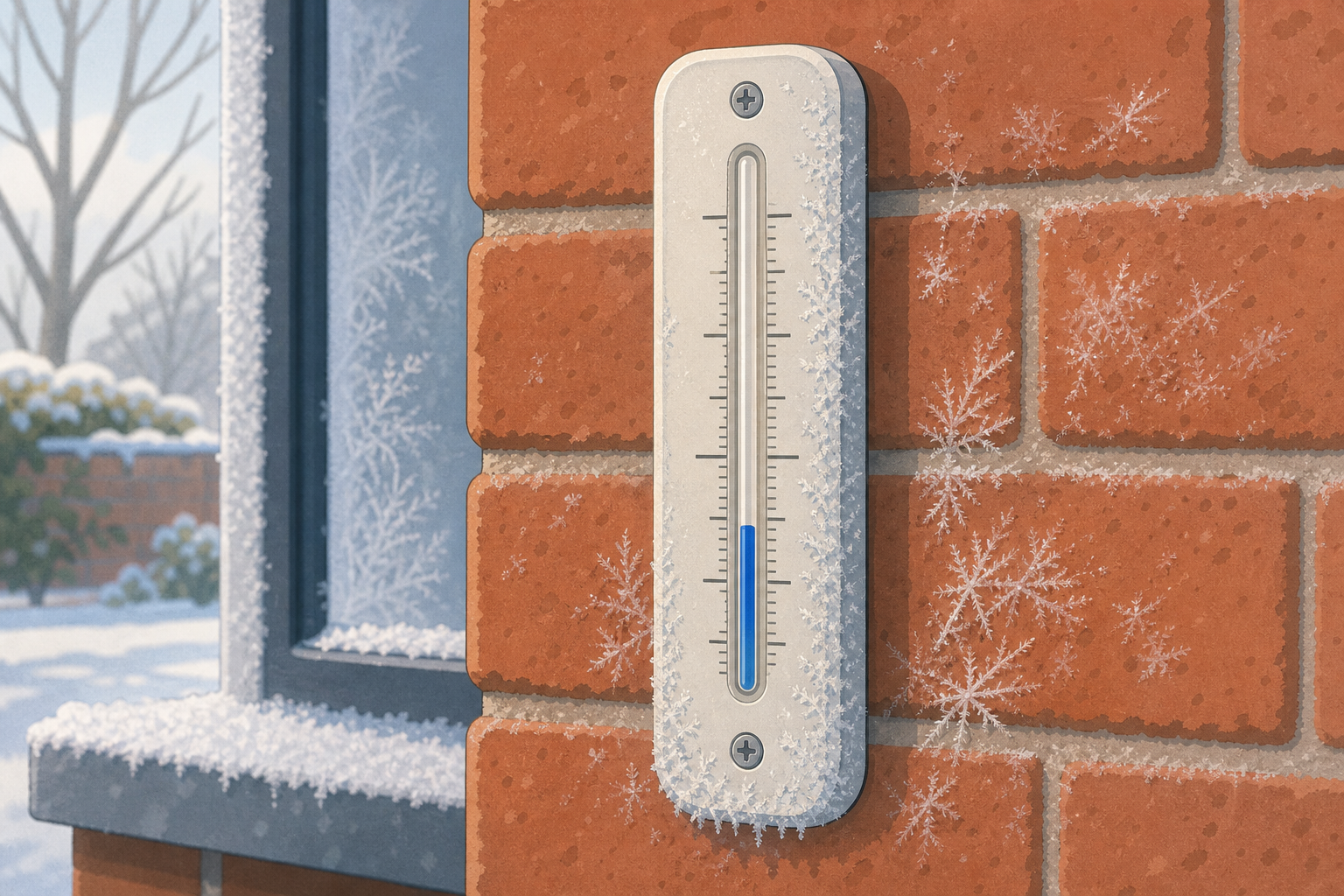
Look at this thermometer. It is reading −4 °C. What does the minus sign in front of the 4 tell us about how cold it is outside?
Give five seconds of quiet think-time, then take two or three hands-up answers. Listen for pupils saying below zero or below freezing rather than just very cold.
The interactive shows three number lines from −10 to +10, each with markers to read. Look at how far each marker sits from zero. For the lift and the temperature, ask yourself: does this change cross zero or stay on one side?
First line, markers at −8, 0, +6. Point to each, say its distance from zero: eight left, six right. Stress zero is the middle, negatives left, positives right.
Lift: carpark −3, ground 0, top +9. Trace finger up so class sees it pass through zero.
Birr fall: +2 in afternoon, −5 overnight. This is the make-or-break idea. Count aloud: 2 down to zero, then 5 more. Pause before the total, let a pupil say 7. It's 7 because the change crosses zero.
Build the rule for the Class Challenge. Opposite sides of zero: count both parts and add, 2 plus 5 makes 7. Same side, no crossing: count within that side, e.g. −8 to −5 is only 3 steps. Point to the line for each case. The decision that matters is whether the change crosses zero.
Before each one goes on the board, show me your prediction: thumb pointing left if it belongs on the left of zero, thumb pointing right if it belongs on the right.
Today we place these markers on the −10 to +10 line together, one at a time: first −6, then −9, then +4, and finally 0. Then one pupil places it and we check together before moving to the next.
This round is for talking it through together. Watching pupils show a thumb (left or right) as their whole-class prediction before each named pupil places a marker, so the back rows stay with every placement.
Have four pupils come up in turn to place −6, −9, +4 and 0. Watch for the common slip of thinking −9 is smaller so it goes closer to zero — it is actually further left because it is further below zero. Revoice a good answer: so the bigger the digit after the minus sign, the further left it sits.
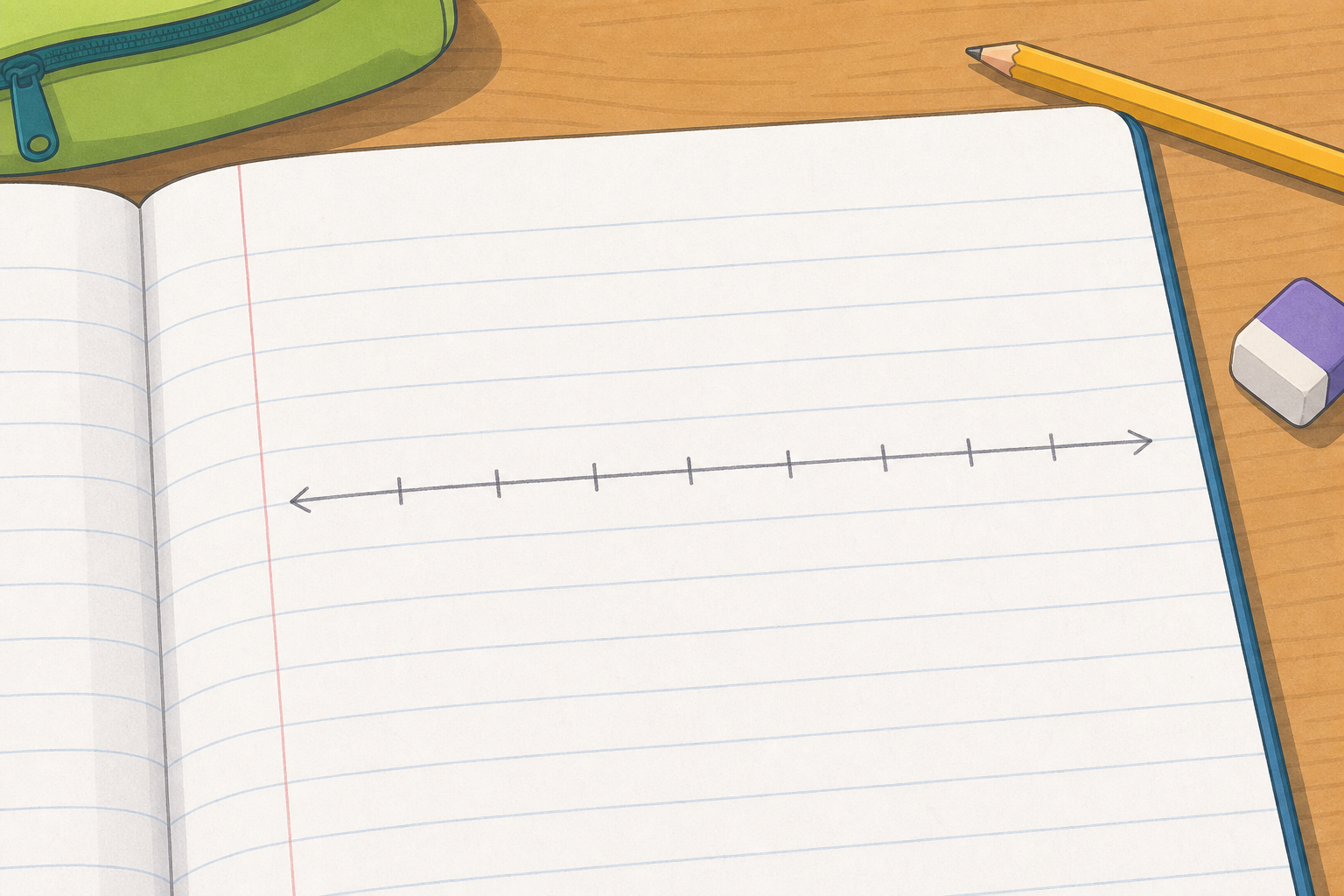
In your maths copy, sketch a number line from −10 to +10 and mark every whole number. Then place each of the lesson's markers on it and label each one with its value:
Walk the room glancing at whether zero sits in the middle and whether the negatives run to the left — no marking, this is whole-class copybook practice.
For every one we are still finding how many degrees it changed, so decide first whether it stays on one side of zero (count within) or crosses zero (add the two parts).
Today we work through these temperature-change problems together, each a little trickier than the last. The freezer falls from −16 °C to −19 °C, staying below zero the whole time. Mullingar drops from +3 °C to −4 °C in a cold snap, crossing over zero. The carpark goes from +1 °C to −6 °C, crossing zero too. Then the stretch, which also crosses zero the other way: Waterford rises from −4 °C to +3 °C as the sun comes up.
These are the practice questions — pupils take turns at the board, check each answer, and the class confirms before moving on. Keep the board work brisk rather than over-explaining.
The key discrimination is the first problem versus the rest: −16 to −19 stays entirely below zero, so it is a simple 3-degree drop (count within the negatives), whereas the others cross zero and need the two parts added. The stretch crosses zero the other way — the temperature rises from −4 up through zero to +3, which is still 4 up to zero plus 3 more above, a 7-degree change. Revoice: rising or falling, if it crosses zero we add the two parts.
You're previewing this lesson. Get full access to this lesson and hundreds more — each one ready to teach, with interactive activities, printable resources and pupil progress tracking built in.