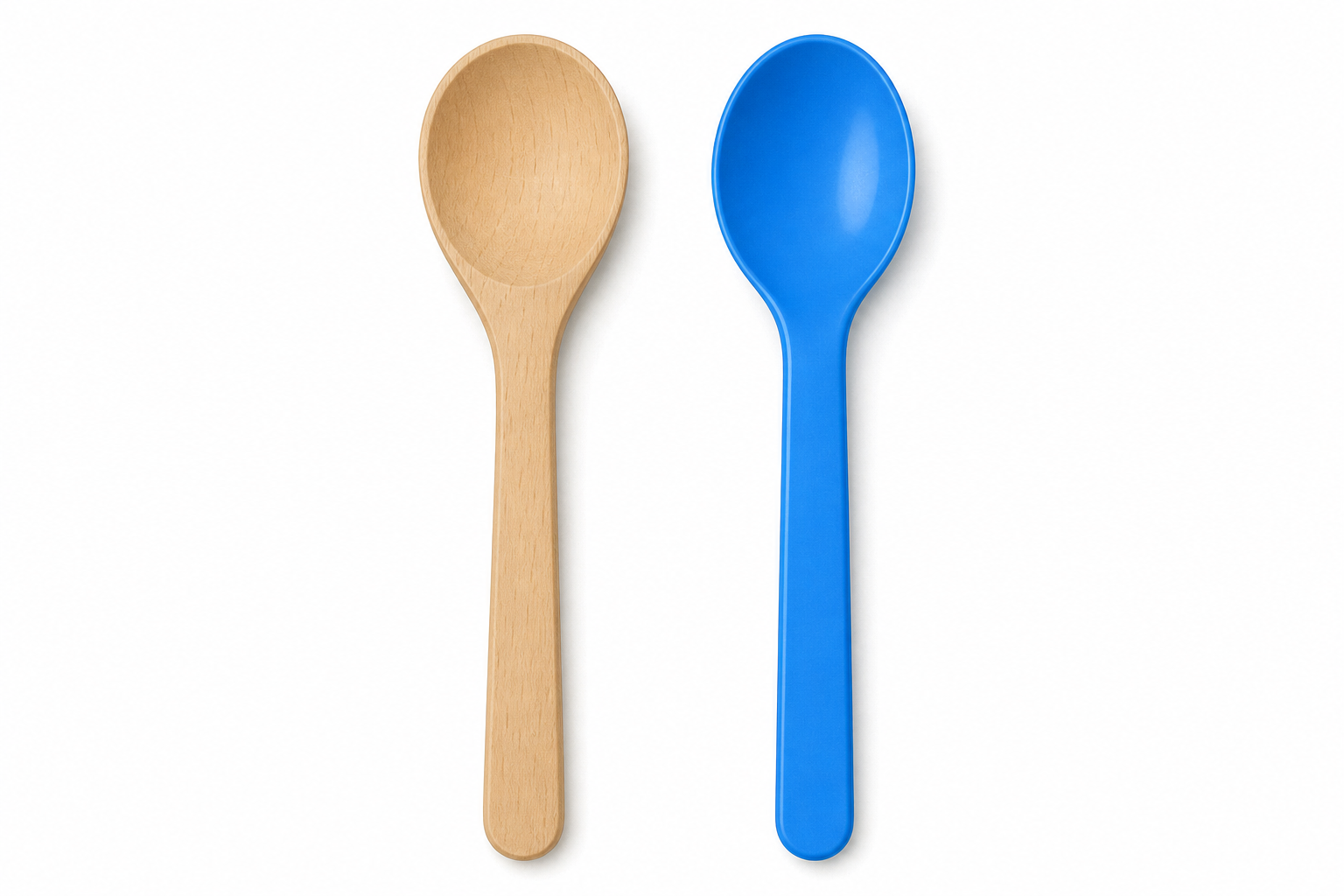
Look at this wooden spoon and this plastic spoon. They both scoop. Where do you think each one came from?
Hold up a wooden spoon and a plastic spoon (or show two clear photos). Keep the hook light: one curiosity question only. Do not name natural and man-made yet.
Ask: Where do you think the wooden one came from? What about the plastic one? Take two or three ideas. Then say briefly: We are thinking about what each spoon is made of — wood from a tree, plastic made by people — not who shaped the spoon. Tell the class you will sort real materials next.
Some materials grow or come from the ground. Others are made by people.
Today's words: natural: comes from plants, animals or the ground. man-made: made by people.
Is wool natural or man-made? What about plastic?
Project only the short board text. Use the table below for your own reference while you teach.
| Concept | Why it matters | Example |
|---|---|---|
| Natural material — a material that comes from plants, animals or the ground | Knowing where a material comes from helps us notice the world with STEM eyes | Wood comes from trees; wool comes from sheep; a stone comes from the ground |
| Man-made material — a material that people make (sometimes called synthetic) | Many everyday things at school and home are made by people | Plastic toys, foil from a lunch wrap, and polyester fleece are man-made |
Worked model (say aloud before groups sort):
I wonder where this feather came from. I predict it is natural because a bird grew it. I look and feel: soft, light, not shiny like plastic. I think it is natural because it came from an animal, not a factory.
Then model one man-made item the same way (e.g. foil): shiny, thin, made by people.
Misconception to head off: children may say anything soft is natural, or anything hard is man-made. Soft can be either (wool or polyester); hard can be either (stone or plastic). The test is where the material came from, not who shaped it into an object.
Language tip: say man-made and, if useful, made by people. Curriculum language may say manufactured — same idea as man-made / made by people. Avoid long factory explanations at this age. Keep finished garments (jumpers, socks) and paper for the later class talk, not as the first worked example.
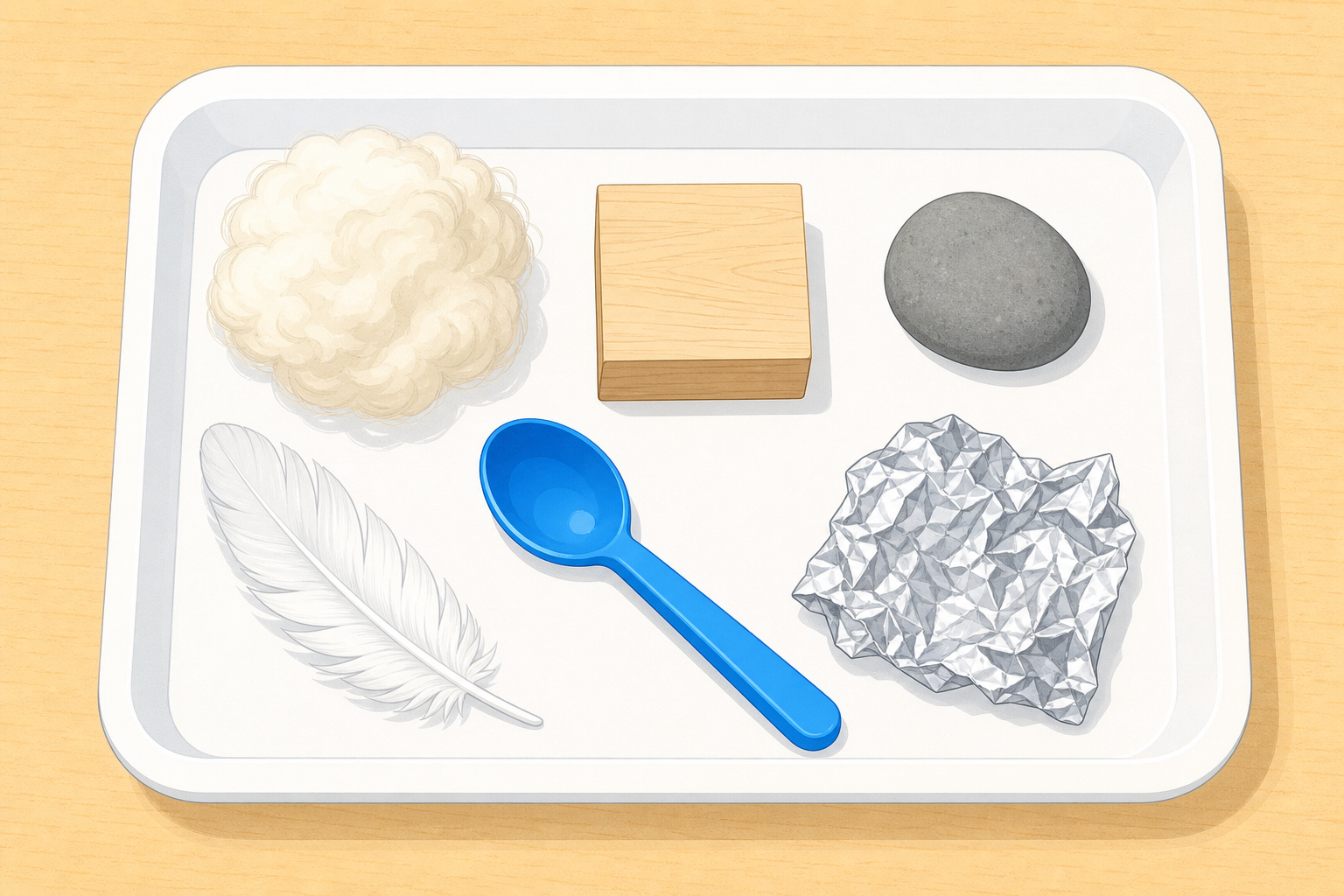
Feel each sample on your tray. Talk with your group: where might this have come from? A plant, an animal, the ground, or made by people?
Give each group one mixed tray of samples (natural and man-made together — not pre-sorted) before the sheet sort. Keep numbers small so every child handles two or three items.
Look-fors:
Key questions: Does this grow? Did people make it? Have you seen this at home?
Circulate and revoice: You noticed the wood feels like a tree trunk — that is a clue it is natural.
Sort each sample onto the natural sheet or the man-made sheet. Say one reason for each choice. If you are not sure, put it in the gap between the two sheets and we will talk about it.
Give each group two large labelled sheets of paper (or two clear table zones): natural and man-made. Leave a clear gap between them for unsure items (or lay a thin strip of paper labelled not sure if that helps). If you have space and enough PE hoops, groups may use two floor hoops instead; otherwise one shared pair of hoops at the front works for a class demo after tray sorting.
Suggested mixed tray set (adapt to what you have; do not pre-sort by category):
Metal cue during the sort: foil and paperclips often feel "from the ground" to children. Keep it simple and early: people dig metal up, then make it into thin shiny foil or clips — so for today we put foil and paperclips with man-made. Do not open a long manufacturing story.
Paper is a good talk point: it comes from trees but people change it a lot. For 1st Class, accept it comes from trees so we put it with natural or park it in the gap for class talk — do not get stuck on a full manufacturing story.
Differentiation: less confident pairs sort with you on two clear items first; confident pairs add a classroom object from the shelf and justify where it goes.
After sorting, one child from each group holds up one item and says the group and a reason.
Now we sort on the board. The question is: does it come from plants, animals or the ground, or did people make it? Help decide whether each material is natural or man-made.
Drive the sorting-tree interactive on the IWB in explore mode. Cards on screen: wood, wool, stone, cotton, feather, plastic, foil, polyester, paperclip.
Read the question aloud: Does it come from plants, animals or the ground? (Yes → natural; no → man-made / made by people.) Drag each card as the class calls out. Fold in watchers: Do you agree? Why?
When the polyester card appears, hold up or point to the soft fleece scrap from a tray and say once: This is the same kind of soft man-made fabric you felt — we call it polyester. That keeps the board word tied to the hands-on sample.
Use this to check the tray sort and clear unsure items from the gap. Keep it brisk; one reason per card is enough. Stay on the origin test, not "who shaped this object".
Match the screen: the nine item names below are exactly what appears in the interactive.
You're previewing this lesson. Get full access to this lesson and hundreds more — each one ready to teach, with interactive activities, printable resources and pupil progress tracking built in.