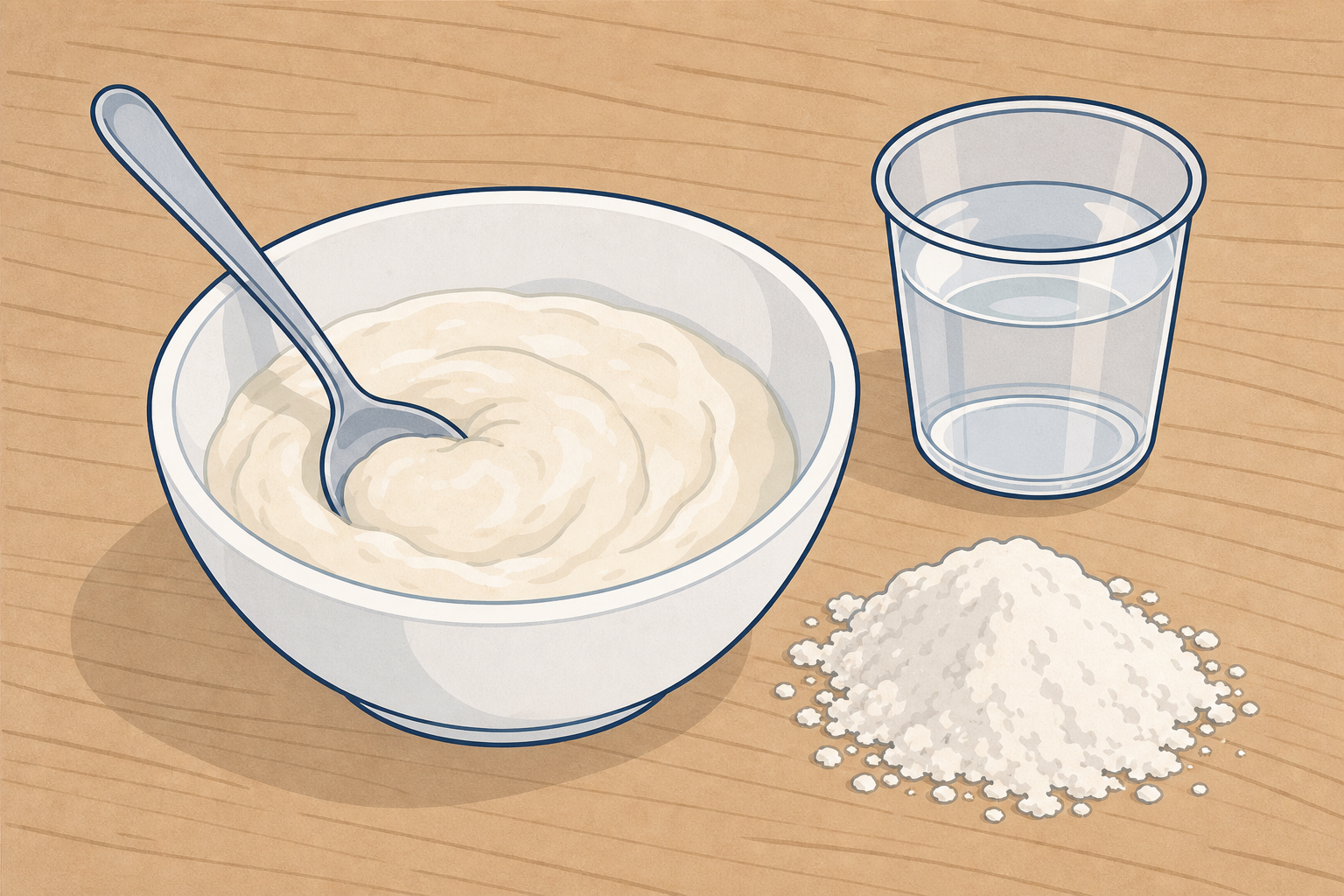
Have you ever helped make porridge, pancakes or play dough at home? What happens when you stir flour or oats into water or milk?
Today we will mix safe materials at stations and notice how each mix looks, feels, and whether it pours or holds its shape.
Keep this beat light: one curiosity question and a quick show of hands. Do not open the wet stations yet.
Hold up only a small clear cup of dry flour and a cup of water. Ask: What might happen if we stir these together? Take two or three ideas. Link gently to home: baking, porridge, making play dough.
Before pupils arrive (one clear prep path): set all six mixing trays fully ready on wipe-clean tables (or trays on desks), two trays of each mix type, already labelled, with dry material portioned and water cups filled. Cover trays with a cloth or newspaper sheet so they stay closed during this hook. Have towels and a basin of warm soapy water ready for hand washing. Place a wipe cloth at each tray for sticky fingers. Check no pupil has a flour or cornflour allergy with the usual school list. Print or prepare the simple mix recording pages (one per pupil) and place them ready for stations.
Watch this flour and water. We stir them together to make a mix.
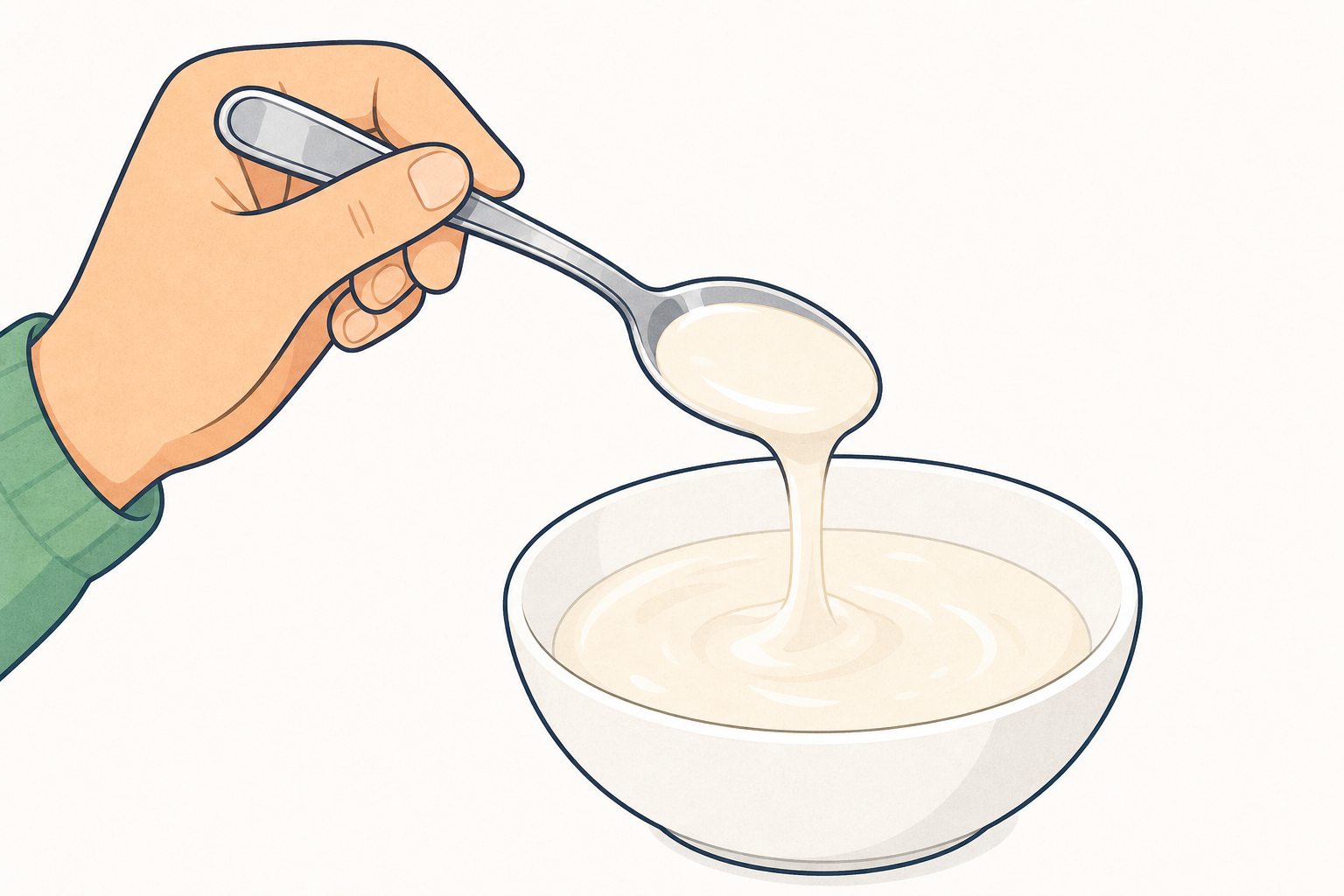
When I tip the spoon, does it pour, or does it hold its shape?
Which mixes will pour, and which will hold their shape? We will find out at the stations.
Board stays short after the live model: show only the two choice words pour and hold its shape. Do not stack three definitions on the IWB before hands-on work. The fuller three-term recap lands in the talk after stations.
Modelled cycle (do this live with flour and water before stations open):
I wonder what will happen when I stir a spoon of flour into a little water. I predict it will go thick and sticky, not like plain water. I test by adding flour, stirring slowly, then tipping the spoon. I observe that it looks cloudy and pale, feels soft and sticky, and holds a soft blob rather than pouring like water. I think flour and water make a paste that holds its shape more than plain water does. Point to pour versus hold on the spoon so the two choice words stick.
Spoken meaning of mix can be said once in passing ("we put two materials together and stir") without writing all three terms on the board.
| Concept | Why it matters | Example |
|---|---|---|
| Mix — putting two materials together and stirring so we can see how the mix looks and feels | Lots of everyday jobs need mixing: baking, making porridge, mixing paint or play dough | Stirring flour into water makes a sticky paste, a bit like pancake mix at home |
| Pour — when a mix runs and flows out of a spoon or cup, like thin soup | Knowing if something pours helps us choose the right material for a job (a drink pours; a wall does not) | Sand mixed with lots of water pours in a stream back into the tray |
| Hold its shape — when a mix stays in a blob or pile and does not run away like water | Some mixes are better for building or moulding because they stay put | Cornflour gloop can feel firm when you press it, then go soft and runny when you stop pressing |
Misconception to head off: children may say a mix has "turned into a new material forever". Keep it gentle: we are exploring how mixes look and feel today; we are not naming permanent chemical change.
Allergy check: if a pupil cannot handle flour or cornflour, give them the sand-and-water station only, or let them observe and describe a partner's mix.
Before stations open: hold up one blank mix recording page (or flash it on the IWB for a few seconds). Point to the two mix rows and the pour / hold circle or tick choices so every pupil knows the quick mark before trays are uncovered. Uncover the six ready trays. Hand out recording pages as groups move.
Visit the mixing stations with your group. At each station:
Talk as you work: How does it look? How does it feel?
Stations are fully ready before pupils arrive (see Getting Started). Uncover them only after the live model and the quick show of the recording page. One adult or older helper near the wet area if possible.
Plan for about six groups of four to five. Set six trays: two of each mix type so two groups can mix the same materials at the same time. Provide four spoons per tray so most of the group can stir at once. Each group visits two stations in the slot (about six to seven minutes per visit, including a quick record mark and a short move). Use a simple turn order if needed: two pupils stir while others watch and describe, then swap within the visit so hands-on time is shared. The aim is that every pupil sees the pour-or-hold test and helps decide; not every child must fully stir every second of both visits.
Send two groups to each mix type first. After about six to seven minutes, rotate each group to a different mix type so every group meets two mixes. You stay mobile: model gentle stirring, stop tasting before it starts, and prompt with: Does it pour? Does it hold a blob? What words describe how it feels?
Clean hands before the mark: keep recording pages on a dry edge of the table or on a clipboard, not in the tray. Prefer feeling with the spoon. If a pupil uses a finger, they wipe on the tray cloth before touching pencil or paper. Micro-record only with clean or wiped hands so pages stay usable.
Micro-record at the tray: before leaving a station, each pupil writes or draws what they mixed and circles or ticks pour or hold (and for gloop, whether it did both). The next step finishes look and feel notes; they are not recalling the whole round from memory.
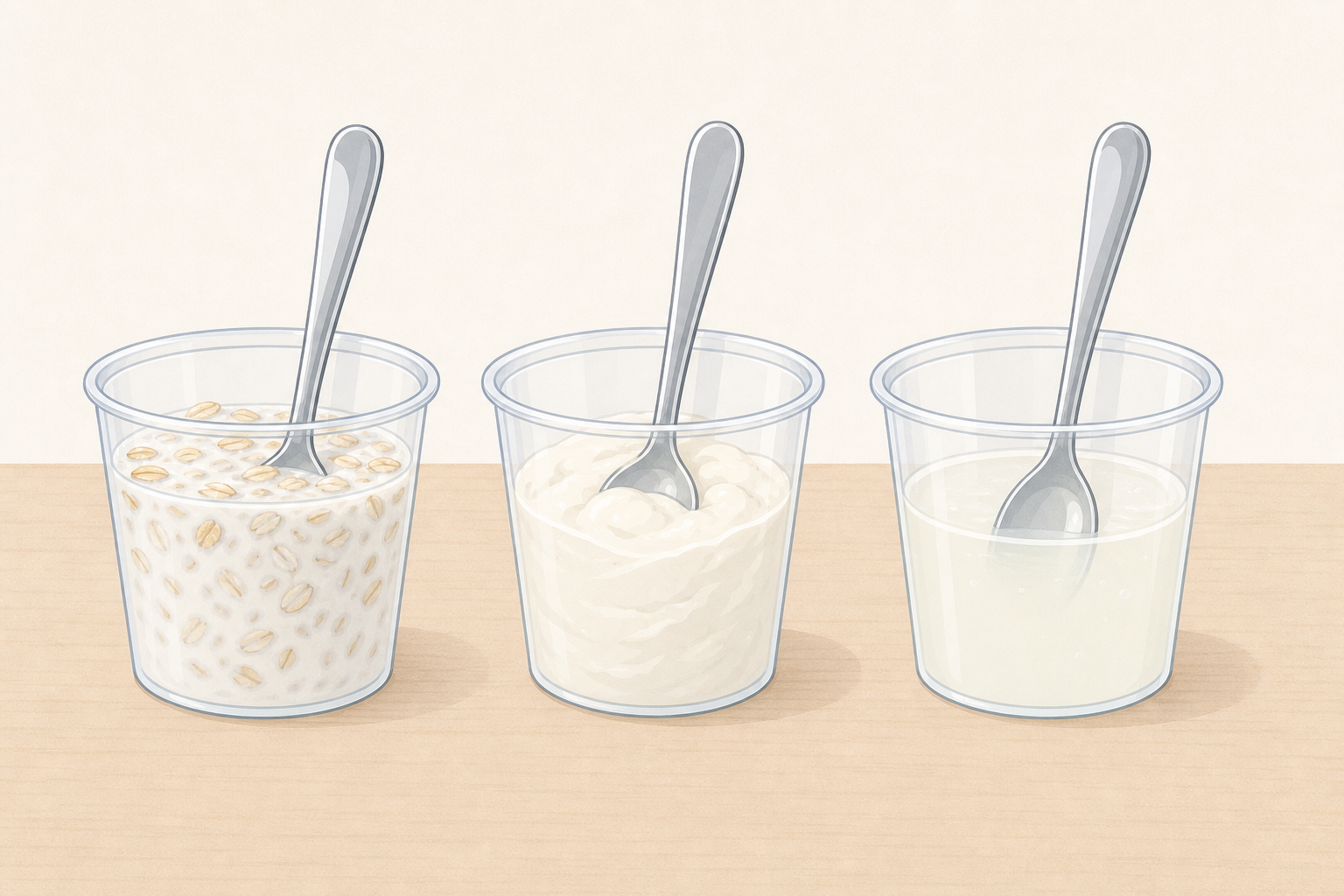
What to expect: sand and water often stays gritty and may pour if wet enough or clump if only damp; flour and water goes pasty and sticky; cornflour gloop can feel solid under a quick press and soft when left alone. Results vary with amounts: that is useful talk, not a problem.
Safety: no tasting; sleeves up; wipe spills straight away; wash hands after the round. Cornflour dust can puff: tip gently, do not blow.
Word cards for language support (write one set on card before the lesson; leave near stations or hold up as needed):
Confident groups can try one extra spoon of water and say what changed.
On your mix recording page, finish what you noticed about each mix. Add how it looked and felt. Check your pour or hold mark. If you mixed cornflour gloop, you can also show if it ever did both.
This is the paper recording beat. Pupils already made a quick pour-or-hold choice at each station; now they finish look and feel words or drawings while the mixes are fresh.
What the page must support (primary tool): a simple stage-2 recording page for two mixes. For each mix the pupil records: (1) what was mixed, (2) how it looked, (3) how it felt, (4) a clear choice of pours or holds its shape (circle, tick or both boxes), plus optional both / when for gloop. Do not rely on a generic observation page that only has draw and notice boxes. Use the printed page if it has those pour/hold choices; otherwise use plain paper ruled for two mixes with pour and hold written as choices the pupil circles. That plain-paper layout is a full substitute, not a fallback afterthought.
Say what to record, not where boxes sit on a platform layout. Prompt aloud: For each mix you tried, show what you mixed. Add words or a drawing for look and feel. Circle pour or hold. For gloop, did it ever do both? When? Accept drawings plus a few words. Circulate and scribe key words for pupils who need it.
Encourage real observation language: cloudy, gritty, sticky, smooth, runny, lumpy. Keep "pour" and "hold its shape" as the main choice words so the learning objective is visible.
If a group only completed one station fully, record that one well rather than inventing a second line.
Which mix poured? Which held its shape? Did gloop ever do both? Where do we mix materials at home, like baking or making porridge?
Display-only science talk. No typing. Revoice pupil words into clear science language. This is also the place for the short three-term recap after hands-on work: mix (two materials stirred together), pour, and hold its shape.
Draw out comparisons: sand and water often feels gritty; flour and water feels sticky; gloop can surprise them by feeling firm when pressed then soft when still. Celebrate the "both" observation for gloop when it appears. Link to home without turning it into a cooking lesson: stirring porridge, pancake batter, gravy, or play dough.
Key point to land: when we mix materials, the mix can look and feel different from the materials alone, and some mixes pour while others hold a shape (and a few can do both at different times).
STEM eyes: ask where mixing happens in school or at home this week (art water pots, baking, mixing soil and water in the garden after rain).
You're previewing this lesson. Get full access to this lesson and hundreds more — each one ready to teach, with interactive activities, printable resources and pupil progress tracking built in.