Listen carefully. First I will clap softly. Now I will clap more loudly. What changed?
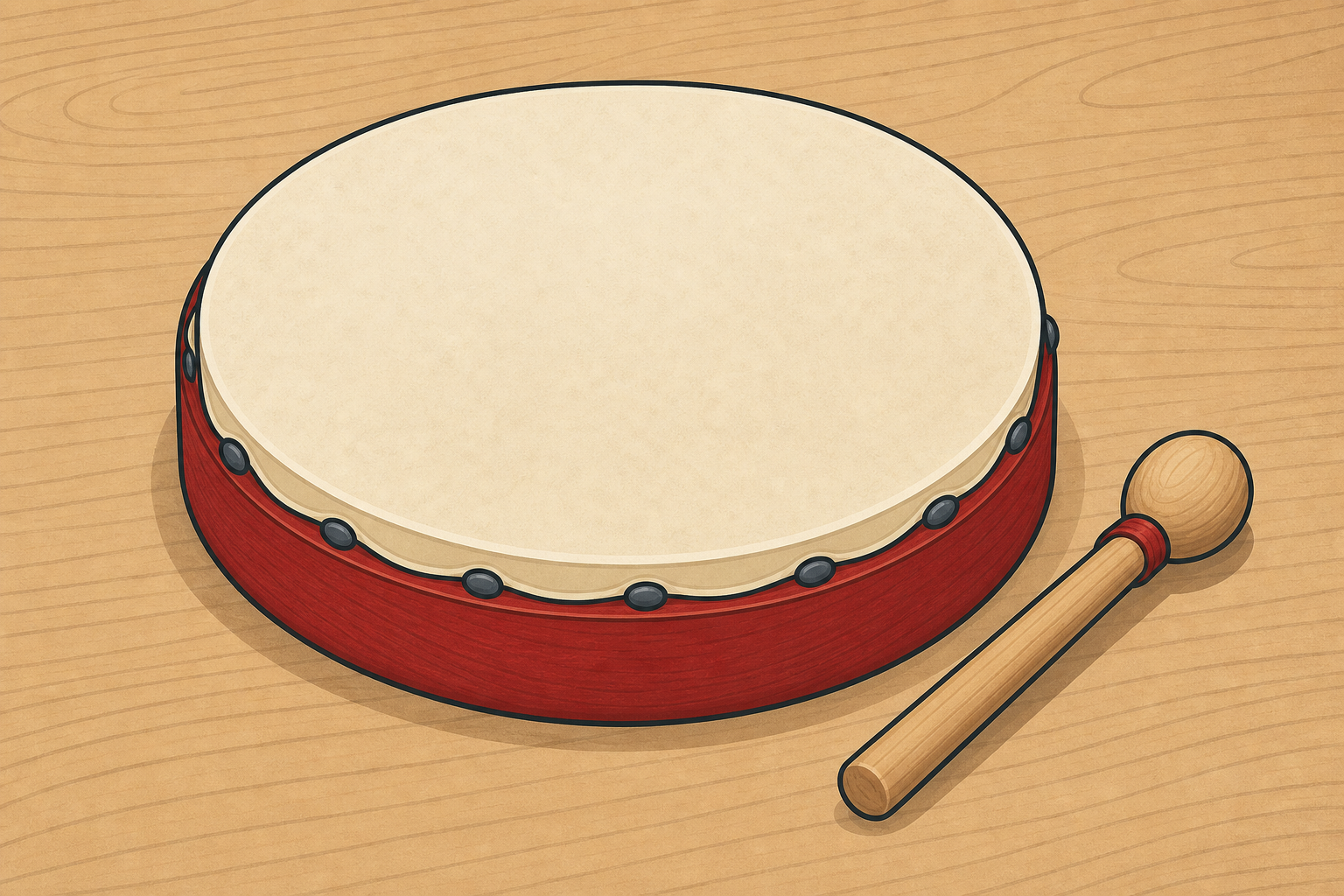
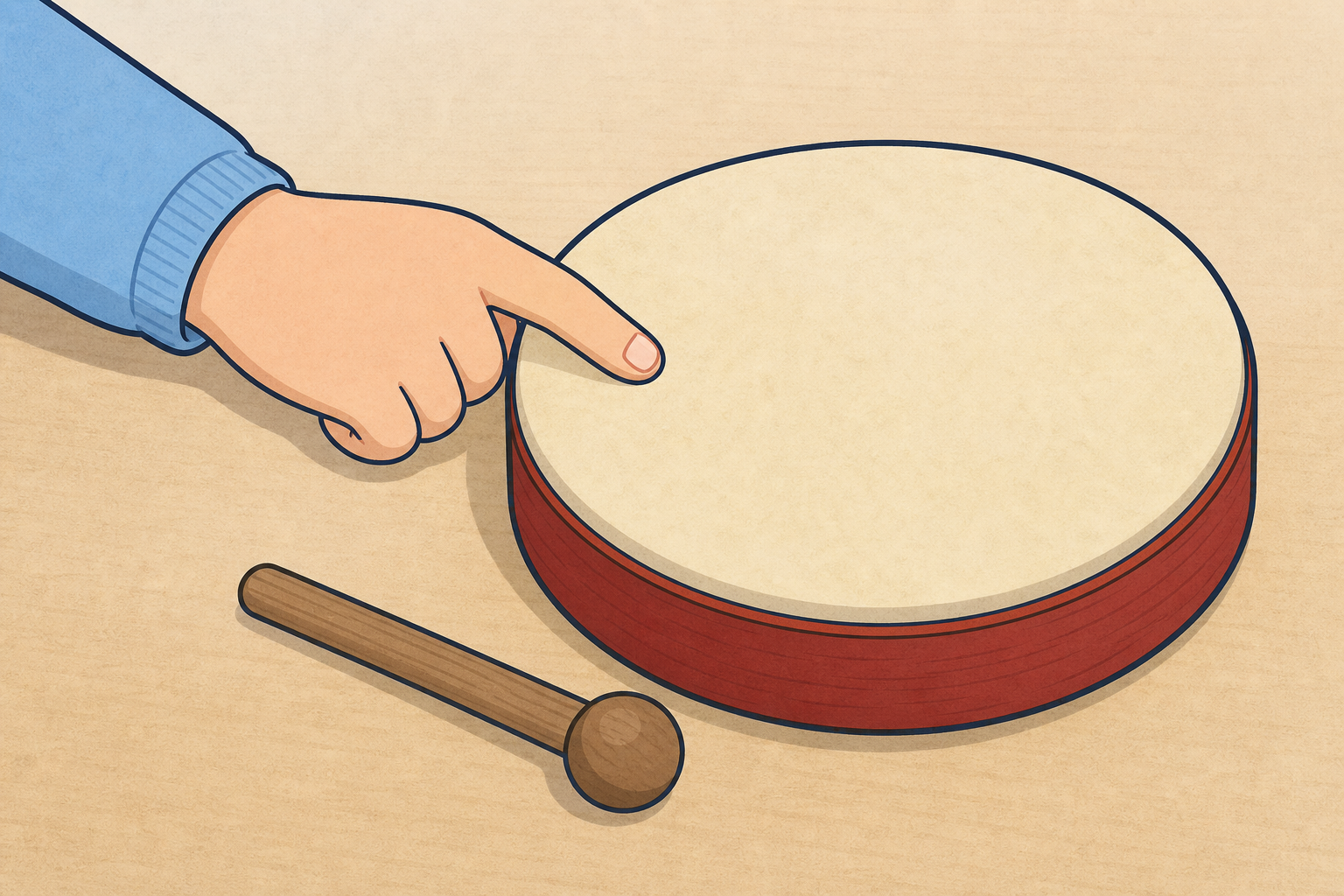
Now listen to this drum. Soft hit. Harder hit. How could we make this drum quieter or louder?
Have one drum (or tin with a skin) ready to sound, not only to show. Soft clap once, then a clearly louder clap. Ask only: What changed? Surface ideas such as harder hit, bigger movement, more energy.
Then give one soft hit and one harder hit on the ready drum so the class hears the same instrument change volume. Ask one short follow-up: How could we make this drum quieter or louder? Keep any 'same kind of drum sound' idea for later; do not stack it into the hook.
Do not explain the wobble link yet; that comes after they try it. Keep the room at a class-friendly volume. Avoid music words like tune, pitch or note in the hook; stay with louder and quieter.
That soft clap was a quiet sound. The strong clap was a loud sound. Quiet means soft and harder to hear unless you are close. Loud means strong and easy to hear. Things that make sound often wobble a little. Next we will try hard and soft hits on the same drum.
Board version only above: name loud and quiet from the claps they just heard, and that sound-makers can wobble. Do not tell the class yet that a bigger wobble makes a louder sound; that link comes after they have tapped and felt the skin (step 5).
Full key concepts for you:
| Concept | Why it matters | Example |
|---|---|---|
| Loud — a sound that is strong and easy to hear from further away | We need loud sounds for a school bell or a warning, and quieter ones for talking nearby | A hard tap on a drum or a school bell ringing in the corridor |
| Quiet — a sound that is soft and harder to hear unless you are close | Quiet sounds help us listen carefully and keep a classroom calm | A soft tap on a drum or a whisper to a friend |
| Bigger wobble — when something shakes with a larger movement; that larger wobble makes a louder sound | Knowing this helps us control volume without mixing it up with how high or low a sound is | Hitting a drum harder makes the skin bounce more and the sound gets louder, but it still sounds like the same kind of drum sound |
Misconception to head off (gently, without giving the test answer): children often mix loud with high. Keep saying louder or quieter, not higher or lower. Save the full harder-hit → bigger wobble → louder link for after the investigation.
Our question: which is louder on the same drum, a soft hit or a hard hit? Say your prediction and one reason. Hands up when you are ready to share. Then mark your prediction on your Investigation Journal page before we try it.
Journal pages should already be on desks from prep so this mark takes about 30 seconds and does not stall on handing out paper.
Pose the question clearly. Take three or four predictions. Accept any reasoned idea; predictions are never wrong. Prompt with: Why do you think that? and What will your hand do differently? Note a few predictions on the board in short phrases so you can return to them later.
Pre-test capture (about 30 seconds): before kits go out, each pupil marks a quick prediction on the Investigation Journal page (a quiet/loud face, or the words soft/hard). This keeps prediction separate from the result for emerging writers. Then start the hands-on step.
In your group, use the same drum or tin with a skin. Hit softly, then hit harder. Listen from the same spot. Feel the top with a light finger after each hit. Which felt like a bigger wobble? Which sounded louder?
Set out one membrane kit per small group: a drum or tin with cling film (or balloon skin). These are the load-bearing instruments so every group can feel the skin bounce. Clear space so groups are not ear-to-ear. Shakers are optional extras for a listen-only loud/quiet check; they do not replace the drum or tin for the feel-the-wobble comparison. Elastic-band guitars stay optional for extension.
Model once with the class watching: same drum or tin, same place, soft then hard. Then groups try. Circulate and ask: What did you hear? What did your finger feel on the skin? If a group only bangs loudly, reset: three soft hits, three harder hits, listen between each. Keep volume class-friendly; no banging near ears.
If a group also has a shaker, they may use it only to compare loud and quiet by ear. The tactile bigger-wobble evidence comes from the drum or tin skin.
Harder hits sound louder and the skin feels a bigger bounce. The sound should still be the same kind of drum sound, not a different one. If someone says it went higher, ask the class to listen again for loudness only.
Hands-on and talk only in this step. Do not start journal writing here; the dedicated record beat is step 6. Keep the full window for hits, listening, and feeling.
Safety: gentle hits away from faces; protect ears from very loud banging.
Look at the drum on the board. Watch what happens to the wobble when the hit gets harder. Did the sound get louder? Does it still sound like a drum?
Open the sound-explorer interactive in explore mode on the drum scene. Start on a quiet strength, then move to medium and loud. Spell out what the class sees: the rings get bigger (louder), but it still sounds like a drum, not a different sound just because it is louder. Ask the two short board questions one at a time: Did the sound get louder? then Does it still sound like a drum? Optional Hear it button if the room can manage a short tone; switch enableTone off if you need quiet. This is the explain beat beside the real instruments, not a replacement for them.
Name the science link now (after they have felt it): a harder hit makes a bigger wobble, and a bigger wobble makes a louder sound. Loud is not the same as high. (If groups later try a stronger pluck on an elastic band in the extension, the same bigger-wobble idea applies.)
Worked model (say aloud to join their test to the idea): We wondered if a harder hit makes a louder sound. Many of us predicted the hard hit would be louder. We tested soft then hard on the same drum from the same spot. We observed the hard hit felt like a bigger bounce under our fingers and sounded louder. We think a bigger wobble makes a louder sound.
Link back: the hard hit made a bigger wobble you could feel; the picture shows that bigger wobble spreading to an ear as a louder sound.
You're previewing this lesson. Get full access to this lesson and hundreds more — each one ready to teach, with interactive activities, printable resources and pupil progress tracking built in.