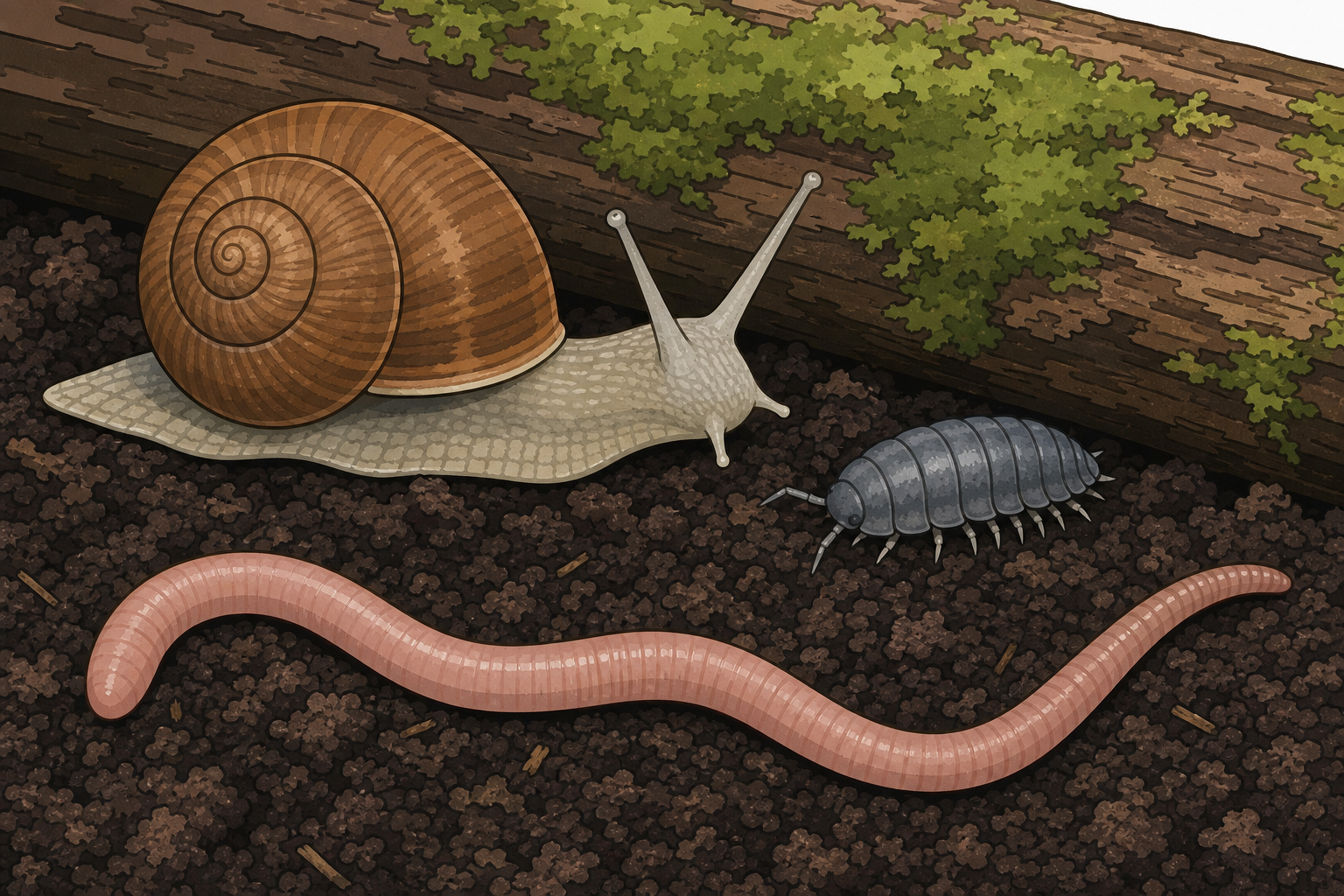
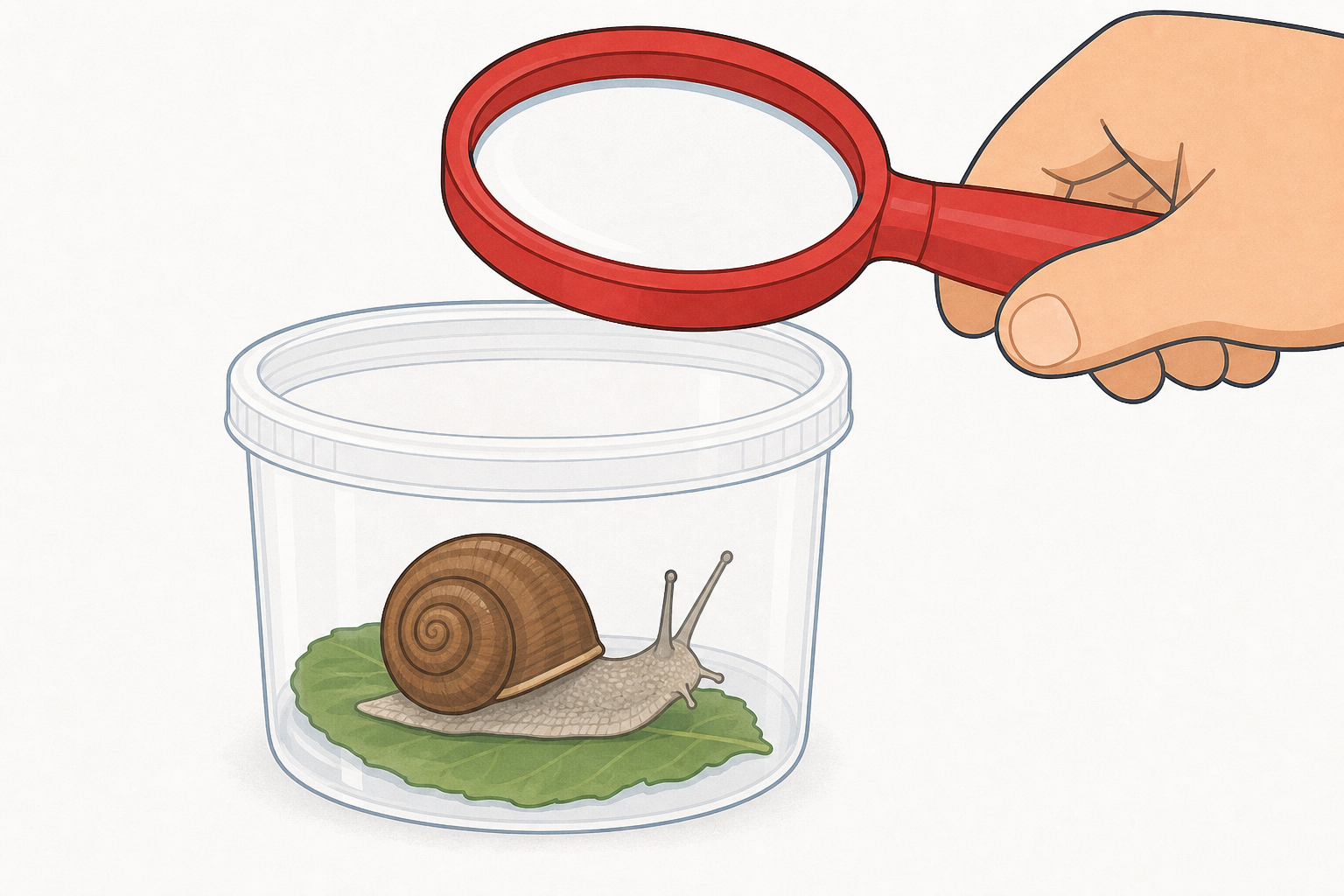
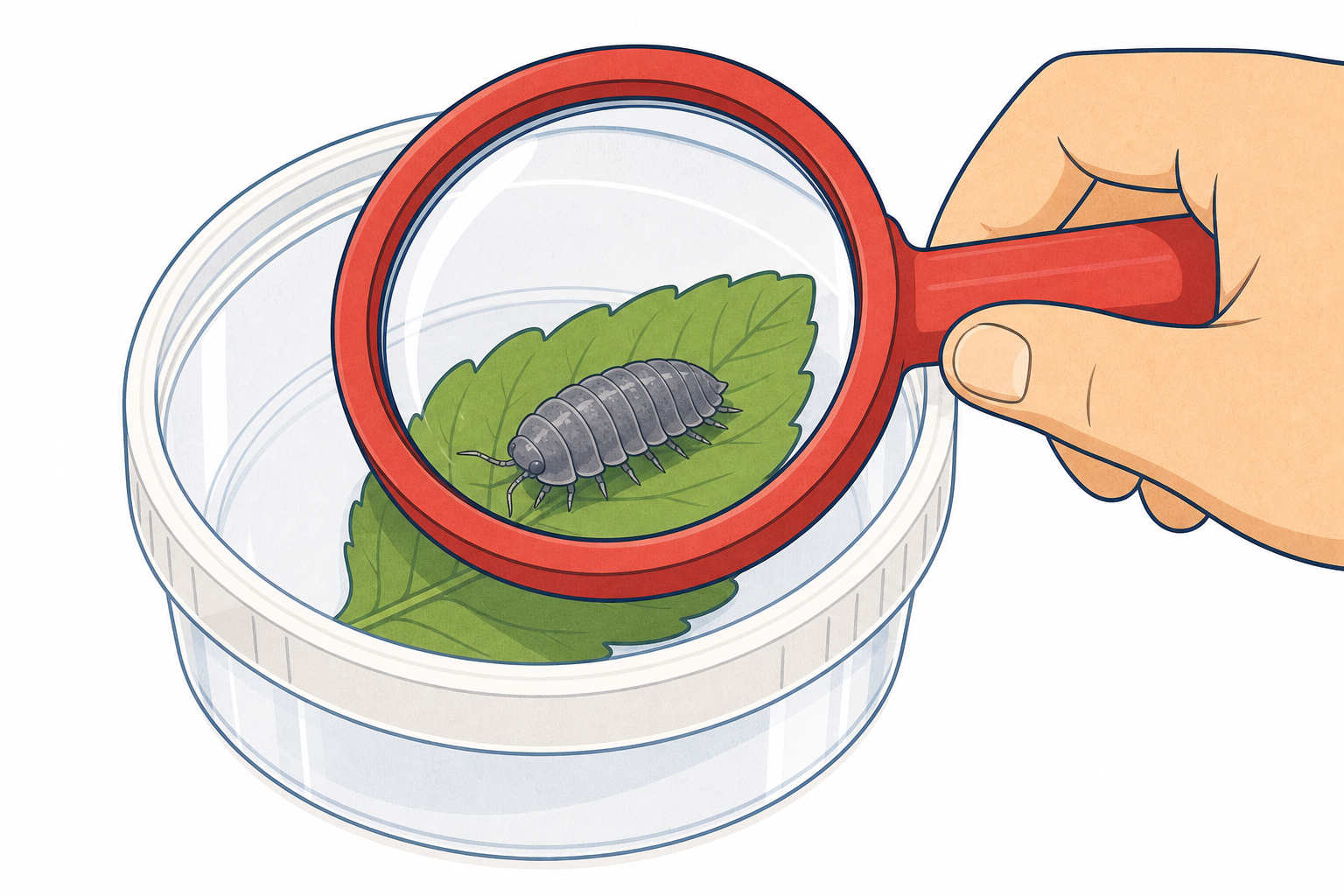
Who has spotted a tiny creature in the garden or under a stone? Their legs and shells are so small we often miss them. Today we get to be minibeast detectives and look very carefully at the parts of their bodies.
Keep this light. Show one photo of a snail, woodlouse (slater) or worm on the IWB if you wish, or simply ask the question. Do not hand out pots or magnifiers yet. Draw out a few names children already know: snail, worm, spider, woodlouse (many will say "slater"). Use the everyday word minibeast for a small outdoor creature; the load-bearing idea later is the body parts we can see.
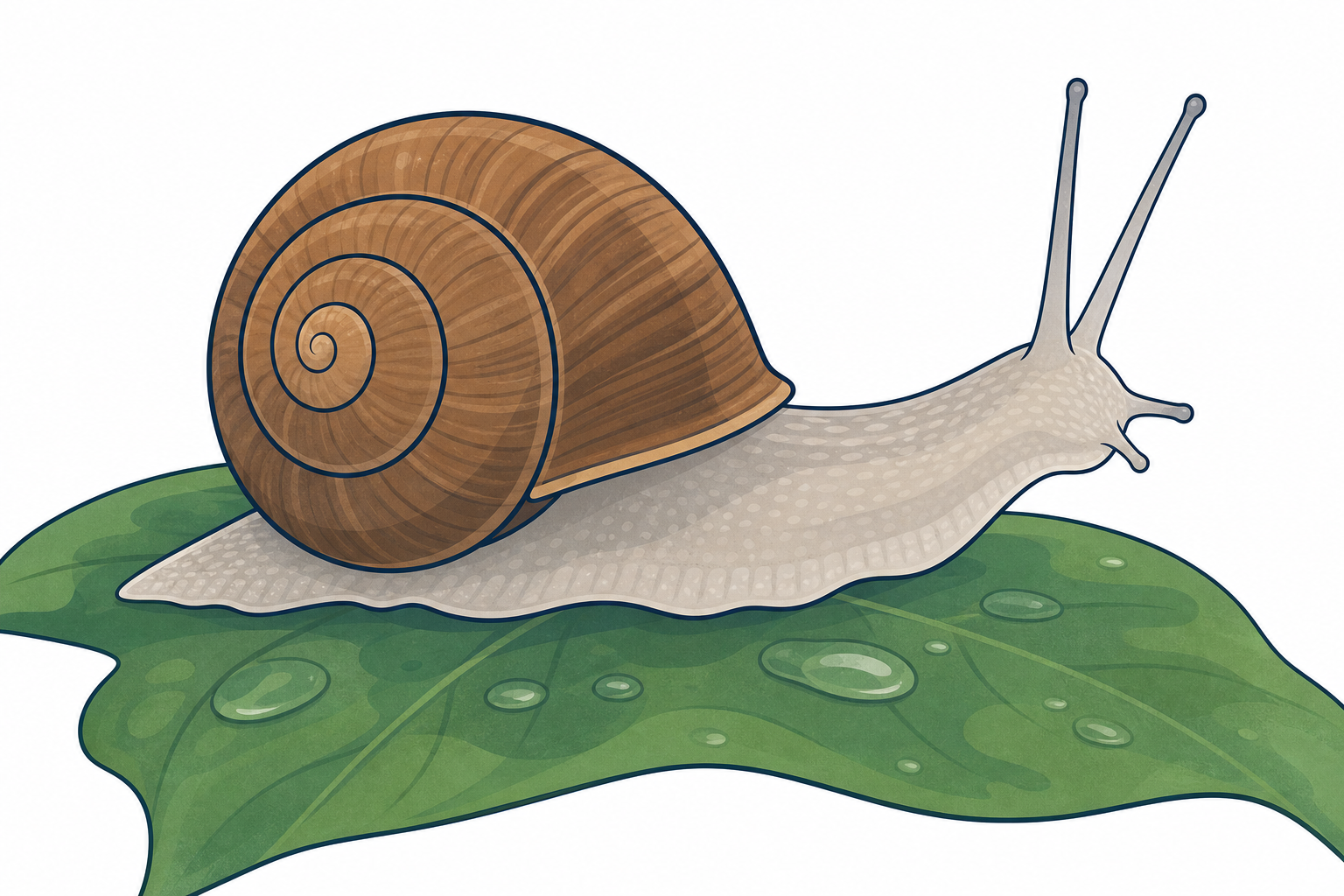
Minibeasts are tiny outdoor creatures, like snails, woodlice and worms. What body parts do you think we might see on a snail?
Board version only above: one short idea plus the snail question. Name woodlice once so all three hunt targets are on the board; if children say "slater", accept it and pair the words. Hold up a chunky plastic magnifier when you say you will use one later, but do not put a glossary on the board.
Full table for you (one new concept for Stage 1):
| Concept | Why it matters | Example |
|---|---|---|
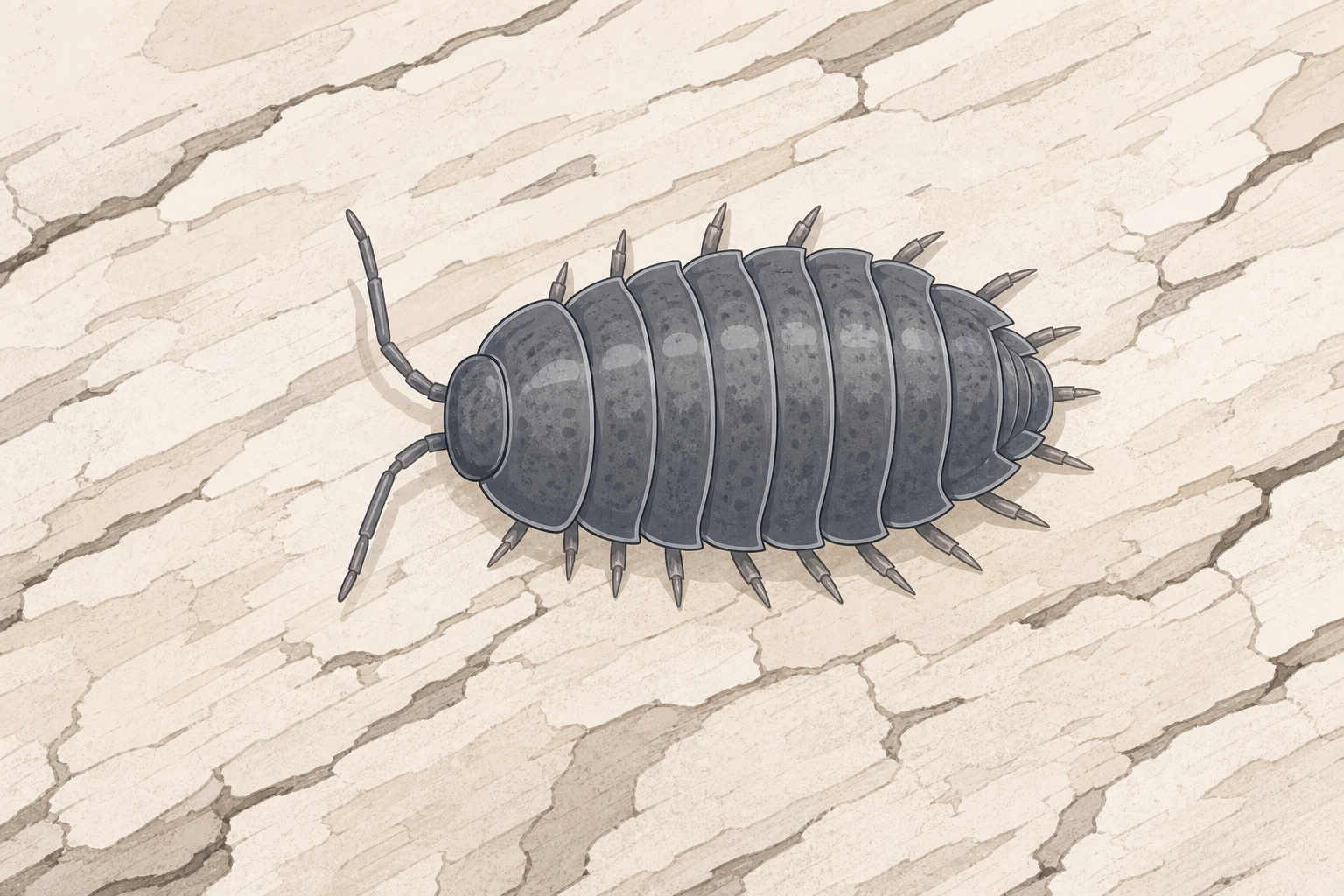
| Body parts — the different bits of a living thing that we can see, like legs, a shell or feelers | Noticing parts helps us describe what we found and tell snails, woodlice and worms apart | A worm has no legs; a woodlouse has lots of little legs; a snail has a shell |
Doing words (say with the real objects, not as board terms): a minibeast is a small creature outdoors; a magnifier is a chunky plastic lens that makes tiny things look bigger so we can see parts more clearly; feelers are the little sticky-out bits on a creature's head that help it sense the world.
Misconception to head off: children may call every small creature a "bug" or think worms have legs. Gently name what you actually see. Also: minibeasts are living things — we look gently and always put them back.
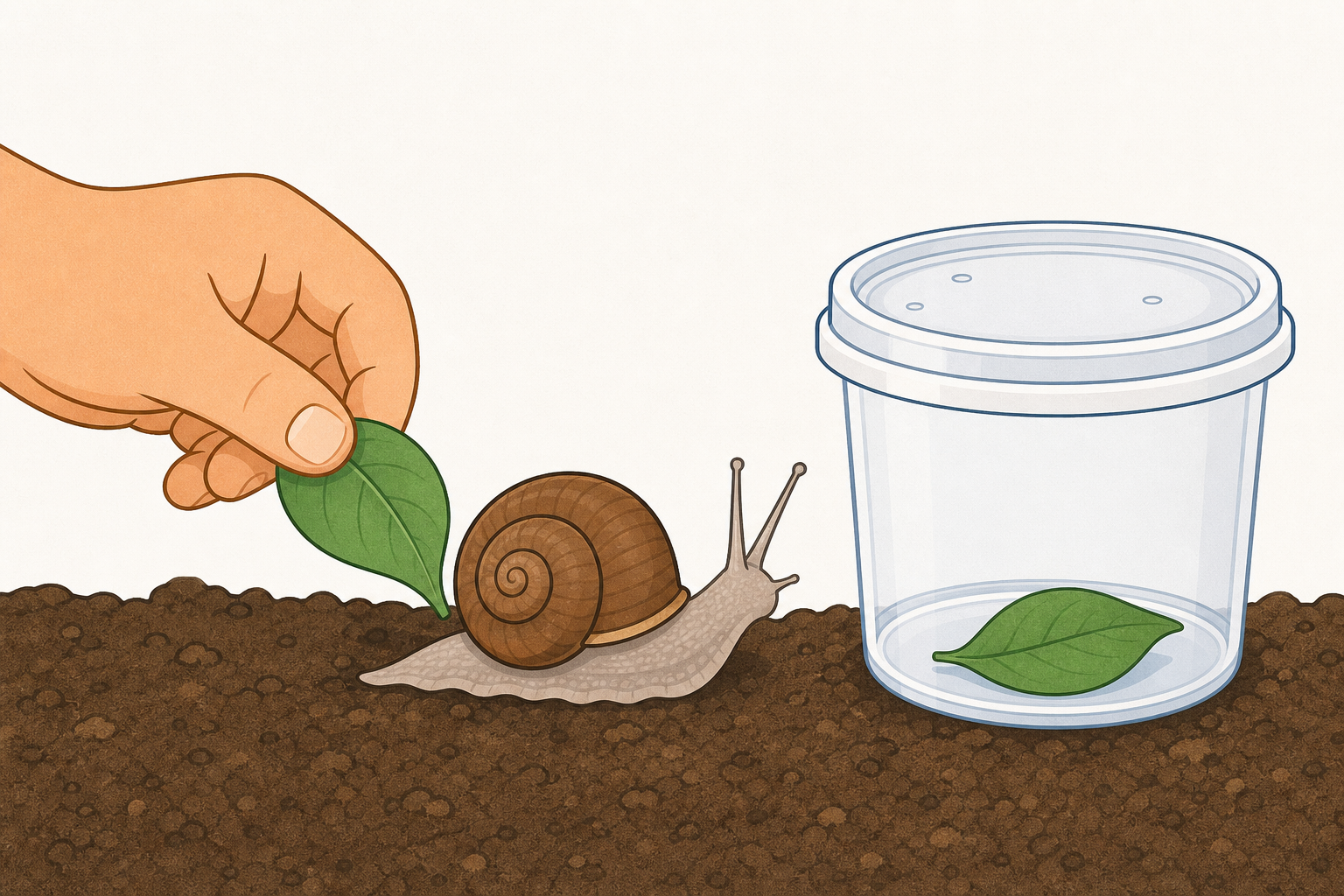
Watch how we collect a minibeast the kind way. What must we remember so the creature stays safe?
Model the full gentle cycle once before groups go out. Think aloud:
Order for today (say clearly): find → look with the magnifier while we are still at the looking spot → put the creature back together → come inside → wash hands → then draw.
Rules to say clearly: soft hands; one creature at a time in a pot; pot stays still while we look; never poke, squeeze or tip the pot upside down; every minibeast goes back to the same spot after our careful look; wash hands when we finish outdoors before we touch pencils.
If the outdoor space is wet or bare, set up three look-stations indoors with creatures the teacher collected just before the lesson (and will return after). Children still use magnifiers and the same gentle rules. Have the backup photos and any empty shells ready from your prep list.
In small groups, look under leaves, pots or logs for a snail, a woodlouse (slater) or a worm.
Guide it gently into a pot. Keep the pot still. Take turns with the magnifier and look for legs, a shell or little feelers on its head. Tell your group one part you can see.
When everyone in your group has had a look, put the minibeast straight back where you found it together. Then line up to come inside.
One outdoor block only (or indoor stations if needed): find → still-pot magnifier look at the looking spot → group return → line up and come in. Do not bring live creatures to the classroom table for a second trip. The careful look is protected here inside this single supervised burst.
Realistic supervision: keep the class inside a tight agreed boundary (one bed edge, a short wall strip, or a few plant pots in one corner). Groups of three to four stay close enough that one adult can see everyone. Build in line-up and walk-out time within these minutes; do not send groups to far corners of the yard.
Where to look in an Irish school garden or yard: under plant pots, damp leaves, logs, the edge of a flower bed, beside a wall after rain. Snails, woodlice (slaters) and earthworms are the targets — these three are common and safe for gentle handling in pots. Pair woodlouse / slater out loud so every child knows the hunt word.
Pacing the look (coach in short beats):
One creature per group is enough. If a group finds nothing, share a look at another group's pot within the boundary, or help them check one more damp spot.
What you hope they notice (age-real):
Do not require correct scientific counts of every leg. "Lots of little legs" or "no legs" is enough at Senior Infants. Revoice their words with the gentle names: shell, feelers, legs, long body.
If no live minibeasts appear: use the clear photos of snail, woodlouse and worm (IWB or print) plus any empty shells from your prep, and still practise "look, notice parts, return" language. Prefer live creatures when the garden allows.
We have put our minibeasts back. Now wash your hands with soap before we touch our drawing pages.
This beat sits straight after return and before pencils or Investigation Journal pages. Send groups to wash in a calm queue; wipe tables if soil or damp pots were nearby. Check every creature is returned and no pots are left outside before drawing begins.
If indoor stations were used, the teacher returns those creatures after hands are washed (or with two helpers once the class is settled at seats).
Keep this practical and brief — hygiene first, then settle for drawing.
You're previewing this lesson. Get full access to this lesson and hundreds more — each one ready to teach, with interactive activities, printable resources and pupil progress tracking built in.