1 - Getting Started ~5 mins
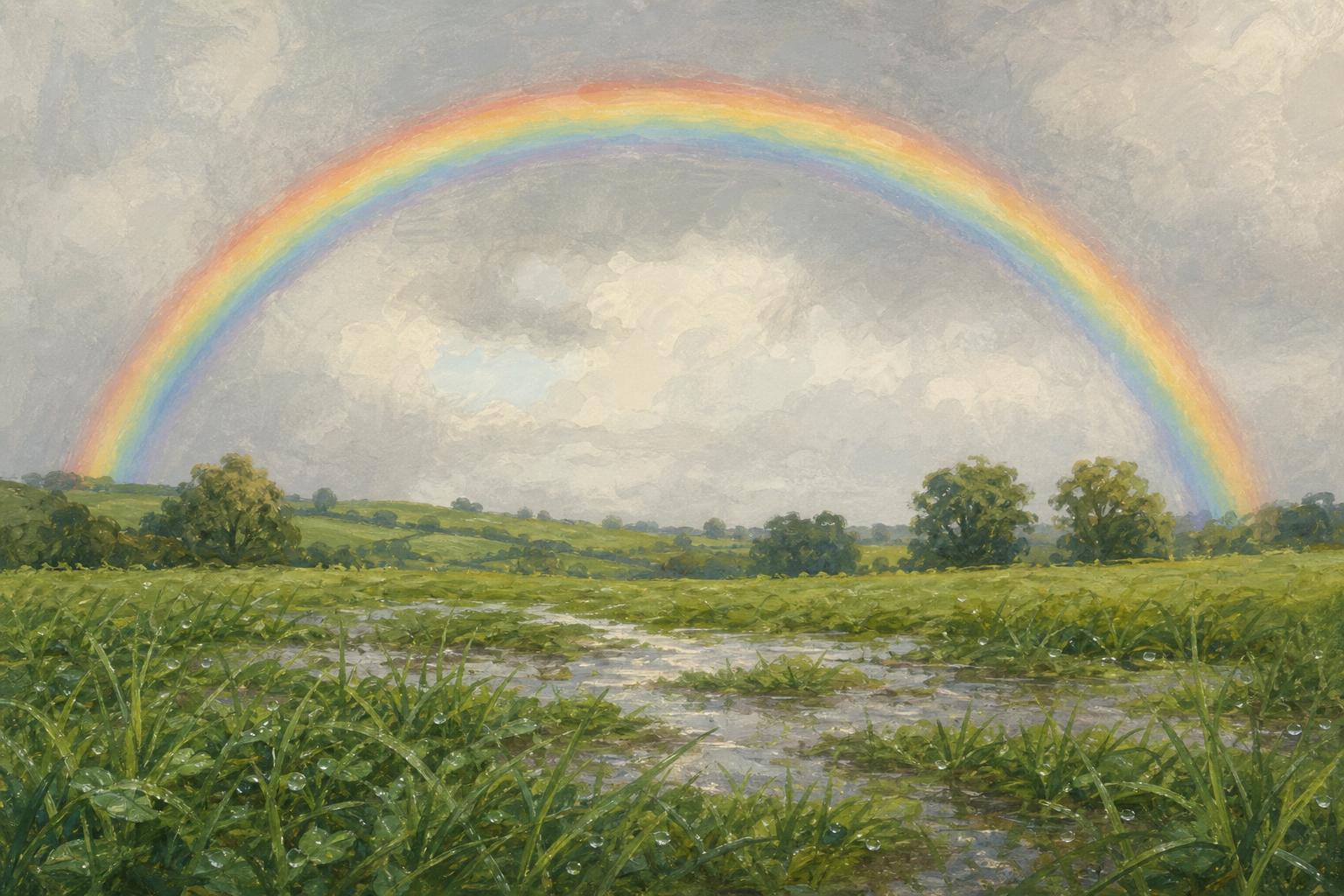 Have you ever noticed how warm a dark school jumper feels in sunshine compared with a pale one? Light does more than help us see. Today we will find out whether light carries energy, what colours hide inside white light, and what happens when those colours spin together again.
Keep this beat light. Hold up a dark card and a pale card, or simply point at a dark jumper and a pale shirt in the room. Do not set out the full kit yet.
Ask: Where does our light come from on a bright Irish day? What about on a grey afternoon in the classroom? Collect a few natural sources (sun) and artificial ones (lamp, torch, screen) without turning it into a full list lesson.
Nature of STEM cue for later: Isaac Newton used a prism to show that sunlight is a mix of colours, and that those colours belong together in white light. Save that story for the spectrum step.
2 - Light That Carries Energy ~5 mins
Today's first idea: light energy means light can warm things when it lands on them.
If we leave a dark card and a pale card under the same light, which do you think will feel warmer, and why?
Project only the short board version above. Hold white light and spectrum for the split step once pupils can see a real band. Use the full table yourself.
| Concept | Why it matters | Example |
|---|---|---|
| Light energy — light is a form of energy that can warm a surface when it lands on it | Feeling warmth helps us notice that light does a job, not only lets us see | A dark card under a warm desk lamp feels warmer than a pale card left beside it for the same time |
| Natural and artificial light — natural light comes from the sun (and stars); artificial light is made by people, such as lamps and torches | We use both every day in Irish classrooms and homes | Sunlight through the window is natural; the classroom ceiling lights and a torch are artificial |
| White light — light that looks white or plain but is really many colours mixed together | Splitting it is how we meet the spectrum and explain rainbows | Sunlight and most torch beams look white until a prism or water tray spreads the colours |
| Spectrum — the ordered band of colours from split white light | It is the same pattern we see in a rainbow after rain | Red, orange, yellow, green, blue, indigo, violet on white card under a prism |
Misconception to head off later: children often think coloured light is "added on" rather than already present in white light. Keep returning to: the colours were in the white light; we only separated them.
Worked model (say aloud before the card test): I wonder whether dark and pale surfaces warm up the same. I predict the dark card will feel warmer because dark surfaces take in more of the light's energy. I will leave both cards under the same warm lamp or on the same sunny sill for the same time, then feel each with the back of my hand. I observed that the dark card felt warmer. I think light carries energy, and a dark surface takes in more of it.
3 - Do Dark and Pale Cards Warm Differently? ~10 mins
We will test whether light carries energy. We leave one dark card and one pale card under the same warm lamp or on the same sunny windowsill for several minutes. Predict first: which will feel warmer? Then check with the back of your hand and be ready to say what you noticed.
Before this step
Plan for light sources a typical 4th Class room actually has. Cool LED desk lamps and ceiling lights often produce little or no noticeable warmth difference. Prefer a sunny windowsill on a bright day, or one shared warm (incandescent or halogen) lamp at the front for a whole-class comparison. One lamp per group is optional only if you already have suitable warm lamps.
How to run it
- Place dark and pale cards side by side under the same light (shared lamp demo or sill).
- Everyone predicts aloud before anyone touches the cards.
- Leave both for about 5 minutes if using a lamp (protect wait time inside this slot); a sunny sill may need a little longer.
- Pupils feel each card with the back of the hand (safer than fingertips for a quick compare).
- Ask: What did you feel? What does that tell us about light?
What to expect: the dark card often feels slightly warmer under strong sun or a warm lamp. Fallback if both feel the same: say honestly that the difference can be small with cool classroom lights; revoice that light still carries energy (we feel it as heat from the sun or a warm bulb), and that dark surfaces are better at taking that energy in. You can still meet the objective through prediction, careful comparing, and this talk.
Differentiation: less confident groups can simply say warmer / cooler / about the same; ready groups can suggest why dark surfaces take in more energy.
Safety: lamps can get warm — no touching bulbs or hot shades; never look into a bright lamp.
4 - Split White Light Into a Spectrum ~12 mins
White light looks plain, but colours hide inside it. We will make a spectrum: white light goes through a prism or a water tray and a band of colours lands on white card. Name the colours you can honestly see. Then check the prism picture on the board — it matches what we just made.
Guarantee one real whole-class spectrum first
Hands-on splits with water trays often fail in ordinary classroom light. Start with a teacher demonstration using the best kit you have (a glass prism in strong light is most reliable; otherwise a shallow tray of water with a small mirror propped in it, or a glass of water, casting onto white card). Torches help on dull Irish days. Do not move on until the class has seen at least one clear real band.
Board words once the band is visible: White light looks plain but is a mix of colours. A spectrum is the band of colours when that mix is spread out.
Class prediction before the first split: If white light is only white, what should we see on the card? If white light is a mix, what might appear?
After the demo: if you have enough reliable kit, groups may try to catch their own band. If not, stay with the whole-class spectrum and have pupils name colours from that shared result. Accept the colours they can honestly name; do not require a full ROYGBIV list.
What to expect: a band with red at one end and violet or blue-violet at the other. Not every attempt will show every named colour clearly.
Interactive on the IWB
After the real spectrum, open the light-rays interactive in display mode on the prism scene as confirmation of what was just seen — not as the only evidence. Nothing moves on the card. Narrate: white light goes in; a spread of colours comes out.
Nature of STEM: tell briefly that Isaac Newton used a prism to show that sunlight is a mix of colours, and that those colours belong together in white light. That helped people understand rainbows. Keep it to a minute.
Safety: never look straight at the sun; never aim light into eyes; glass and water need steady hands and wipe spills.
5 - Spin the Colour Wheel ~10 mins
Your group has a colour wheel with spectrum colours on it. Spin it on the desk or between your palms. Watch carefully: what does the mix look like when the wheel goes fast? Be ready to say whether it stays as separate colours or blends toward pale white or grey-white.
Main task: spinning colour wheel (protect this whole slot)
Pupils already have pre-prepared card or paper-plate colour wheels with spectrum segments coloured in before this lesson. Do not colour during the step. Push a pencil through the centre or use a split pin on a straw. Spin on the desk or between palms.
Look-for on the board: when it spins quickly, the colours blur toward a pale grey-white or muddy white — not a perfect pure white. That is fine and honest. The point is that mixing the spectrum colours back together moves toward white light again.
Run whole-class with teacher spinning one wheel first if groups need a model, then every group spins their own.
Optional extra only if time remains: a quick teacher hold-up of one coloured filter over a torch beam on white card, with one question: Which colours still seem to reach the card? Do not open a full filter station; filters are outside the three learning objectives and must not crowd the wheel.
Safety: never look at the sun through a filter or lens; do not shine torches into faces; mind split pins.
Unlock the full learning experience
You're previewing this lesson. Get full access to this lesson and hundreds more — each one ready to teach, with interactive activities, printable resources and pupil progress tracking built in.
This lesson is copyright of Coding Ireland 2017 - 2025. Unauthorised use, copying or distribution is not allowed.