1 - Getting Started ~5 mins
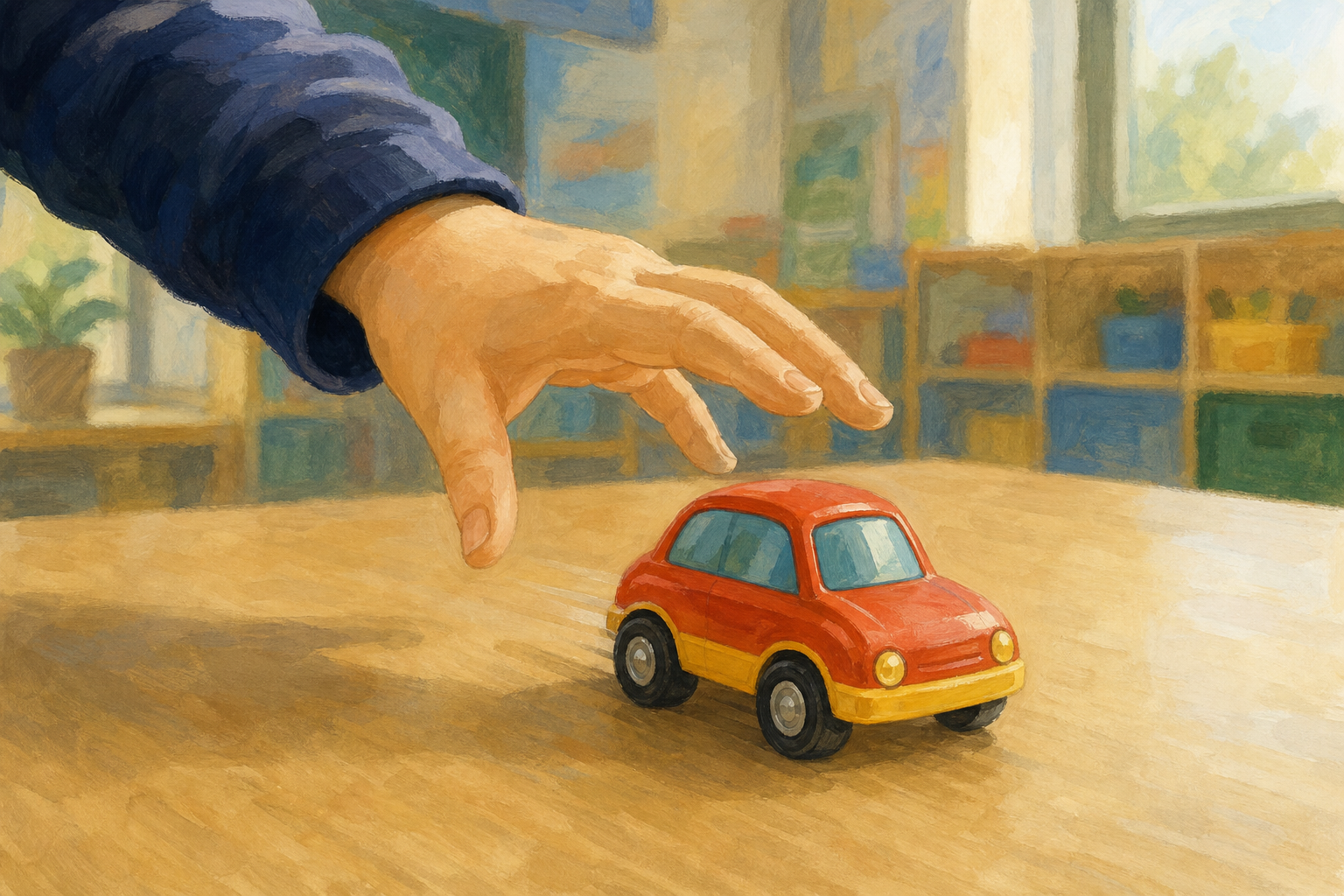 Watch this pull-back car. When I let it go, what do you think will change about how it moves, and what might make those changes happen?
Hands up your guess: will it stay at the same speed in a straight line the whole way, or will something make it slow, stop or turn?
Scientists and engineers care about every one of those changes (start, slow, stop, turn) because that is how bikes, trains and cars are made safe to use.
Keep this beat light. Hold one pull-back car so the class can see it, but do not run the full investigation yet. One quick release is enough to spark talk.
Key questions: What made it start? What made it slow down? Could anything make it turn?
Collect two or three ideas on the board without correcting them. You will return to them after the investigation.
Have the three kit types ready nearby for the next steps, but do not hand them out yet.
2 - What Can a Force Change? ~6 mins
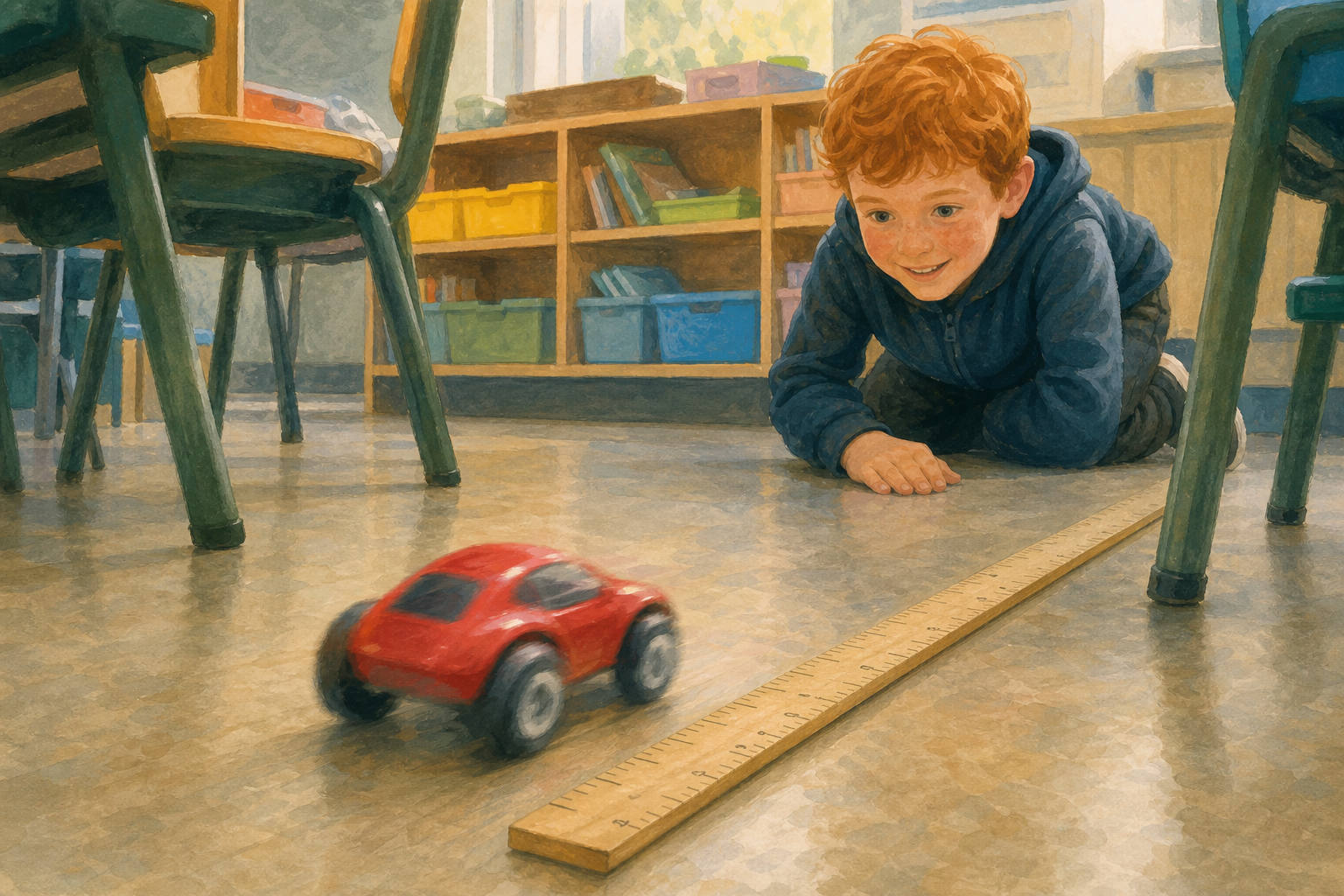 Three words for the car we just watched. Call out as we go:
Force — a push or a pull. What push started the car?
Motion — how something is moving: starting, going, slowing, stopping or turning.
Change of motion — a start, stop, speed-up, slow-down or turn caused by a force. What force slowed our car?
| Concept | Why it matters | Example |
|---|---|---|
| Force — a push or a pull that can start, stop, speed up, slow down or turn something | Every journey, game and machine around us works because we use forces to change motion on purpose | Pushing a swing, kicking a ball, or braking a bike on the way home from school |
| Motion — how something is moving: starting, stopping, going faster or slower, or changing direction | Naming the motion helps us notice exactly what changed, not just that “it moved” | A marble racing down a ramp, then rolling more slowly across carpet |
| Change of motion — whenever something starts, stops, speeds up, slows or turns, a force caused it | Scientists and engineers study these changes so trains, bikes and cars can start, turn and stop safely | Air rushing from a balloon pushes a balloon rocket along a string; friction then slows it |
Short live model (keep this tight; about two minutes): Pull the car back once on a clear stretch, let go, and narrate only the three beats: a push from the wound-up spring started it; friction with the floor slowed and stopped it; a sideways force at the wheels can make it turn. Invite one or two pupil echoes of those force names, then move on.
Land each board line with the call-out already on screen so the terms feel like talk about the car, not a vocabulary list. Keep the IWB text short; the fuller definitions sit in this table for you.
Optional deeper model (only if the class needs a fuller inquiry shape spoken aloud): I wonder what forces change the motion of this pull-back car. I predict that pulling it back winds a spring that will push it forward when I let go, and that the floor will slow it until it stops. I test by pulling it back the same amount, letting go, and watching start, path and stop. I observed it shot forward, rolled, then slowed and stopped; steered wheels made it turn. I think a push from the wound-up spring started it, and friction slowed and stopped it.
Misconception to head off: children often say “it stopped because it ran out of energy” without naming a force. Gently revoice: something was rubbing or pushing against it — that force changed the motion. If a balloon rocket empties, prompt: the push from the air stopped, so friction could slow it.
Nature of STEM cue (keep light here): the same force ideas will help us talk later about bikes, Luas and DART, and roads we know. Save the full Irish transport weave for the make-sense talk after the demos.
3 - Try the Force Kit ~10 mins
Which kit will make the change of motion easiest for the class to spot — a flying start, a sudden stop, or a clear turn?
Your group will visit short stations for the three kits: a marble run, a balloon rocket, and a pull-back car.
Balloon rocket setup: slide the straw onto the string, tape the balloon to the straw, blow it up, pinch the neck, then let go.
Try one kit properly so you know how it works. Take a quick look at a second kit if you have time. Notice starts, slows, stops and turns. Choosing your class demo comes next — pick from a kit you actually tried.
Before this step
Default layout: short stations. Set three stations (marble run, balloon rocket, pull-back car) and rotate groups. Use table kits only if you already have space, chairs and string lines for every group at once. Stations avoid needing two chairs and a string line per group.
Success criterion for explore: every group leaves knowing one preferred kit well enough to demo. A second kit is a quick look, not a full second build. Ten minutes is enough for that shape; do not chase two full assemblies.
Station stock:
- Marble run: marbles, cardboard tubes or folded card channels, a few books for height
- Balloon rocket: balloons, straws, string or yarn stretched between two chairs (or table legs), tape. Thread the straw on the string, tape the balloon to the straw, inflate, and release. No chassis build — gather and go. Pre-stretch string lines at the balloon station before pupils arrive if you can.
- Pull-back car: one ready toy car per station turn
Clear a short run at each station. Mark a simple start line with tape if it helps.
Quick whole-class force names (about one minute before or as groups start)
Name the start force for each kit so showcase later uses shared words:
- Pull-back car: push from the wound-up spring
- Balloon rocket: push from the air leaving the balloon
- Marble run: gravity — a downward pull that starts the marble rolling down the slope
Slowing and stopping still point to friction with the floor, track or string for all three.
During the exploration
Circulate and ask: What started it? What slowed it? Could you make it turn? Which kit felt easiest to control and show?
Keep the mood playful. This is try-out time so groups can choose wisely next from a kit they handled.
Pacing lever: if time is tight, stop groups once each has one solid kit try, even if the second look is only a watch at the next station. The open choice still stands across the three kit types in the room.
Safety: roll marbles and cars away from feet and faces. Do not aim balloon air at anyone's face. Pick up marbles the moment they leave the run. Keep string lines at a safe height so pupils do not walk into them.
Differentiation: if a balloon rocket barely moves, suggest a bigger puff and less floppy tape. If a marble run is too fast, lower the start height.
4 - Design Your Force Show ~5 mins
Engineers try ideas before they build the real thing — your demo is that kind of try-out.
Your group job: design one short demonstration that clearly shows a force changing motion.
Choose one kit your group actually tried at the stations. Decide what you will change on purpose (for example start height, how hard you pull back, or how much air is in the balloon). Agree a prediction with your group: what will happen to the motion, and why?
This is the open choice beat. Groups pick from the kit types they handled in explore (marble run, balloon rocket or pull-back car) and design how they will show a change of motion. More than one valid demo is fine.
No cold switches: do not let a group pick a kit they only watched a neighbour try. That would burn step 5 table time on first assembly. If kit stock forces a swap, give that group the fast-setup path: they use a station already set up from explore and get one extra minute at the start of step 5 while others refine — still not a full first build from scratch.
Prompt groups to name:
- the force that starts the motion (spring push, air push, or gravity down the slope)
- the force that slows, stops or turns it
- one thing they will deliberately change so the class can see a clear difference
Predictions stay in the group: each group says We think … because … aloud to each other (not a serial line-up to you). As you circulate, sample two or three groups' predictions so you know the room is ready. Do not wait for every group to report to you before building continues.
Predictions are never wrong; they start the science. If a group only plans “make it go”, push them toward a visible change: faster or slower, further or shorter, straight or turning.
Keep this to five minutes so the investigate beat still has room. Groups should already know their kit from the try-out, so this is choose-and-predict, not first assembly.
5 - Show a Force Changing Motion ~14 mins
Watch like a detective at start, middle and end — the force leaves clues in how the motion changes.
First, run your group's demo at your table once or twice so you trust what you see. Be ready to name the start force and the force that slows, stops or turns it.
Then we will watch two or three groups on the shared run at the front. When it is not your group's turn, your job is to watch and be ready to answer: What force started that? What force changed the motion?
How to run it (run, then showcase)
Part A — table runs (about 6–7 minutes): Groups should already have tried their chosen kit in the explore step. This window is mostly run, refine once if needed — not first assembly. A balloon needs inflating and a ramp may need a book moved, but tracks and string lines should already exist from step 3. If a group needed the rare fast-setup path after a stock-forced swap, give them the first minute at a ready station while others refine.
Part B — class showcase (about 6–7 minutes): Call a clear stop to table runs. Invite two or three groups with different kits to show on a clear central run while the rest watch. Fold watchers in with questions: What force started that? What changed the direction? Was that the same as your group's demo? Watching is real participation; do not invent a separate desk task.
Shared start-force words (use these in questioning):
- Pull-back car: push from the wound-up spring
- Balloon rocket: push from the air leaving the balloon
- Marble run: gravity (a downward pull) starting the marble down the slope
Pacing lever: if table runs overrun, cut to two showcase groups rather than rushing the watcher talk. If table runs finish early, take a third showcase group.
Look-fors:
- A clear start force named with the shared words above
- A clear change (speed, stop, turn)
- A force named for the change (friction with the floor or track, a bump, a curve in the track). If the balloon empties, prompt: the push from the air stopped, so friction could slow it. Optional stretch only: sometimes air pushes back a little too, but floor or track friction is the force we can usually see at classroom speeds.
If a demo fizzles: balloon rocket going nowhere usually needs a straighter straw, a tighter string, and less floppy tape. Marble leaving the track usually needs lower sides or a gentler slope. Pull-back car spinning out may need a smoother, clearer run.
Safety: keep the run clear of feet and bags. No balloon air toward faces. Collect stray marbles immediately.
Unlock the full learning experience
You're previewing this lesson. Get full access to this lesson and hundreds more — each one ready to teach, with interactive activities, printable resources and pupil progress tracking built in.
This lesson is copyright of Coding Ireland 2017 - 2025. Unauthorised use, copying or distribution is not allowed.