Intermediate
40 mins
Teacher/Student led
+70 XP
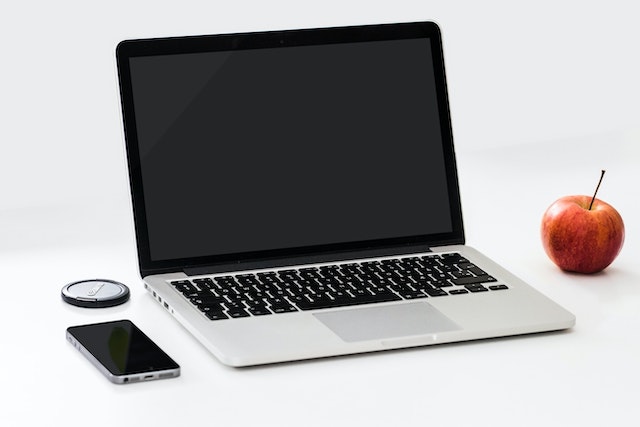 Chromebooks, laptops, and PCs are crucial tools for coding and digital skills education. Chromebooks are ideal for web-based applications and collaborative projects, while laptops and PCs support a wider range of programming environments and software for more intensive tasks like software development and data analysis.
Editing Video with Clipchamp, Part 2: Transitions, Sound and Export
Students finish last lesson's sequence with a transition, colour matching and layered sound, export it, then re-cut the same clips to see how order carries meaning.
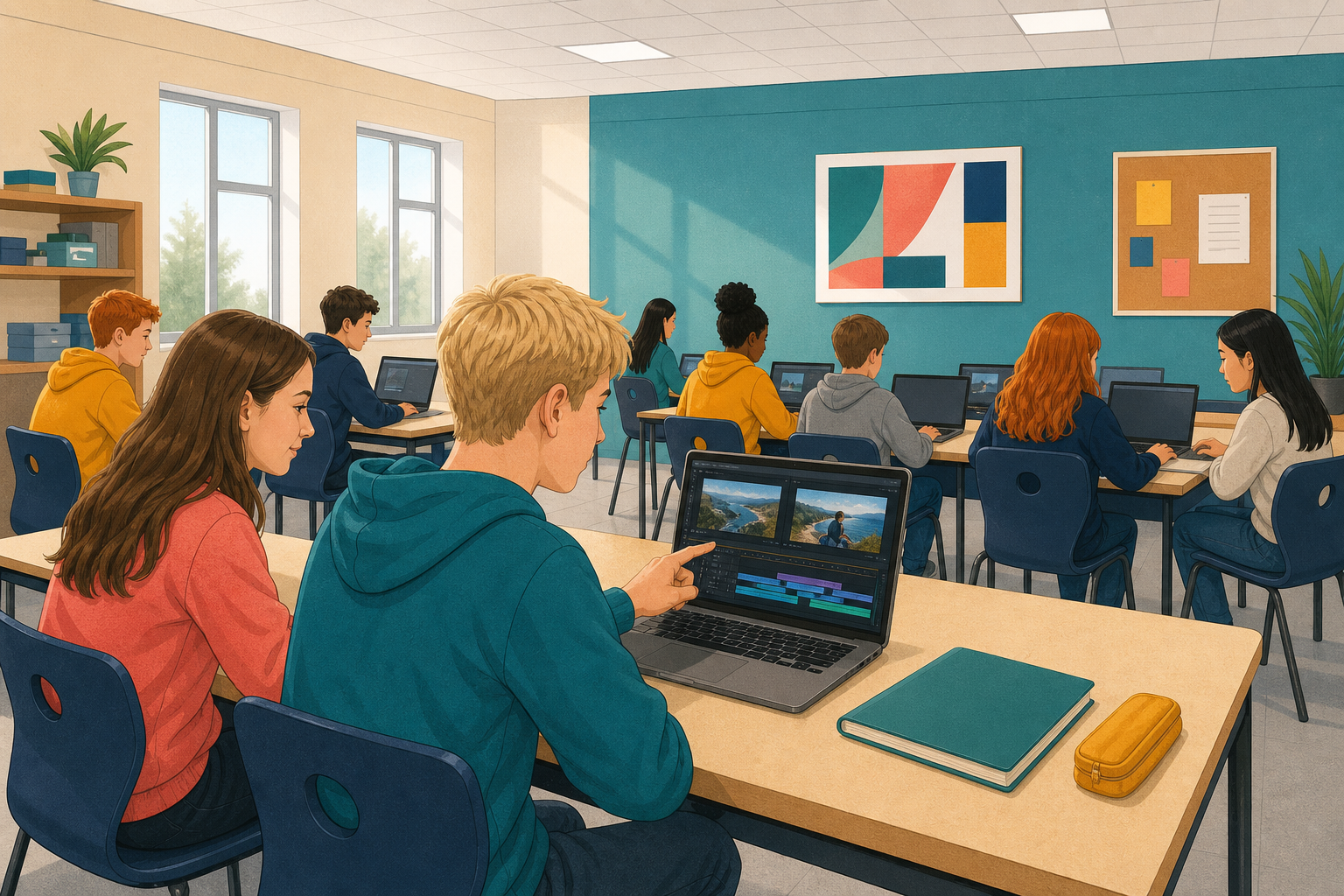 Open the project you saved last lesson: the globe over the fire, everything trimmed.