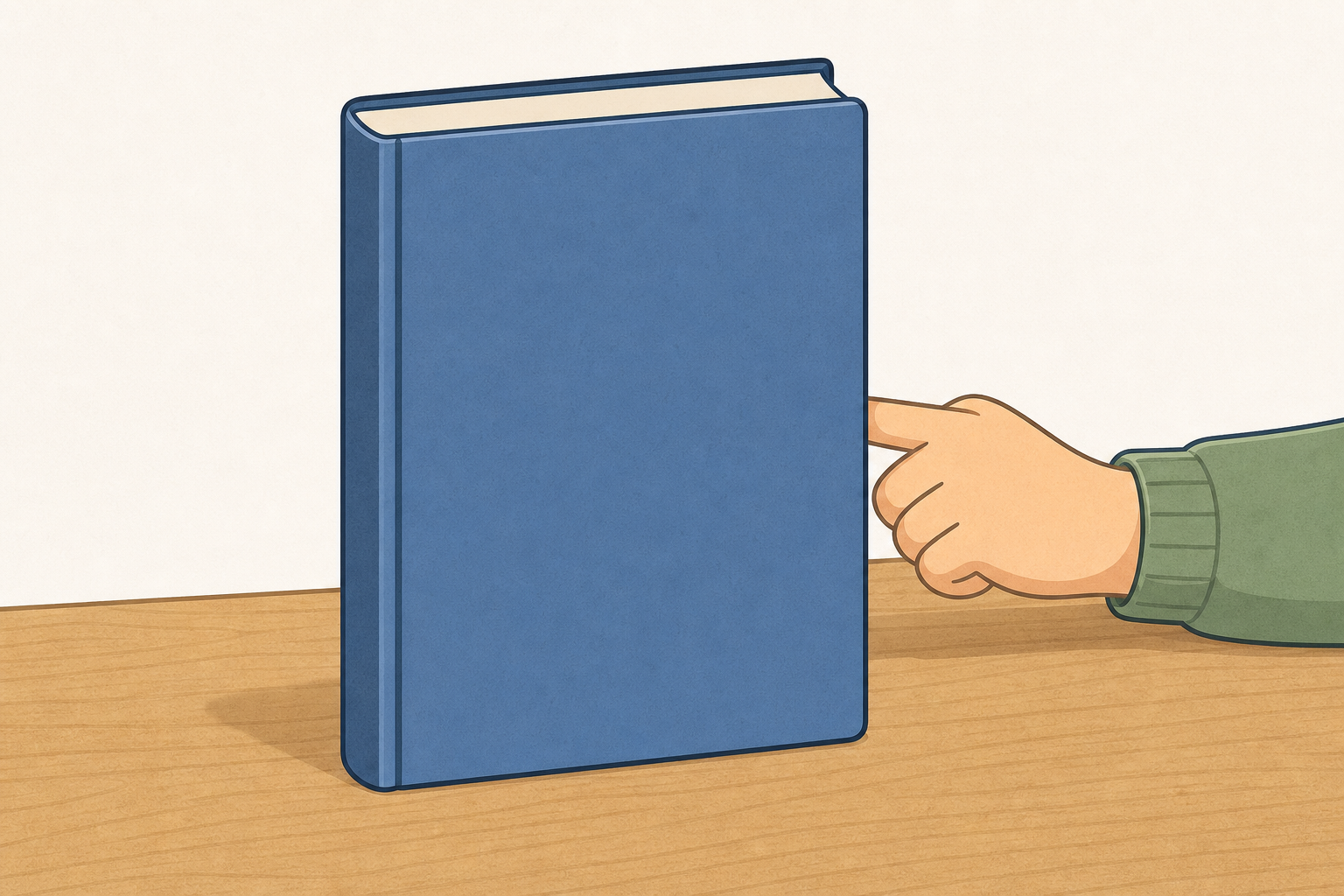
Some friends will stroke our mystery piece with one finger. Watch carefully. What word would you use for how it feels?
Today we are feeling-word detectives. We will feel materials and find the best word for how they feel.
Keep this light. Hold up one mystery piece (for example a square of sandpaper or a scrap of soft fabric) behind a book or bag so the class cannot see it yet. Invite two or three children to stroke it with one finger and say a feeling word out loud. After each stroke, ask the seated class: Do you agree? What feeling word would you say? Keep it choral and quick so watchers stay in the investigation. Do not name property yet, do not introduce the rough/smooth sort, and do not lay out the whole tray on the board.
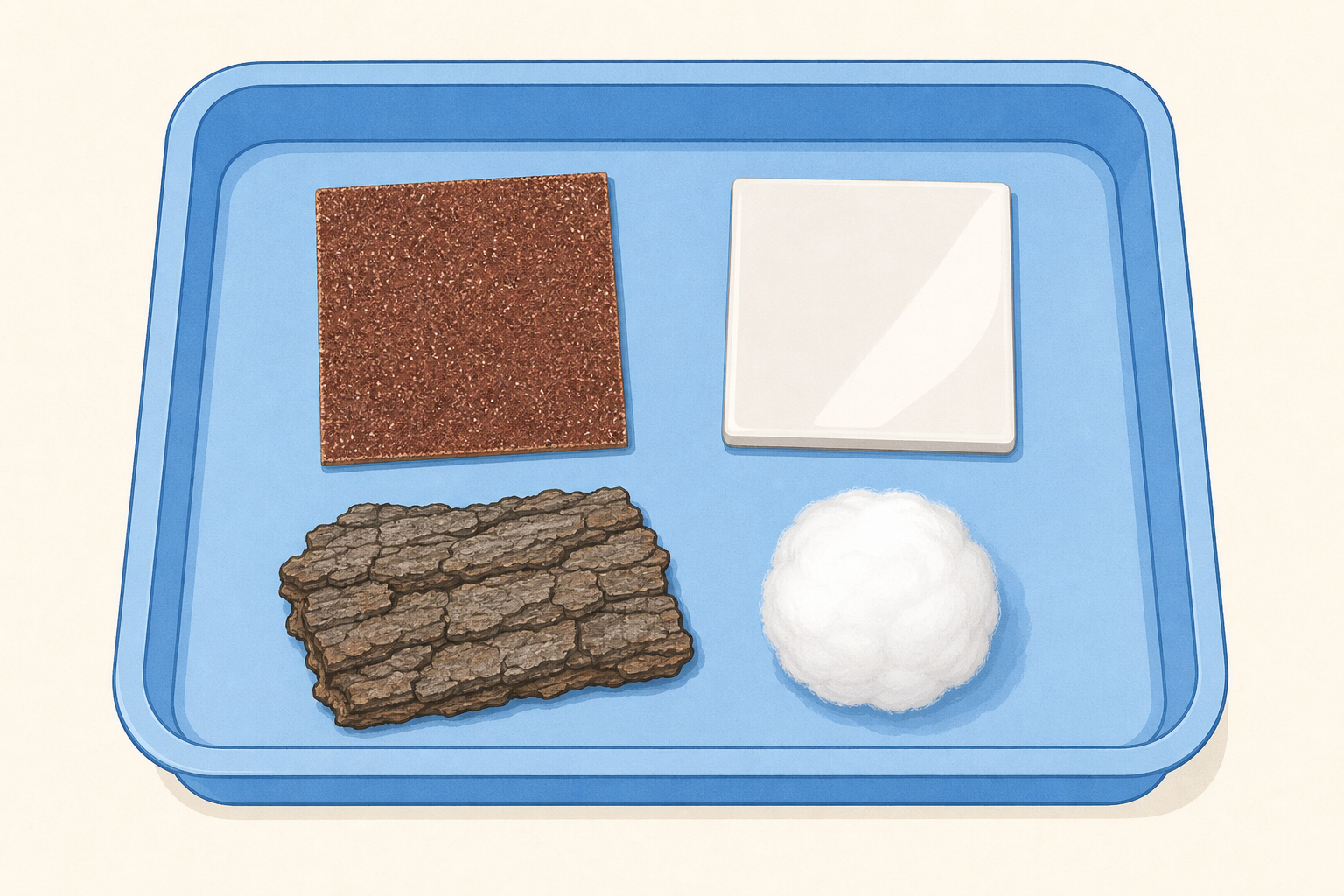
Before the lesson: set one materials tray and two sorting hoops or labelled trays at each group table (identical sets). Print the Investigation Journal page for each pupil. Have the picture-sort interactive ready on the IWB for later. Print the provided rough and smooth picture/word cards for the hoops (bumpy/scrapey cue for rough; slippy cue for smooth).
Key question: What word tells us how this feels?
Detectives need special words. Here are today's words.
A property is how a material feels or looks.
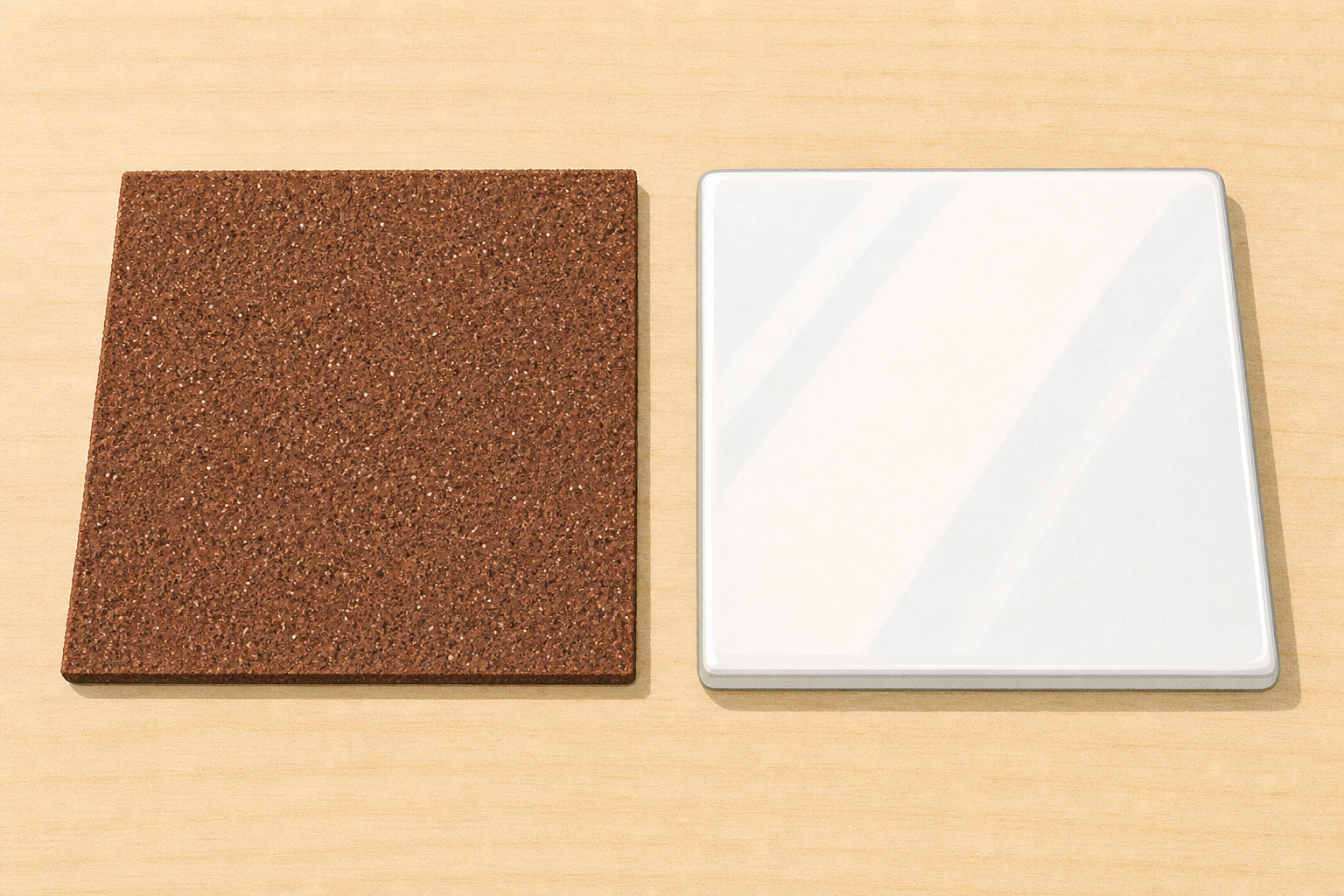
Rough scrapes or grips under your finger. Smooth slips under your finger.
Which word fits the mystery piece we just felt?
Show only the short board lines and large rough/smooth picture or word cards. Do not list hard, soft, shiny or bendy on the IWB. If a child offers one of those words later, accept and revoice it, but today's taught pair is rough and smooth.
| Concept | Why it matters | Example |
|---|---|---|
| Property — how a material feels or looks; we use words like rough or smooth to say it | Property words help us choose the right material for a job | Someone who makes clothes chooses soft, smooth cloth so a jumper feels nice on skin |
| Rough — a surface with little bumps that scrape or grip | Rough materials grip and do not slide easily | Sandpaper or tree bark feels rough under one finger |
| Smooth — a surface that feels even and slips under a finger | Smooth materials feel even and slip. Some smooth things are also shiny, but shiny is a look word we notice with our eyes | Kitchen foil, a plastic lid or a shiny spoon feels smooth |
Optional oral stretch (not on the board): hard, soft, shiny, bendy — use only if a child notices them while handling materials.
Who helps us (say once, lightly): people who make clothes choose soft, smooth materials so clothes feel comfy on our skin.
Misconception to head off: children may say a material is "nice" or "big". Gently steer them to a property word, starting with rough or smooth.
Ask: which word fits our mystery piece — rough or smooth?
At your table, take turns with the materials tray. Pick up one piece. Stroke it with one finger. Look closely. Tell your talking partner one feeling word you notice. If it is not your turn yet, watch and think of your word ready.
Facilitation model: every group works at its own table at the same time. Each table already has one identical materials tray (set up before the lesson). Children stay seated in their groups; they take short turns handling one piece while their talking partner watches, then swap. There is no single class tray and no carousel in this beat.
Model first with one piece at the front: I stroke the sandpaper. It scrapes my finger. I think it is rough. Then send groups to their trays together.
Guiding questions (fold the whole group in): What does it feel like? Is it rough or smooth? If a child says hard or soft, accept it as a true notice, then gently bring the talk back to rough or smooth for today's sort.
What to expect: most children will land on rough or smooth first. Accept any clear property word and revoice it so the class hears the language.
Differentiation: offer rough/smooth picture/word cards for children who need a scaffold; invite ready talkers to add a second true word if they notice one (for example "smooth and shiny").
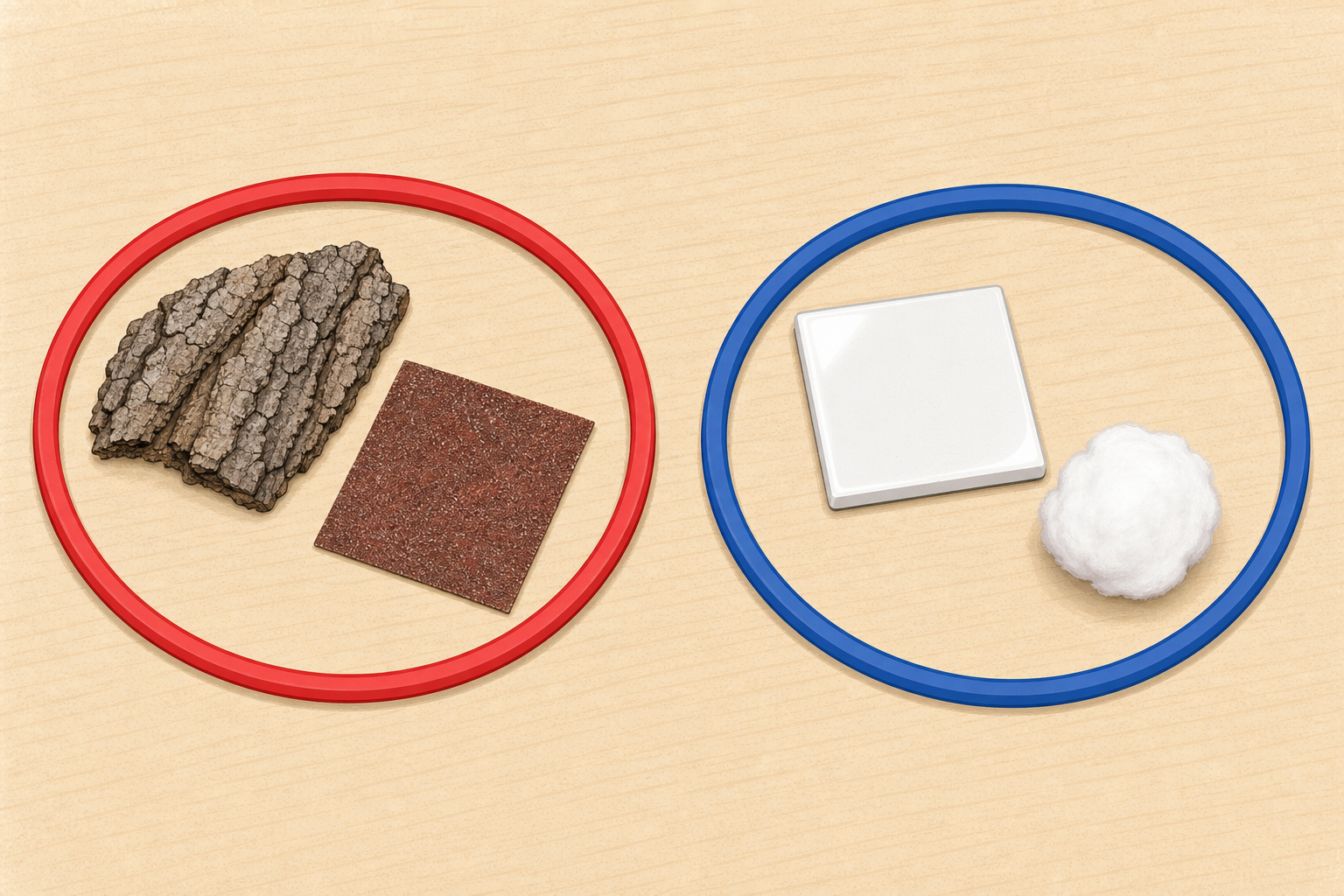
Still at your table, sort with your group. Take one piece at a time. Put it in the bumpy rough hoop or the slippy smooth hoop. Say your reason out loud: I put this here because it feels… If it feels soft or fluffy, say that word too, then choose the hoop that fits best.
Use the same group tables as step 3. Each table already has one materials tray and two hoops or labelled trays with rough and smooth picture/word cards (bumpy/scrapey picture for rough; slippy picture for smooth). Word labels alone are not enough for non-readers. Every group sorts at the same time; there is no waiting carousel. Keep the same set of materials at every table so the sort stays fair and quick.
Agree the sort as a class first: each piece goes one at a time into the rough hoop or the smooth hoop. Children handle one piece, say the property, and place it. Soft or fluffy talk pieces (cotton wool, sponge, soft fabric) may not scrape or slip clearly: let children say soft or fluffy first, then choose the hoop that fits best, or hold those pieces for a short hard/soft oral talk if the group finishes early. If a group finishes early, run a second short sort with the same tray using hard or soft (oral only; not a second board list).
Wooden block: use a sanded, smooth classroom block. If children still disagree on where it belongs, accept either placement with a clear reason and treat it as a talk point, not a correction.
Look-fors:
Common mix-up: a shiny spoon is smooth; foil is smooth and may also look shiny. Celebrate two true properties rather than forcing one "right" answer when both fit. Cotton wool and sponge are often soft or fluffy rather than clearly smooth — if children place them by soft, accept the true feel and talk it through.
Who helps us (vary the wording): who else picks materials with a reason — someone who makes a soft toy or a coat?
Now we sort pictures on the board. Listen to the question: is it rough or smooth? Call out which hoop each picture should go in.
Open the picture-sort interactive on the IWB in explore mode. Read the one question aloud every time: Is it rough or smooth? Children do not need to read the words; each card and hoop has a picture cue.
Cards on screen: sandpaper, bark, rough stick, foil, plastic lid, shiny spoon. Every rough card should scrape; every smooth card should feel even and slippy. Drag with the class after they call out. A card in the "wrong" hoop is a conversation, not a mark: ask stroke it in your mind — does it scrape or slip?
Cotton wool and sponge stay off this board sort; they belong in hard/soft talk at the tray, not as fixed smooth answers.
yourTurn prompt to use: What do the smooth ones feel like when you stroke them?
This board sort consolidates the real hoop sort; it does not replace the hands-on tray.
You're previewing this lesson. Get full access to this lesson and hundreds more — each one ready to teach, with interactive activities, printable resources and pupil progress tracking built in.