Hold up your hand. Is your jumper soft or hard? Is the table top rough or smooth?
Today we will handle real materials and use special describing words called properties.
Keep this beat light. Have one soft fabric scrap and one hard wooden block ready to show only if you want a quick contrast. Do not lay out the full materials tray yet.
Ask two or three children to name how something near them feels. Accept everyday words, then say you will collect better science words next.
A property is a way a material feels, looks, or behaves.
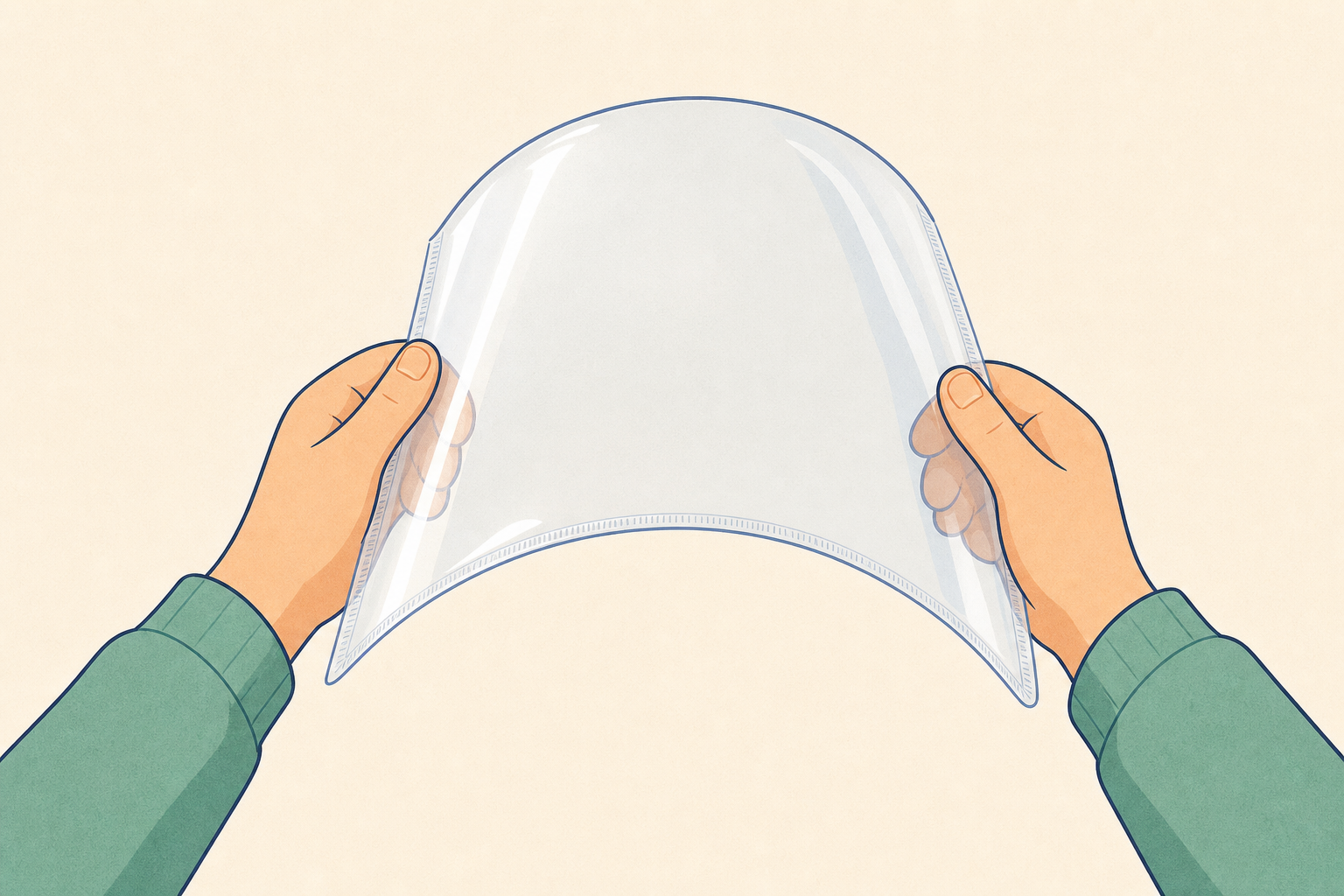
Watch this clear plastic wallet. Is it bendy? Can you see through it?
Today we will sort materials into bendy and not bendy.
Board copy stays short. Hold up one real sample (clear plastic wallet or strip) while you model. Point at other room objects only as light labels for hard/soft, rough/smooth and see-through; do not turn them into a second glossary on the board.
| Concept | Why it matters | Example |
|---|---|---|
| Property — a way a material feels, looks, or behaves (not the name of the material itself) | Properties help us choose the right material for a job later | Saying "this plastic is bendy and see-through" tells more than just saying "plastic" |
| Bendy / not bendy — bendy materials can curve or fold without snapping | Today's sort uses one clear test so groups can compare fairly | Paper and fabric bend; a wooden lolly stick and a metal spoon usually do not |
Light word bank (say while pointing, not as board text): hard/soft (press gently), rough/smooth (fingertip), see-through (look through). Children may use these words when they handle samples, but bendy is the property we sort and record.
Misconception to head off: children often mix up the material name with the property ("it is wood-y"). Gently revoice: "Wood is the material. Hard is a property of this piece of wood."
Worked model (say aloud while handling the clear plastic): "I wonder how this feels and looks. I predict it will be smooth and see-through. I try to bend it: it curves, so it is bendy. I look through it: I can see my hand. Its properties include bendy and see-through."
At your table tray, take turns. Gently try the bendy test on each material: does it curve without snapping? Say bendy or not bendy.
You may also notice hard or soft, rough or smooth, or see-through.
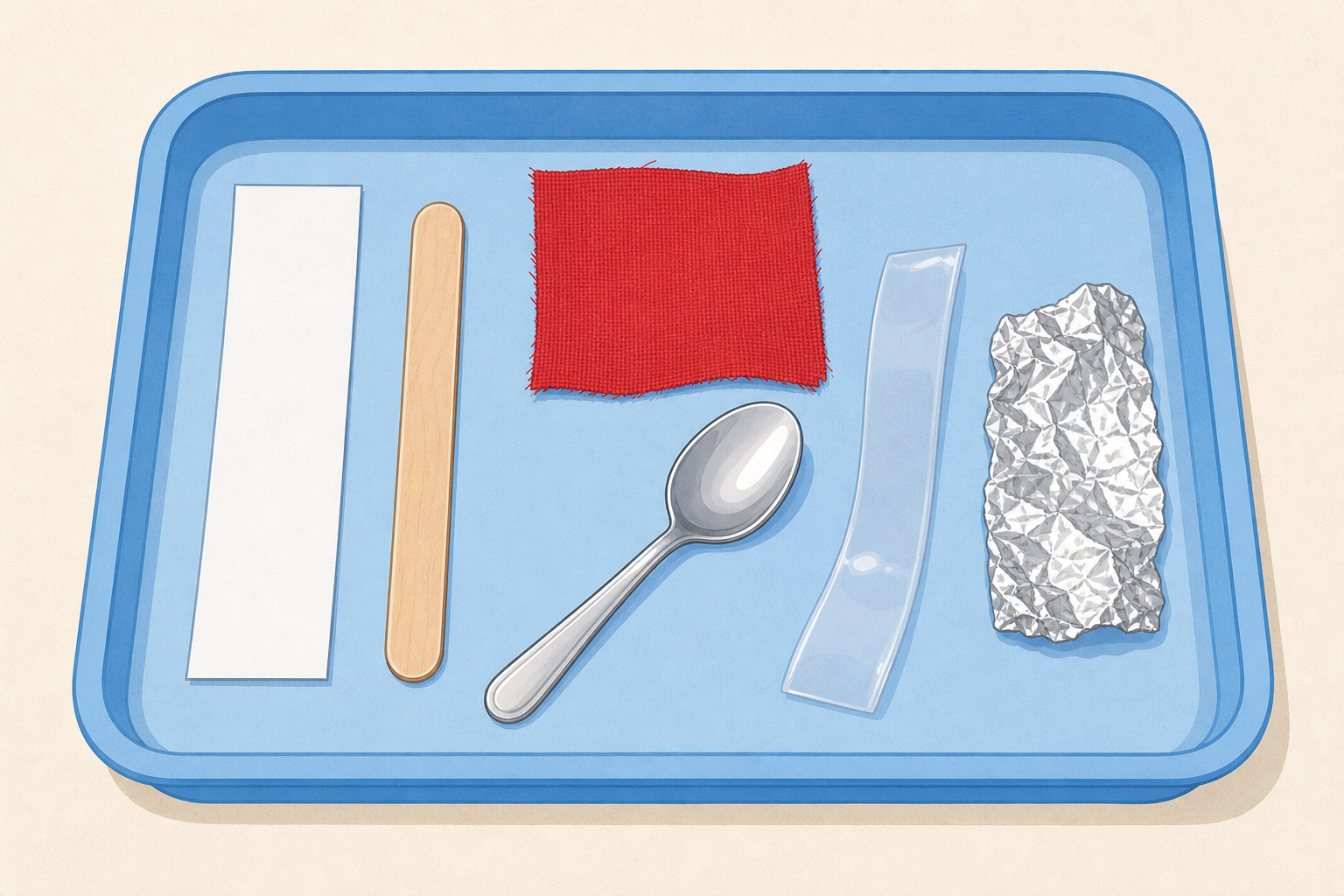
Set one materials tray per group with the same six samples: wooden lolly stick, fabric scrap, paper strip, metal spoon, clear plastic strip from a document wallet, foil piece. Print the provided property word cards if you want them as prompts on the table.
Class bend rule (use this language now and again at the hoops): gently try to bend the sample without breaking it. Curves without snapping = bendy.
The group shares the tray. Each child handles some of the samples; the group agrees one property word for each of the six. Try the bendy test once per sample rather than every child testing every piece.
Circulate and prompt: Does it curve without snapping? Is it bendy or not bendy? Can you see through it? Does it feel rough or smooth? Keep talk concrete. No tasting. Return each piece to the tray.
Look-fors: children using the bendy test carefully; pairs disagreeing politely and checking again by touch; optional use of hard/soft or rough/smooth as extra talk.
We will sort our tray materials into two groups: bendy and not bendy.
In your group, put each material into one of the two hoops. Be ready to say why it went there.
State the class rule clearly before groups start: gently try to bend the sample without breaking it. Curves without snapping = bendy. Place two hoops or two clear desk zones labelled bendy / not bendy (word cards only; no teacher-made poster art needed).
Use the fixed tray list only: wooden lolly stick, fabric scrap, paper strip, metal spoon, clear plastic strip, foil piece.
If a group finishes early, invite them to re-sort the same tray by see-through / not see-through and whisper to you what changed (oral stretch only; not recorded today).
Common sticky point: thick card or stiff plastic that bends a little. Accept "a bit bendy" talk, then decide together using the class rule.
Common sticky point: some children treat metal as always not-bendy. Revoice: "Metal is the material; the spoon is not bendy, but the foil is metal and bendy. Property is not the same as the material name."
Look at the interactive activity on the board. The materials match your tray: paper strip, wooden lolly stick, fabric scrap, metal spoon, clear plastic strip and foil piece.
We will answer: Is it bendy? Call out which group each one belongs in: bendy or not bendy.
Drive the sorting-tree in explore mode on the IWB. Name the six cards exactly as they appear and match the tray: paper strip, wooden lolly stick, fabric scrap, metal spoon, clear plastic strip, foil piece. Ask the class the yes/no question Is it bendy? before you place each card.
Fold the watchers in: Do you agree with that group? What would your hands tell you? Link back to the real tray sort so the board is a recap, not a replacement.
Expected groups: bendy — paper strip, fabric scrap, clear plastic strip, foil piece; not bendy — wooden lolly stick, metal spoon. Accept short debate if a sample feels stiff, then re-check with the class bend test.
You're previewing this lesson. Get full access to this lesson and hundreds more — each one ready to teach, with interactive activities, printable resources and pupil progress tracking built in.