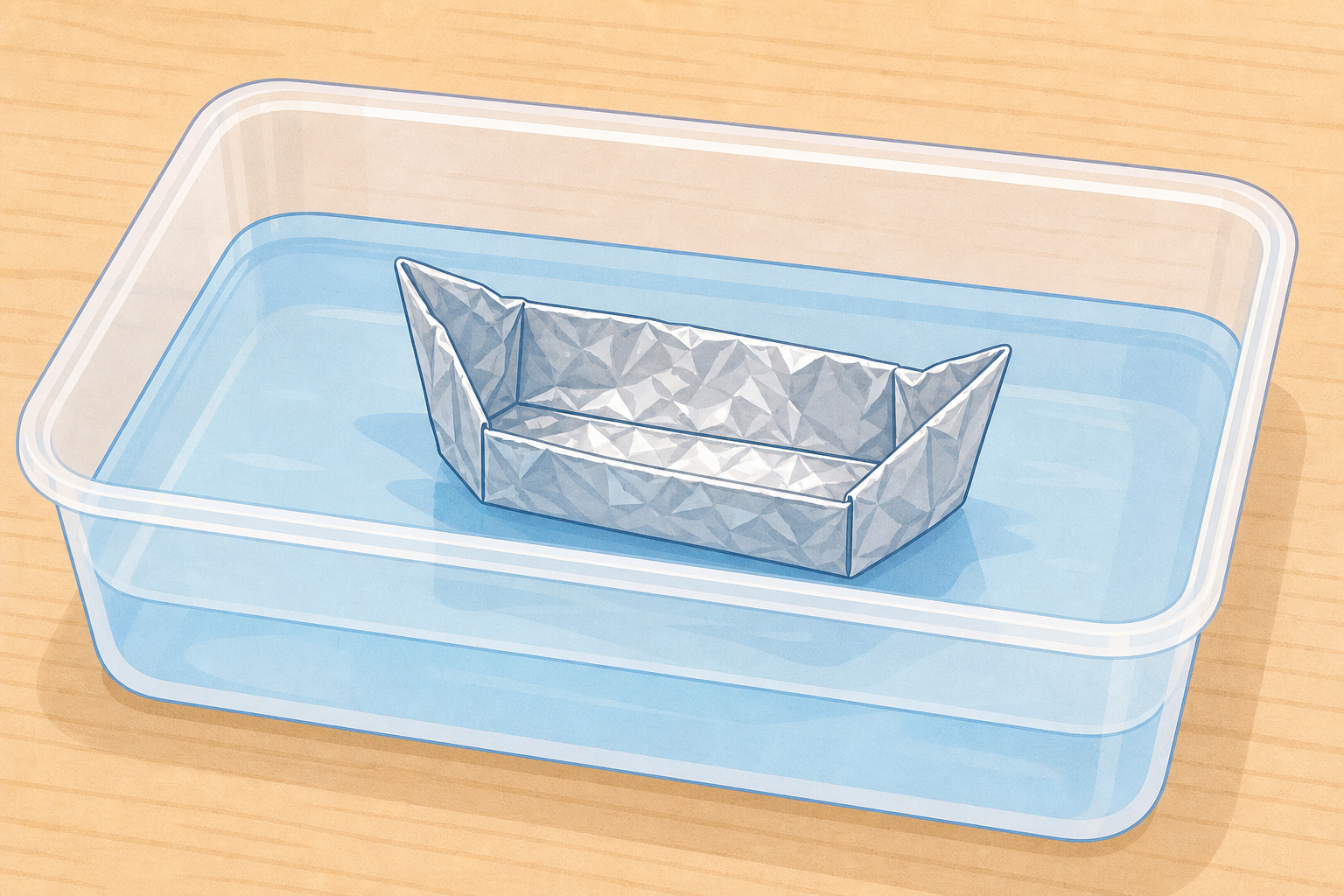
This tiny boat has a job: stay on the water and carry things without sinking, like a little ferry in the harbour. What shape do you think will float best and hold the most without going under?
Hold up a simple foil boat (or a picture of a small boat on a river or harbour). Keep the hook light: one curiosity question only. Do not hand out foil or set up trays yet. Use everyday words here; save the word load for step 2 when you teach it.
Key question: What shape do you think will float best and hold the most without going under?
Take three or four quick ideas. Link gently to Irish rivers, harbours and ponds where children may have seen boats (a ferry in the harbour, a rowboat on the Shannon, or ducks on a local pond).
Today's words (one at a time):
Float
Stay on top of the water.
Load
The things the boat carries.
Improve
Change it so it works better.
Will a boat with high sides hold more counters than a flat one?
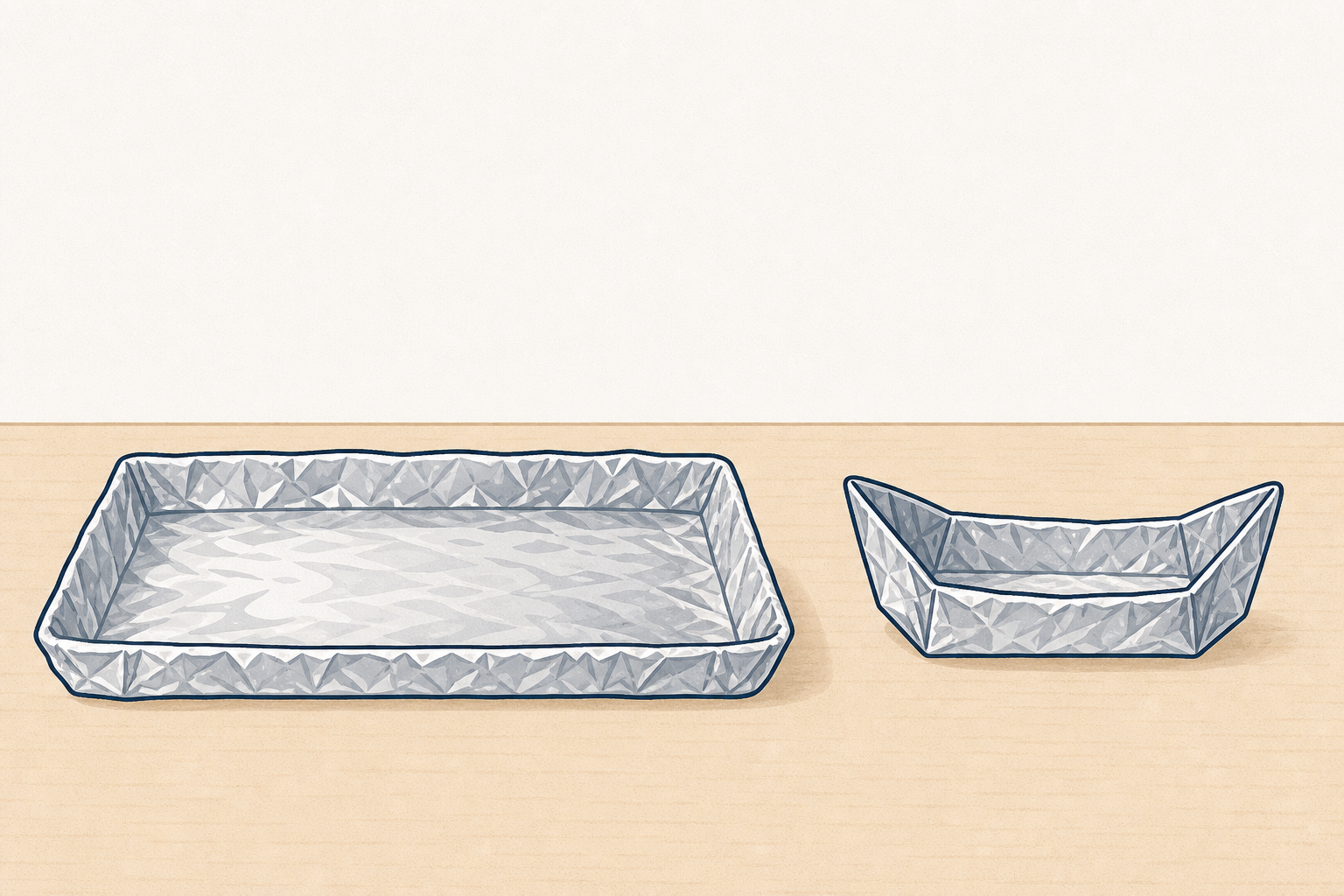
Teach the ideas briefly before building. Read the board text aloud one word at a time, pause after each meaning, and point to your foil demo boat so children meet float, then load, then improve as separate beats (not one dense block). Project only the short board text; keep the full table here for you.
| Concept | Why it matters | Example |
|---|---|---|
| Float — when something stays on top of the water instead of going under | If our boat sinks straight away, we cannot test how many counters it can carry | A foil boat with turned-up sides sits up on the water tray; a tight crumpled ball of foil often sinks or sits low |
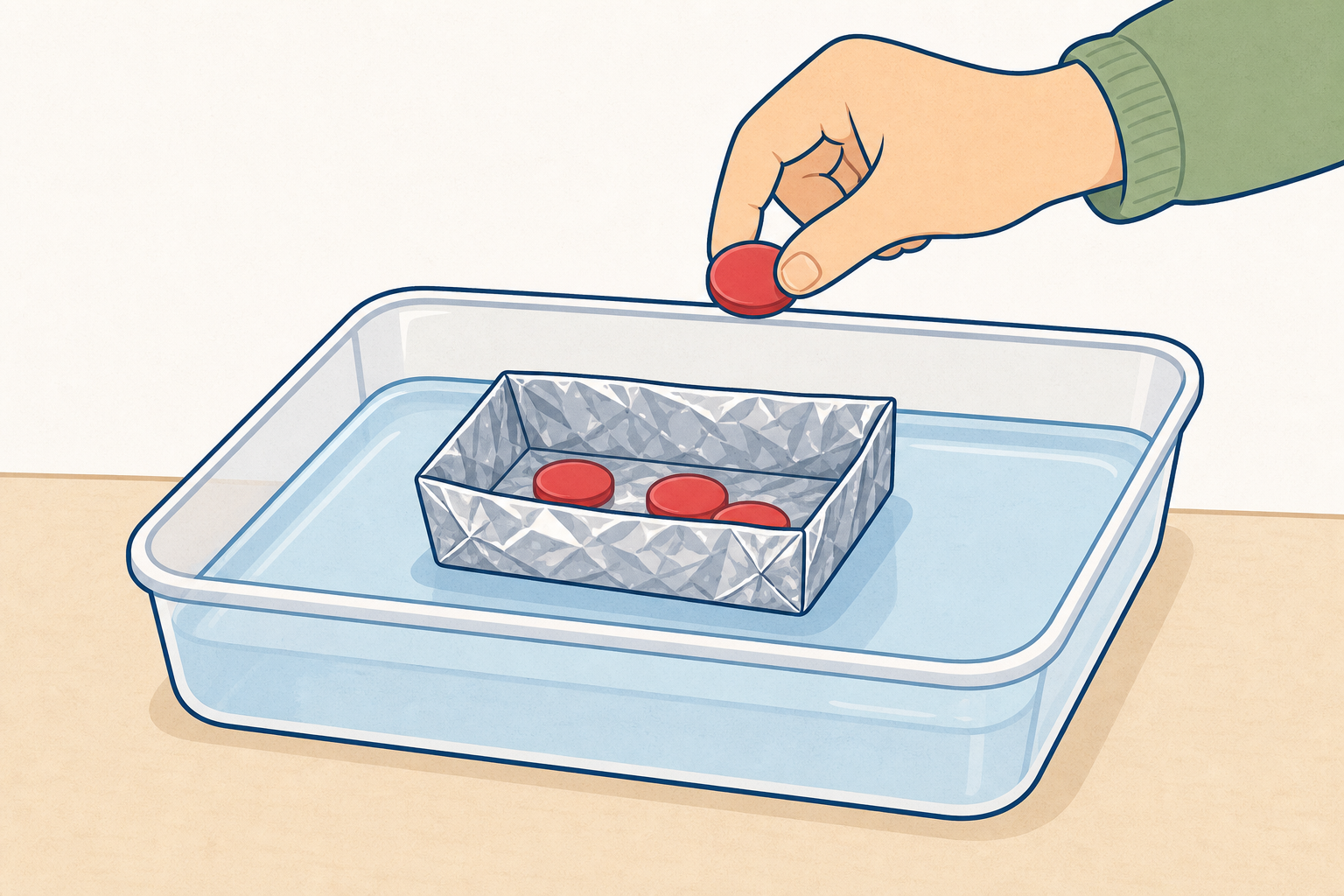
| Load — the things you put into a boat for it to carry | We add counters one by one so we can see when the boat starts to sink | Five plastic counters resting in the bottom of the boat before the water creeps in |
| Improve — change something so it works better | Makers try once, notice a problem, then change the shape and try again | Folding the sides higher after the first boat let water in too soon |
Lesson rule (not part of the word meaning): only one improvement this lesson — keep it Stage 2 light.
Misconception to head off: children often say heavy things always sink and light things always float. Keep the talk on shape (sides, a hollow middle) rather than weight alone. Hold up the open boat beside a tight foil ball so the shape contrast is visible.
STEM eyes: ask where children have seen boats on Irish rivers, harbours or ponds.
With your group, make a small boat from the foil on your table. Give it a flat bottom and sides so water stays out. When you think it will float, bring it to the water tray and check.
Fill shallow water trays (one per group or shared stations) before this make step — groups need water ready to float-check their empty boat. Tear foil sheets roughly 20 cm by 20 cm. Put counters or coins in small pots (for step 4, not on the make tables yet). Lay towels beside each tray. Keep modelling clay with you for leaky-corner rescue only. Keep scrap paper and lolly sticks aside for early-finisher sails after a successful empty float. Roll sleeves up before water work.
Only now put one foil sheet per child or pair on each table, with towels and access to the water tray. Do not put clay, sticks or scrap paper on the make tables with the foil.
Groups of two or three. Model one quick boat yourself: press a flat bottom, fold four sides up, pinch the corners so they hold. Think aloud: I wonder if high sides will keep the water out… I predict a flat tray shape will float…
Core build is foil only. Hold extras back:
Look-fors:
Differentiation: offer pre-folded corner demos for groups who struggle; challenge early finishers to add a small sail from scrap paper and a lolly stick (the boat must still float on its own first).
Safety: wipe spills straight away; no splashing; keep counters out of mouths.
Use your demo boat at the front tray. Keep this model short — about two minutes — so groups still have time for their own load and the journal page:
Then release groups to their trays. Circulate and ask: What will you change once? Why? Only one improvement this lesson. The required path is oral prediction, first load count, and one improve. A second load is a bonus only if time; many groups will stop after the improve and that is fine. Protect the journal record next.
What to expect: wide, shallow boats often take fewer counters; boats with higher pinched sides usually take more. If every boat sinks at once, the foil is too small or the sides are open at the corners — show pinching corners again.
Class fold-in: when one group is at a shared tray, ask watchers what they predict and what they notice — watching is real participation.
On your Investigation Journal page, write or draw:
Pupils record on the paper Investigation Journal page (one sheet per child from materials). Say what to capture, not where boxes sit on the page. Required three-part record:
Optional fourth line only if the group actually did a second load: more, fewer, or the same. If they did not get a second try, they mark no second try or leave that part blank — do not push them to invent a comparison.
Scribes for emerging writers are fine; drawings of the before and after shape are valuable. Keep this beat calm — trays can stay out but loading stops so pages stay dry. Protect the full six minutes; do not fold this into tidy-up.
You're previewing this lesson. Get full access to this lesson and hundreds more — each one ready to teach, with interactive activities, printable resources and pupil progress tracking built in.