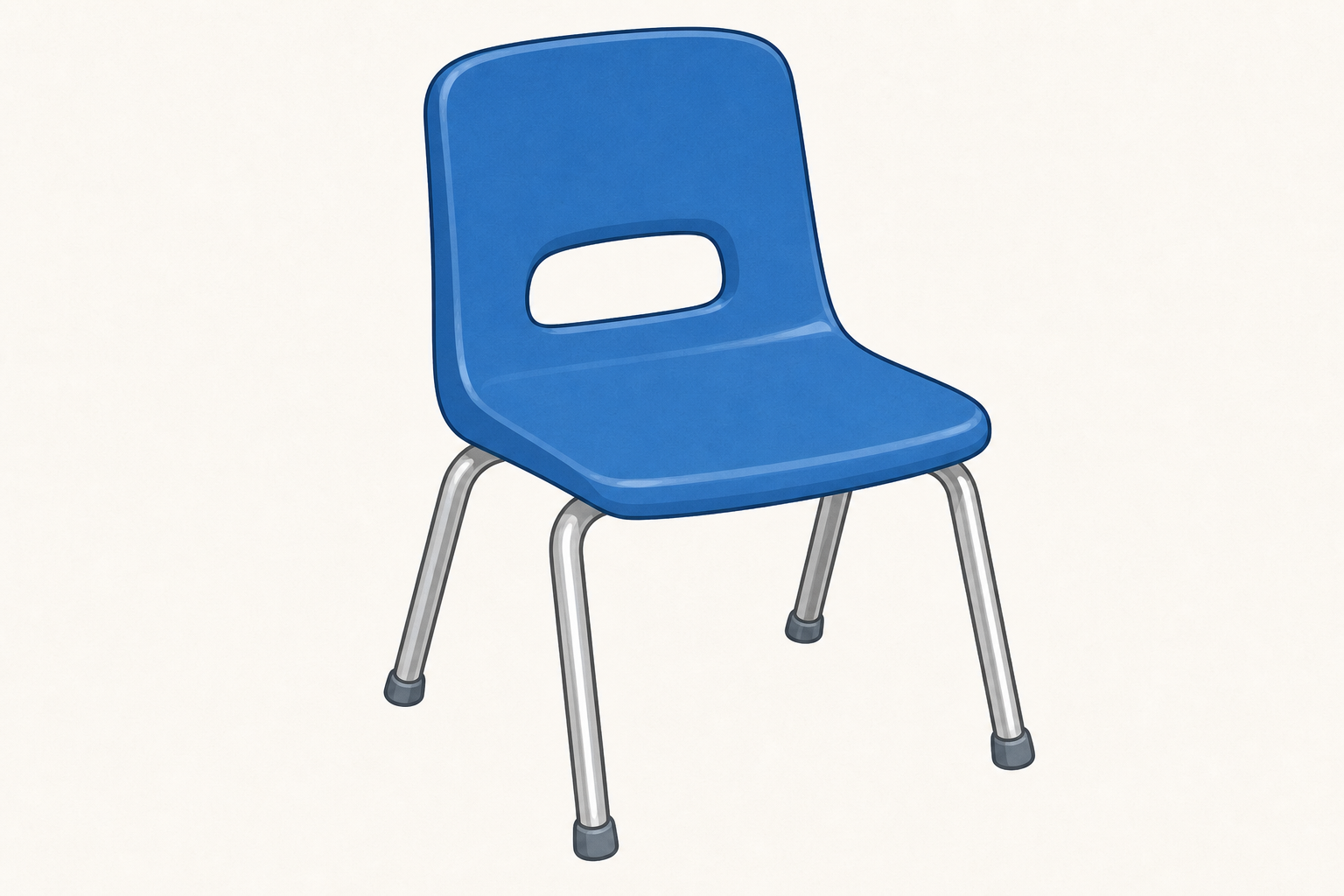
 Look around our classroom. What are the things near you made of? Is your chair wood, plastic, or metal? Hands up: one thing you can see and a guess about its material.
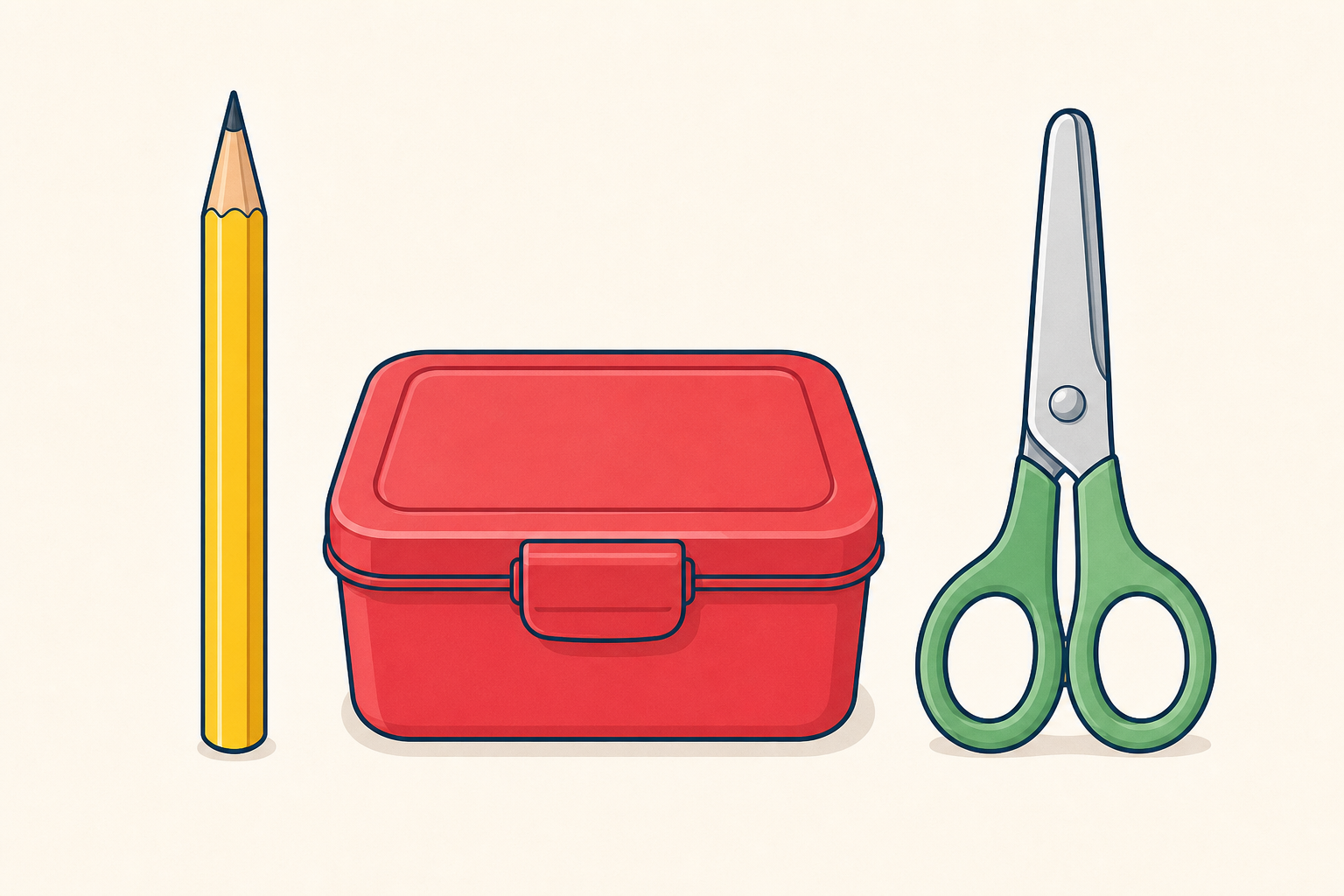 Today's big word is material: what something is made of.
Look at these real things. A pencil is mostly wood. A lunch box or bottle lid is often plastic. A coat hook or scissors blade is often metal.
Our word bank on the board also shows glass, fabric and paper. We will use those words on the hunt. You do not need to learn every name by heart before we start.
Which material do you think your pencil is made of?
Your teacher has put you in a group and pointed to your classroom zone. Stay with your group in that zone.
Look carefully. Gently touch only the things your teacher said are safe to touch. Point to each find and say: this is a ___. It is made of ___ (use a word from the word bank on the board: wood, plastic, metal, glass, fabric or paper).
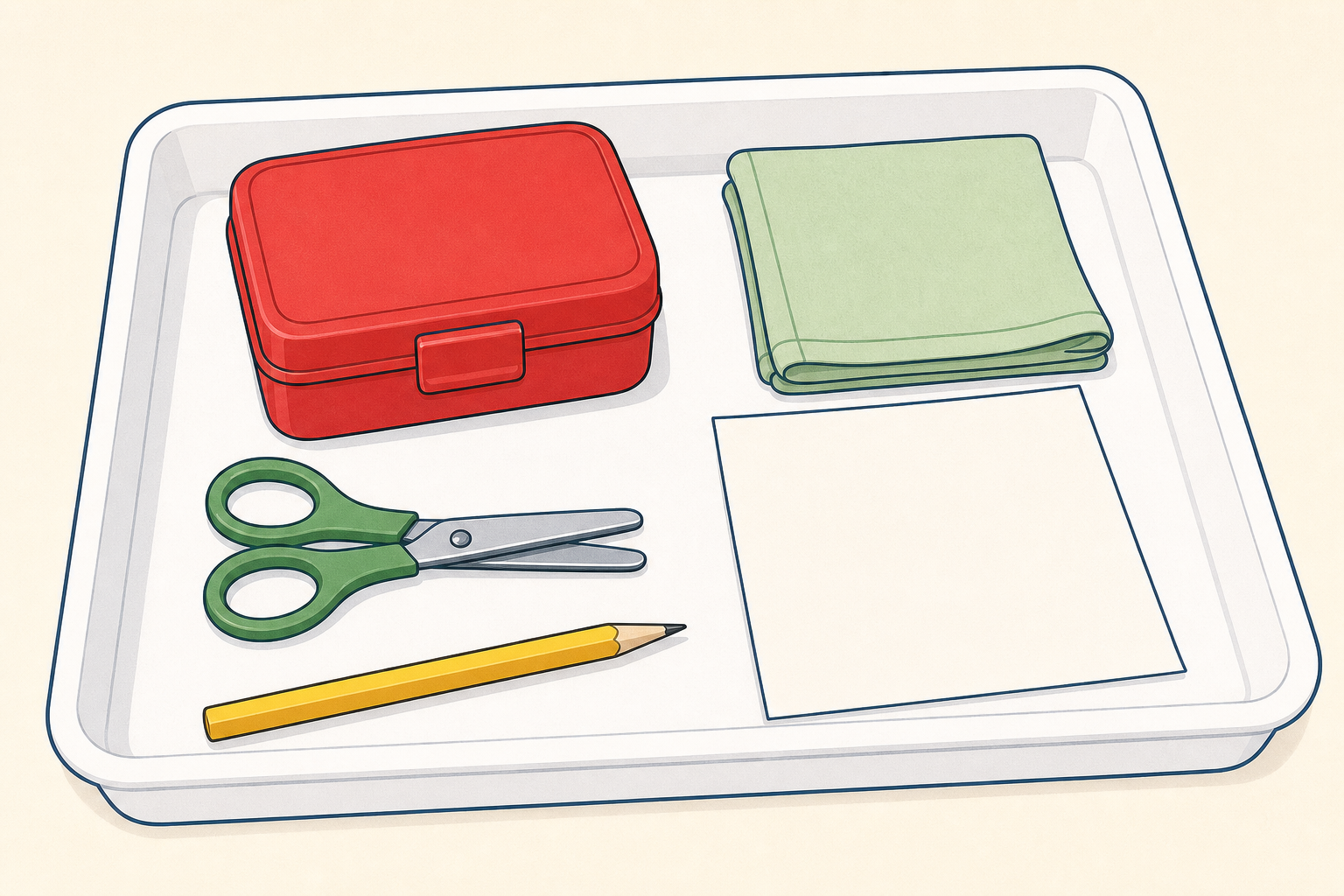 Come back together. As a group, pick one favourite find from the hunt. If it is small and your teacher says yes, put it on the sharing tray at the front. If it must stay put (like a window or door), one person draws it quickly on scrap paper instead.
Look and feel your favourite together and name its material. Your teacher will choose who speaks for your group.
On your Investigation Journal page, record three finds from the whole hunt (not only the tray favourite). For each find, write the material word from the word bank, and show the object as a word or a picture. A drawing counts as the object.
Unlock the full learning experience
You're previewing this lesson. Get full access to this lesson and hundreds more — each one ready to teach, with interactive activities, printable resources and pupil progress tracking built in.
This lesson is copyright of Coding Ireland 2017 - 2025. Unauthorised use, copying or distribution is not allowed.