A complete year of Maths, delivered by teacher-led interactive-whiteboard lessons, a printed pupil Activity Book, and a Teacher Resource Book, built to the NCCA Primary Mathematics Curriculum.
Click any lesson with to preview it
Open the year and Stage 2 by making every number to 20 an old friend. Re-anchor counting and numerals to 10, meet the teen numbers as a ten and some more on the ten-frame, then read, write, compare and order every number to 20 on the number line, with the hundred square in the closing review.
| Counting to 10, a Careful Re-anchor | ||
| Zero to Ten on the Number Line | ||
| Eleven and Twelve, a Ten and Some More | ||
| Thirteen, Fourteen and Fifteen | ||
| Sixteen, Seventeen and Eighteen | ||
| Nineteen and Twenty, the Second Frame Fills up | ||
| Writing the Teen Numbers, the Ten Writes First | ||
| Counting Forwards and Back Within 20 | ||
| Estimate, Then Count | ||
| Comparing Numbers to 20, Which Is More? | ||
| Ordering Numbers to 20 | ||
| Numbers to 20 on the Hundred Square, Module Review |
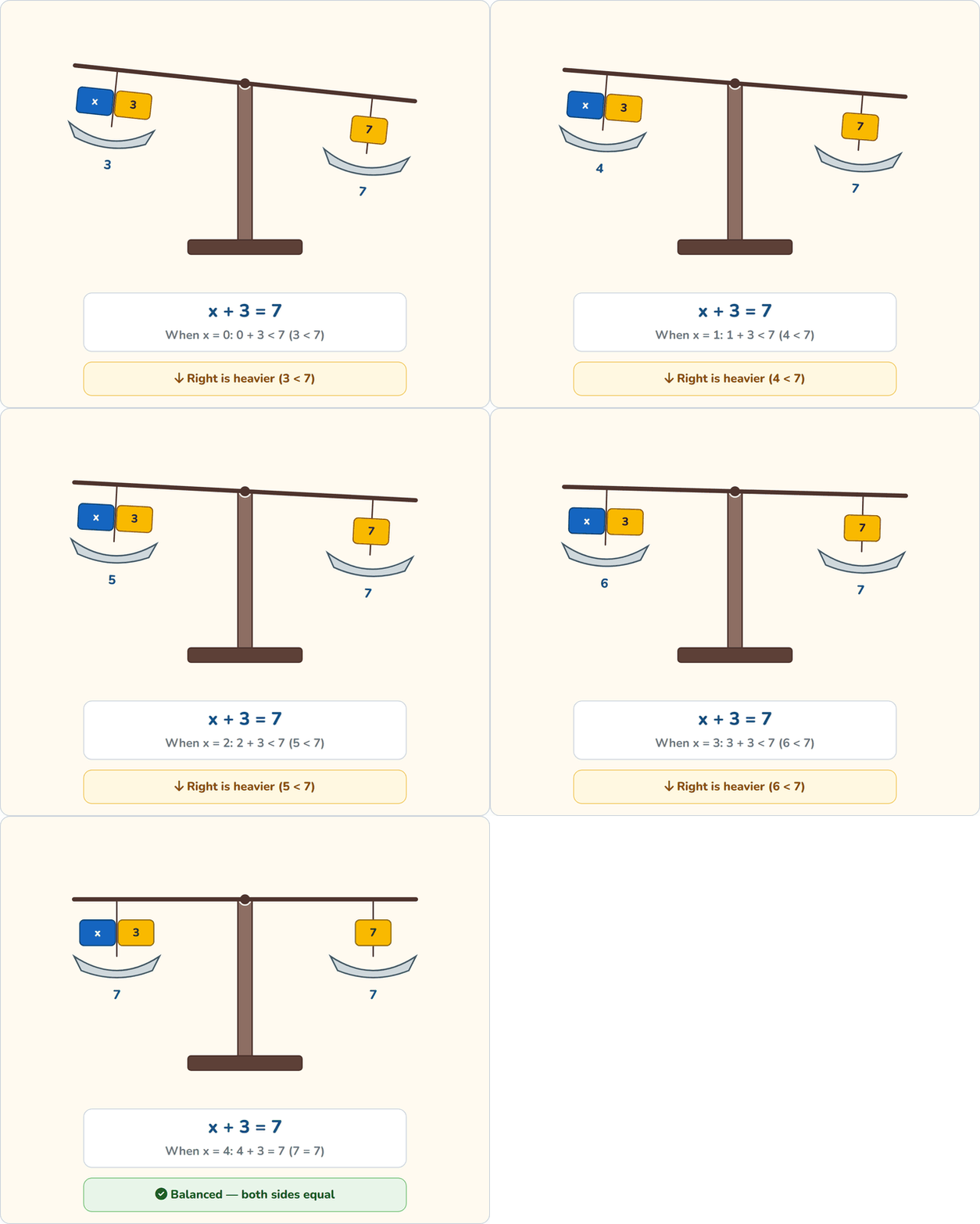
Addition begins as combining sets, then the plus and equals symbols land and pupils write their first number sentences. The block builds the addition-fact toolkit within 20 (bonds to 10, counting on, turnarounds, doubles, near doubles, making ten) and closes with story problems and a facts round-up.
| Combining Two Sets, How Many Altogether? | ||
| The Plus Sign, the Joining Sign | ||
| The Equals Sign, a Balance Not an Answer | ||
| Reading and Writing Whole Number Sentences | ||
| Bonds of 6 and 7, Parts That Make the Whole | ||
| Bonds of 8 and 9 | ||
| Bonds of 10, Ten's Best Friends | ||
| Counting on 1, 2, and Adding 0 Sample | ||
| Turnarounds, 2 Plus 9 Is 9 Plus 2 | ||
| Doubles, Two of the Same | ||
| Near Doubles, a Double and One More | ||
| Making Ten to Add, Filling the Frame First | ||
| Addition Stories, Picking the Right Tool | ||
| Our Addition Toolkit, Module Review and Facts Round-up |
Subtraction begins as taking away, then the minus symbol and full take-away sentences land, completing the number-sentence story. The block opens subtraction's second meaning (difference), links every take-away back to bonds, binds addition and subtraction in fact families, and closes with story problems and a facts round-up.
| Taking Away, How Many Are Left? | ||
| The Minus Sign, the Taking-away Sign | ||
| Take-away Sentences, the Whole Story | ||
| Counting Back 1, 2, and Taking Away 0 | ||
| Difference, How Many More? | ||
| Bonds Undo the Take, Subtraction Hides Inside Every Bond | ||
| Fact Families, Four Facts from One Picture | ||
| Taking from the Teens, Counting Back Within 20 | ||
| Back Through Ten, Break the Jump at the Ten | ||
| Count up to Take Away, When the Numbers Are Close | ||
| Subtraction Stories, Did Some Leave or Are We Comparing? | ||
| Our Subtraction Toolkit, Module Review and Facts Round-up |
The biggest idea of the year: ten loose units bundle into one ten, and where a digit sits decides its value. Pupils trade units for ten-rods, rebuild the teens, climb the decade numbers, build every number to 99, and use the hundred square as a number map for one more, one less, ten more, ten less. Comparing by tens and estimate-group-count close the block.
| Bundling Ten, Ten Little Ones Make One Ten | ||
| The Teens Are One Ten and Units | ||
| The Decade Numbers, Whole Bundles None Left Over | ||
| Building Any Number to 99, Tens and Units Together | ||
| Where a Digit Sits, 34 and 43 Are Not the Same | ||
| The Hundred Square, Our Number Map | ||
| One More, One Less, Ten More, Ten Less | ||
| Comparing Numbers to 99, the Tens Decide First | ||
| Estimate, Group, Count, Tens Make Big Counts Easy | ||
| Tens and Units, Module Review on the Number Map |
Pattern thinking turns counting into early algebra. Pupils copy, continue and mend repeating patterns and name the unit of repeat, build growing staircases, then discover skip counting in 2s, 5s and 10s on the hundred square and number line. Missing-number puzzles and a pattern-detective review close the block.
| Repeating Patterns, Copy It, Continue It, Say It | ||
| The Unit of Repeat, the Chunk That Repeats | ||
| Growing Patterns, the Staircase | ||
| Counting in 2s, Two at a Time | ||
| Jumps of 2 on the Number Line, the Pattern in the Endings | ||
| Counting in 10s, a Bundle at a Time | ||
| Counting in 5s, a Hand at a Time | ||
| Skip Counting Does Real Jobs, 2s, 5s or 10s? | ||
| Missing Numbers, the Rule Finds Them | ||
| Pattern Detectives, Module Review |
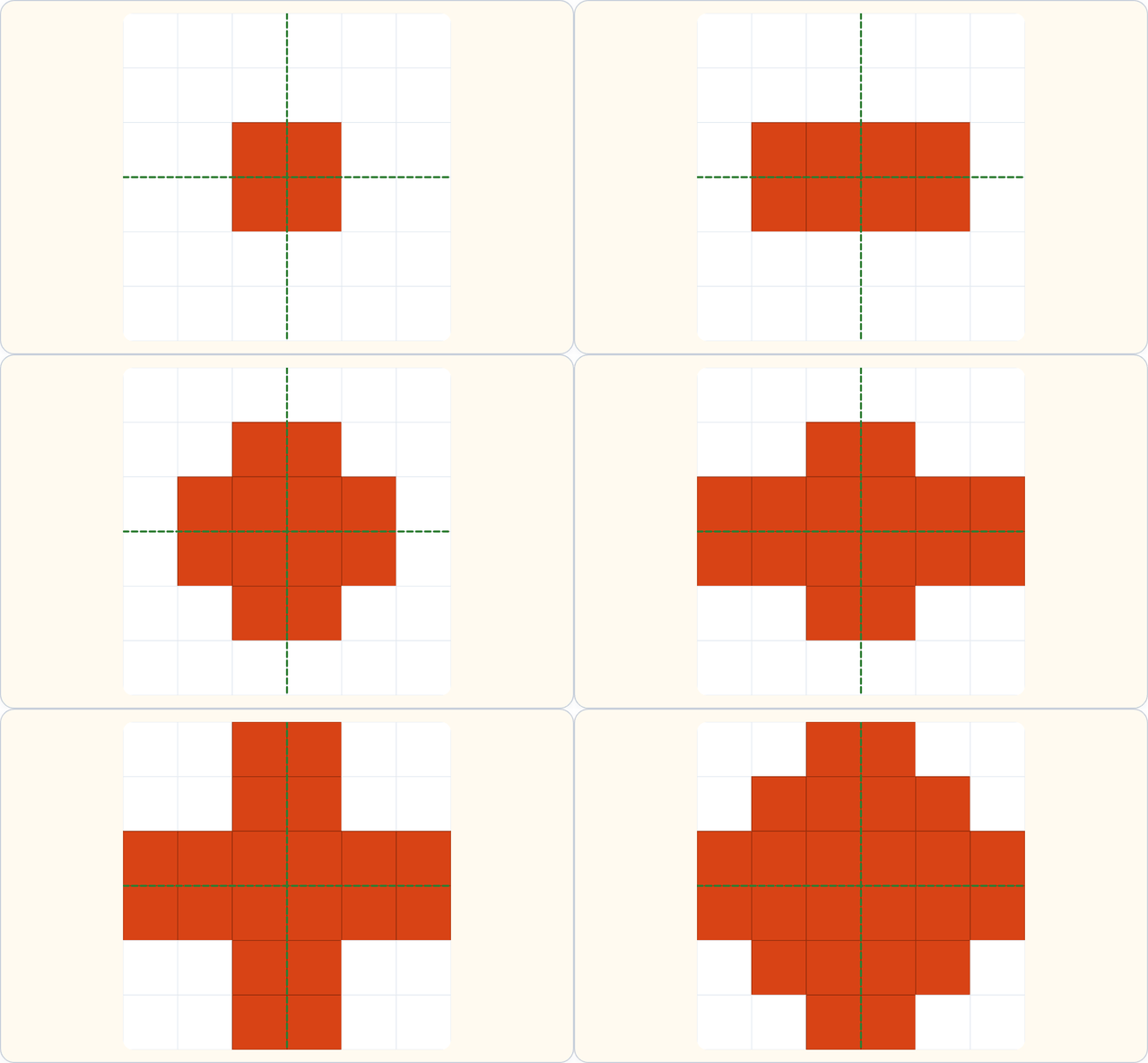
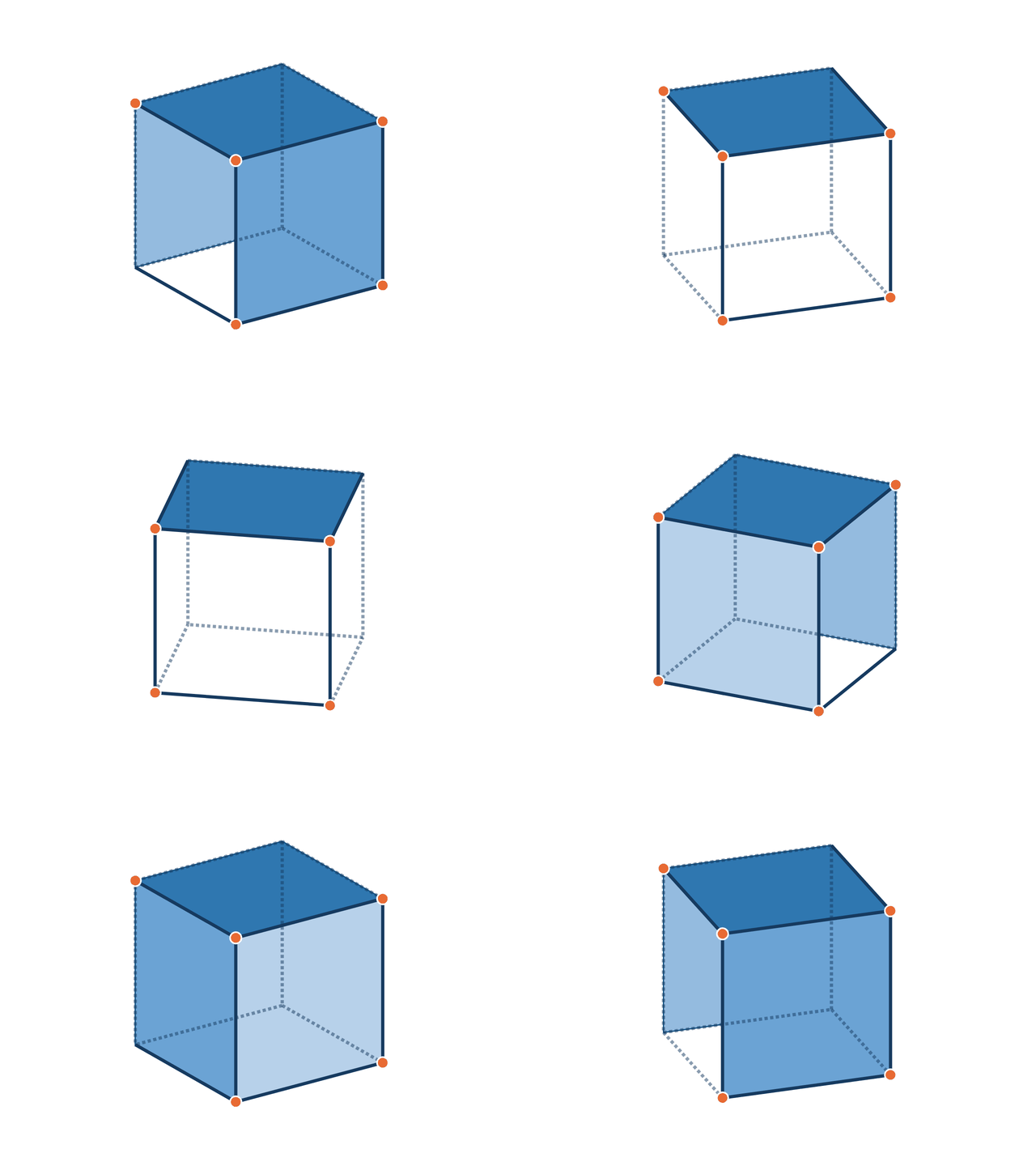
Shape opens the geometric eye. The block names and describes flat shapes by sides and corners, builds new shapes from old, picks up the solid shapes and finds the flat faces hiding on them. Position words, routes on a grid, and the first slides, flips and turns close the block.
| Flat Shapes All Around Us: Square, Circle, Triangle, Rectangle | ||
| Sides and Corners, a Shape Tells Us Its Own Name | ||
| Square and Rectangle, the Four-corner Cousins | ||
| Triangles of Every Kind | ||
| Circles and Semicircles | ||
| Making New Shapes from Old, Shapes Hiding Inside Shapes | ||
| Solid Shapes, the Cube and the Cuboid | ||
| Cylinder and Sphere, the Rolling Shapes | ||
| The Flat Faces Hiding on Solids | ||
| Stack, Roll or Slide, Building with Solids | ||
| Left, Right, Above, Below, Between: Position Words | ||
| Follow the Route, Directions on a Grid | ||
| Slide, Flip and Turn, Moving Shapes Without Changing Them | ||
| Shape Detectives, Module Review |
Measuring turns comparing into counting. Pupils compare and order lengths, weights and capacities directly, measure with their own units, and discover why everyone's answer disagrees, before standard units arrive: the metre and centimetre with a real ruler, the kilogram on the balance, and the litre on the label. Estimate-then-measure runs through the whole block, and the ruler joins core kit from here.
| Longer, Shorter, the Same, Comparing Lengths Fairly | ||
| Measuring with Our Own Units, Cubes End to End | ||
| Everyone Got a Different Answer, Why We Need the Metre | ||
| The Centimetre, a Small Unit for Small Things | ||
| Measuring Carefully, Zero at the Start Read the End | ||
| Estimate, Then Measure, Length in Centimetres | ||
| Heavier or Lighter, the Balance Tells the Truth | ||
| Weighing with Cubes, Giving Weight a Number | ||
| The Kilogram, the Shop's Unit of Weight | ||
| Estimate, Then Weigh, Ordering by Weight | ||
| Full, Empty and Holds More, Comparing Capacity | ||
| Measuring with Cupfuls | ||
| The Litre, the Carton's Unit | ||
| Measuring Round-up, Pick the Tool and the Unit, Module Review |
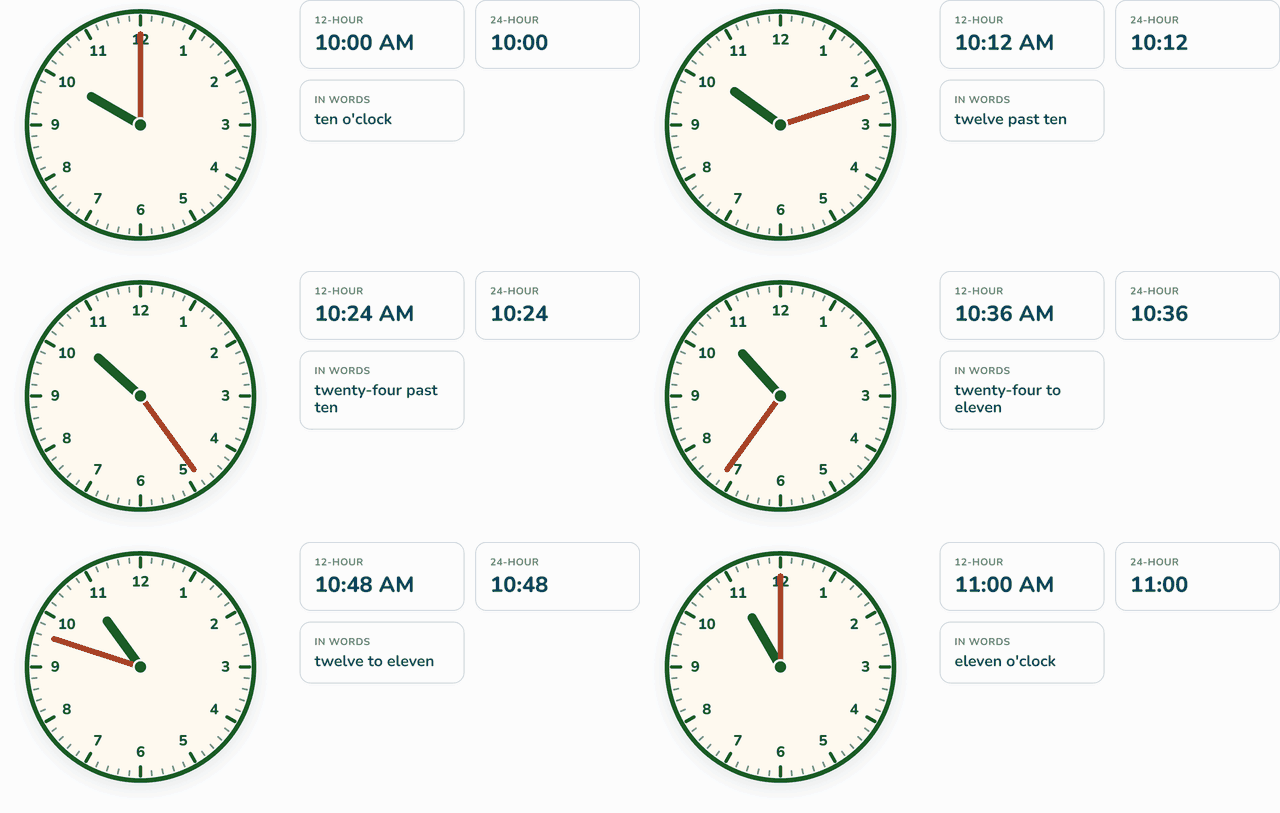
Time begins with the rhythms pupils live: the days of the week, yesterday and tomorrow, the months and seasons, and which jobs take a moment or a long time. Then the clock face arrives with its two hands, o'clock read off the hour hand, and, late in the block, half past. A sort-the-clocks review closes the module.
| Days of the Week, the Week Goes Round | ||
| Yesterday, Today and Tomorrow | ||
| The Months and the Seasons | ||
| How Long Does It Take? Comparing Time | ||
| Meet the Clock Face, Two Hands and Twelve Numbers | ||
| O'clock, the Hour Hand Points the Way | ||
| Reading O'clock Times Through the Day | ||
| Matching O'clock Times to Our Day | ||
| Half Past, the Hour Hand Slips Halfway | ||
| O'clock and Half Past, Module Review |
Money puts numbers to work in the class shop. Pupils meet the cent coins from 1c to 50c, learn to sort them by value not size, count on from the biggest coin to total a purse, make the same amount in more than one way, and reach totals to 50c. The euro arrives as a coin worth a hundred cent, and a class-shop review has pupils pay exact prices.
| Meet the Cent Coins: 1c, 2c and 5c Sample | ||
| The Bigger Cent Coins: 10c, 20c and 50c | ||
| Which Coin Is Worth More? Sorting by Value | ||
| How Much in the Purse? Counting on | ||
| The Same Amount, Made Different Ways | ||
| Bigger Totals, to 20c and to 50c | ||
| Meet the Euro, the €1 Coin | ||
| The Class Shop, Module Review |
Fractions begin with fair sharing between two. Pupils cut a whole into two equal parts and name one a half, learn that only equal parts count as halves, and see that two halves rebuild the whole. Halving reaches beyond shapes to a group of objects and to halves spotted around the classroom, and a three-ways review closes the block.
| Fair Shares for Two, One Half | ||
| Equal Parts Matter, Is It Really a Half? | ||
| Two Halves Make One Whole, the Fraction Strip | ||
| Half of a Set, Sharing a Group Fairly | ||
| Spot the Half, Halves All Around Us | ||
| Halves Round-up, Module Review |
Data lets the class answer its own questions with evidence. Pupils sort things into groups, keep count with tally marks and the five-bar gate, pose a question and tally the answers, then read the tally to find the most and fewest. The same data is shown three ways, and a data-detectives review ties the strand together.
| Sorting Into Groups, Where Data Begins | ||
| Keeping Count with Tally Marks | ||
| Ask a Question and Tally the Answers | ||
| Reading Our Tally Chart: Most, Fewest, How Many | ||
| The Pictogram, One Picture for One | ||
| Reading a Pictogram, Comparing the Rows | ||
| The Block Graph, One Block for Each One | ||
| Reading a Block Graph, the Tallest Tells the Most | ||
| From Question to Graph, the Whole Data Journey | ||
| Data Detectives, Module Review |
Open the year and Stage 2 by making every number to 20 an old friend. Re-anchor counting and numerals to 10, meet the teen numbers as a ten and some more on the ten-frame, then read, write, compare and order every number to 20 on the number line, with the hundred square in the closing review.
| Counting to 10, a Careful Re-anchor | ||
| Zero to Ten on the Number Line | ||
| Eleven and Twelve, a Ten and Some More | ||
| Thirteen, Fourteen and Fifteen | ||
| Sixteen, Seventeen and Eighteen | ||
| Nineteen and Twenty, the Second Frame Fills up | ||
| Writing the Teen Numbers, the Ten Writes First | ||
| Counting Forwards and Back Within 20 | ||
| Estimate, Then Count | ||
| Comparing Numbers to 20, Which Is More? | ||
| Ordering Numbers to 20 | ||
| Numbers to 20 on the Hundred Square, Module Review |
Addition begins as combining sets, then the plus and equals symbols land and pupils write their first number sentences. The block builds the addition-fact toolkit within 20 (bonds to 10, counting on, turnarounds, doubles, near doubles, making ten) and closes with story problems and a facts round-up.
| Combining Two Sets, How Many Altogether? | ||
| The Plus Sign, the Joining Sign | ||
| The Equals Sign, a Balance Not an Answer | ||
| Reading and Writing Whole Number Sentences | ||
| Bonds of 6 and 7, Parts That Make the Whole | ||
| Bonds of 8 and 9 | ||
| Bonds of 10, Ten's Best Friends | ||
| Counting on 1, 2, and Adding 0 Sample | ||
| Turnarounds, 2 Plus 9 Is 9 Plus 2 | ||
| Doubles, Two of the Same | ||
| Near Doubles, a Double and One More | ||
| Making Ten to Add, Filling the Frame First | ||
| Addition Stories, Picking the Right Tool | ||
| Our Addition Toolkit, Module Review and Facts Round-up |
Subtraction begins as taking away, then the minus symbol and full take-away sentences land, completing the number-sentence story. The block opens subtraction's second meaning (difference), links every take-away back to bonds, binds addition and subtraction in fact families, and closes with story problems and a facts round-up.
| Taking Away, How Many Are Left? | ||
| The Minus Sign, the Taking-away Sign | ||
| Take-away Sentences, the Whole Story | ||
| Counting Back 1, 2, and Taking Away 0 | ||
| Difference, How Many More? | ||
| Bonds Undo the Take, Subtraction Hides Inside Every Bond | ||
| Fact Families, Four Facts from One Picture | ||
| Taking from the Teens, Counting Back Within 20 | ||
| Back Through Ten, Break the Jump at the Ten | ||
| Count up to Take Away, When the Numbers Are Close | ||
| Subtraction Stories, Did Some Leave or Are We Comparing? | ||
| Our Subtraction Toolkit, Module Review and Facts Round-up |
The biggest idea of the year: ten loose units bundle into one ten, and where a digit sits decides its value. Pupils trade units for ten-rods, rebuild the teens, climb the decade numbers, build every number to 99, and use the hundred square as a number map for one more, one less, ten more, ten less. Comparing by tens and estimate-group-count close the block.
| Bundling Ten, Ten Little Ones Make One Ten | ||
| The Teens Are One Ten and Units | ||
| The Decade Numbers, Whole Bundles None Left Over | ||
| Building Any Number to 99, Tens and Units Together | ||
| Where a Digit Sits, 34 and 43 Are Not the Same | ||
| The Hundred Square, Our Number Map | ||
| One More, One Less, Ten More, Ten Less | ||
| Comparing Numbers to 99, the Tens Decide First | ||
| Estimate, Group, Count, Tens Make Big Counts Easy | ||
| Tens and Units, Module Review on the Number Map |
Pattern thinking turns counting into early algebra. Pupils copy, continue and mend repeating patterns and name the unit of repeat, build growing staircases, then discover skip counting in 2s, 5s and 10s on the hundred square and number line. Missing-number puzzles and a pattern-detective review close the block.
| Repeating Patterns, Copy It, Continue It, Say It | ||
| The Unit of Repeat, the Chunk That Repeats | ||
| Growing Patterns, the Staircase | ||
| Counting in 2s, Two at a Time | ||
| Jumps of 2 on the Number Line, the Pattern in the Endings | ||
| Counting in 10s, a Bundle at a Time | ||
| Counting in 5s, a Hand at a Time | ||
| Skip Counting Does Real Jobs, 2s, 5s or 10s? | ||
| Missing Numbers, the Rule Finds Them | ||
| Pattern Detectives, Module Review |
Shape opens the geometric eye. The block names and describes flat shapes by sides and corners, builds new shapes from old, picks up the solid shapes and finds the flat faces hiding on them. Position words, routes on a grid, and the first slides, flips and turns close the block.
| Flat Shapes All Around Us: Square, Circle, Triangle, Rectangle | ||
| Sides and Corners, a Shape Tells Us Its Own Name | ||
| Square and Rectangle, the Four-corner Cousins | ||
| Triangles of Every Kind | ||
| Circles and Semicircles | ||
| Making New Shapes from Old, Shapes Hiding Inside Shapes | ||
| Solid Shapes, the Cube and the Cuboid | ||
| Cylinder and Sphere, the Rolling Shapes | ||
| The Flat Faces Hiding on Solids | ||
| Stack, Roll or Slide, Building with Solids | ||
| Left, Right, Above, Below, Between: Position Words | ||
| Follow the Route, Directions on a Grid | ||
| Slide, Flip and Turn, Moving Shapes Without Changing Them | ||
| Shape Detectives, Module Review |
Measuring turns comparing into counting. Pupils compare and order lengths, weights and capacities directly, measure with their own units, and discover why everyone's answer disagrees, before standard units arrive: the metre and centimetre with a real ruler, the kilogram on the balance, and the litre on the label. Estimate-then-measure runs through the whole block, and the ruler joins core kit from here.
| Longer, Shorter, the Same, Comparing Lengths Fairly | ||
| Measuring with Our Own Units, Cubes End to End | ||
| Everyone Got a Different Answer, Why We Need the Metre | ||
| The Centimetre, a Small Unit for Small Things | ||
| Measuring Carefully, Zero at the Start Read the End | ||
| Estimate, Then Measure, Length in Centimetres | ||
| Heavier or Lighter, the Balance Tells the Truth | ||
| Weighing with Cubes, Giving Weight a Number | ||
| The Kilogram, the Shop's Unit of Weight | ||
| Estimate, Then Weigh, Ordering by Weight | ||
| Full, Empty and Holds More, Comparing Capacity | ||
| Measuring with Cupfuls | ||
| The Litre, the Carton's Unit | ||
| Measuring Round-up, Pick the Tool and the Unit, Module Review |
Time begins with the rhythms pupils live: the days of the week, yesterday and tomorrow, the months and seasons, and which jobs take a moment or a long time. Then the clock face arrives with its two hands, o'clock read off the hour hand, and, late in the block, half past. A sort-the-clocks review closes the module.
| Days of the Week, the Week Goes Round | ||
| Yesterday, Today and Tomorrow | ||
| The Months and the Seasons | ||
| How Long Does It Take? Comparing Time | ||
| Meet the Clock Face, Two Hands and Twelve Numbers | ||
| O'clock, the Hour Hand Points the Way | ||
| Reading O'clock Times Through the Day | ||
| Matching O'clock Times to Our Day | ||
| Half Past, the Hour Hand Slips Halfway | ||
| O'clock and Half Past, Module Review |
Money puts numbers to work in the class shop. Pupils meet the cent coins from 1c to 50c, learn to sort them by value not size, count on from the biggest coin to total a purse, make the same amount in more than one way, and reach totals to 50c. The euro arrives as a coin worth a hundred cent, and a class-shop review has pupils pay exact prices.
| Meet the Cent Coins: 1c, 2c and 5c Sample | ||
| The Bigger Cent Coins: 10c, 20c and 50c | ||
| Which Coin Is Worth More? Sorting by Value | ||
| How Much in the Purse? Counting on | ||
| The Same Amount, Made Different Ways | ||
| Bigger Totals, to 20c and to 50c | ||
| Meet the Euro, the €1 Coin | ||
| The Class Shop, Module Review |
Fractions begin with fair sharing between two. Pupils cut a whole into two equal parts and name one a half, learn that only equal parts count as halves, and see that two halves rebuild the whole. Halving reaches beyond shapes to a group of objects and to halves spotted around the classroom, and a three-ways review closes the block.
| Fair Shares for Two, One Half | ||
| Equal Parts Matter, Is It Really a Half? | ||
| Two Halves Make One Whole, the Fraction Strip | ||
| Half of a Set, Sharing a Group Fairly | ||
| Spot the Half, Halves All Around Us | ||
| Halves Round-up, Module Review |
Data lets the class answer its own questions with evidence. Pupils sort things into groups, keep count with tally marks and the five-bar gate, pose a question and tally the answers, then read the tally to find the most and fewest. The same data is shown three ways, and a data-detectives review ties the strand together.
| Sorting Into Groups, Where Data Begins | ||
| Keeping Count with Tally Marks | ||
| Ask a Question and Tally the Answers | ||
| Reading Our Tally Chart: Most, Fewest, How Many | ||
| The Pictogram, One Picture for One | ||
| Reading a Pictogram, Comparing the Rows | ||
| The Block Graph, One Block for Each One | ||
| Reading a Block Graph, the Tallest Tells the Most | ||
| From Question to Graph, the Whole Data Journey | ||
| Data Detectives, Module Review |
Equipment used in some of the lessons in this course. Items can be shared among students.
Get in touch to discuss pricing and ordering for your school.