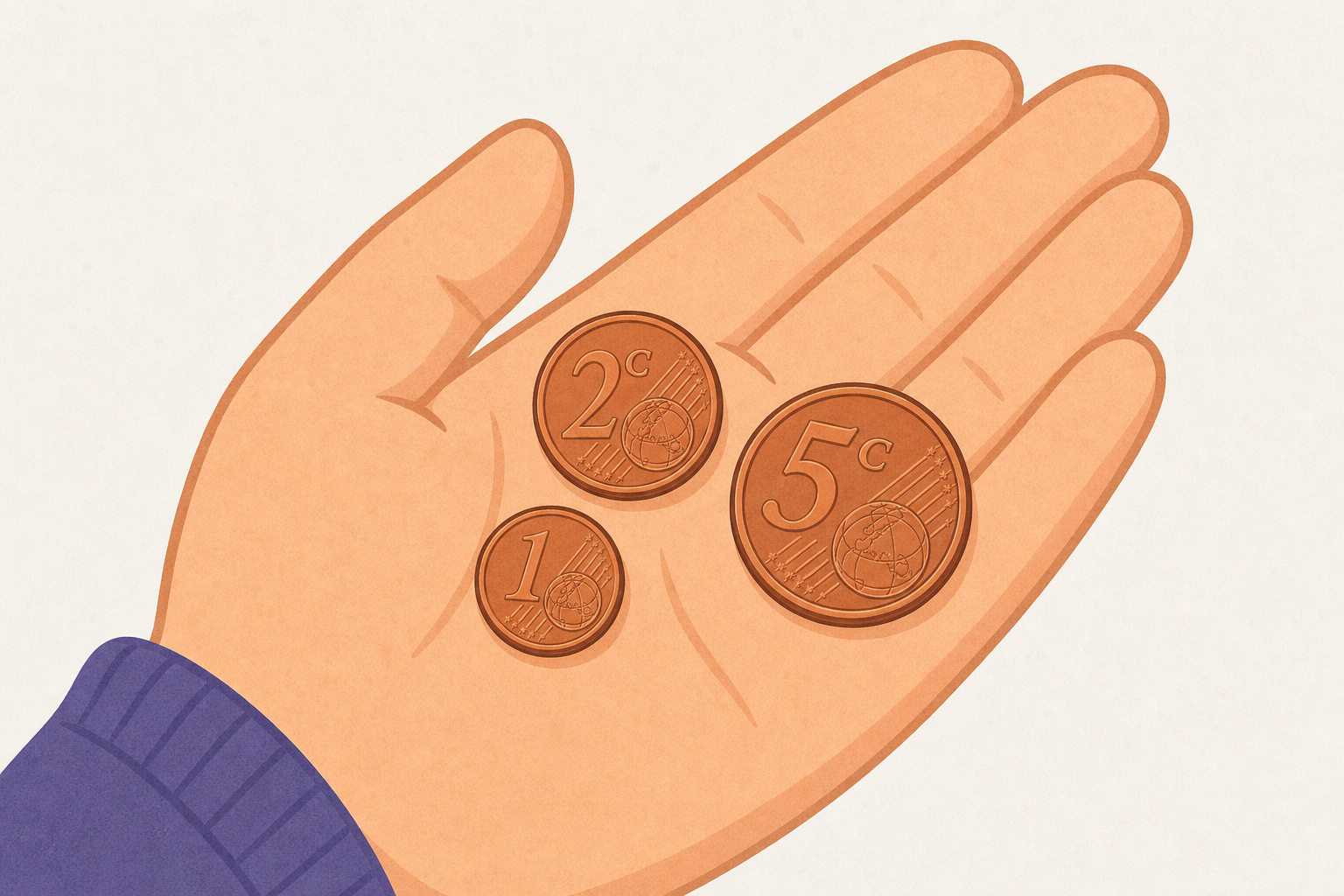
A little purse has been tipped out on the shop table, and out roll three small copper-coloured coins. Look closely at them. Which one is the tiniest of all? What number can you spot stamped on that little coin?
Show the three coins on screen from the coin-counter, or tip a real purse under the visualiser if you have the coins to hand. Either way the on-screen coins are the version the board refers to. Take three hands-up answers to which is the smallest coin? before moving on — don't let it become open call-out.

Here is our first coin, the smallest one of all. It is copper-coloured, so it looks reddish-brown. Look at the number on it: a single 1. That tells us this coin is worth one cent. It is the littlest coin, and it is worth the least.
Now watch the next coin. It is copper-coloured too, and a little bigger than the 1c. Read the number stamped on it before I say it: what do you think? Yes, a 2. This coin is worth two cent. Bigger than the 1c, and worth a little more.
Here is our biggest cent coin. It is copper-coloured, just like the other two, so you cannot tell its worth from the colour. But look at its number: a 5. That means it is worth five cent, more than the 1c and 2c put together. The colour does not tell us the worth. The number does.
These are pre-built display snapshots — narrate over them, don't drag. Point to the stamped numeral on each coin in turn.
Today we hunt for coins on the tray together. When I call a coin, one of you comes up to the board and taps it: first the 1c, then the 2c, then the 5c. Each time you tap, the whole class reads the number of cent stamped on it aloud.
This round is for talking it through together — pupils take turns at the board and the class agrees or corrects out loud.
Call one coin at a time and rotate three pupils to the board. Between taps, keep the watching rows with it: ask a quick question (which coin is worth the most?) and revoice a strong answer, or have the class read the stamped number aloud before you confirm — look at the number, not the size. Watch for pupils reaching for the biggest coin when you ask for the most valuable, and steer them back to the number.
Groups without the interactive can use the printed coin cards from the coin_cards printable: lay out the 1c, 2c and 5c cards and point to the one called.
In your maths copy, write the three coins we met today, one after the other:
Say the name of each coin quietly as you write it.
Walk the room glancing at how the c is formed after each number — this is whole-class copybook practice, not marking. No individual scores.
Today we work through these coin hunts together, one harder than the last: first find the 1c coin, then the 2c coin, then the 5c coin, and finally find the coin worth exactly 2 cent hiding in a mixed handful of all three. Read the stamped number each time before you check.
This round is the practice bank — pupils take turns at the board, check each answer, and the class confirms before moving on. Keep the board work brisk rather than over-explaining.
Rotate four pupils. The last challenge is the pay-off: the 2c hides among the 1c and 5c coins, all copper-coloured, so pupils must read the number rather than grab the biggest coin. Ask the class to predict before the taker checks.
You're previewing this lesson. Get full access to this lesson and hundreds more — each one ready to teach, with interactive activities, printable resources and pupil progress tracking built in.