1 - Getting Started ~5 mins
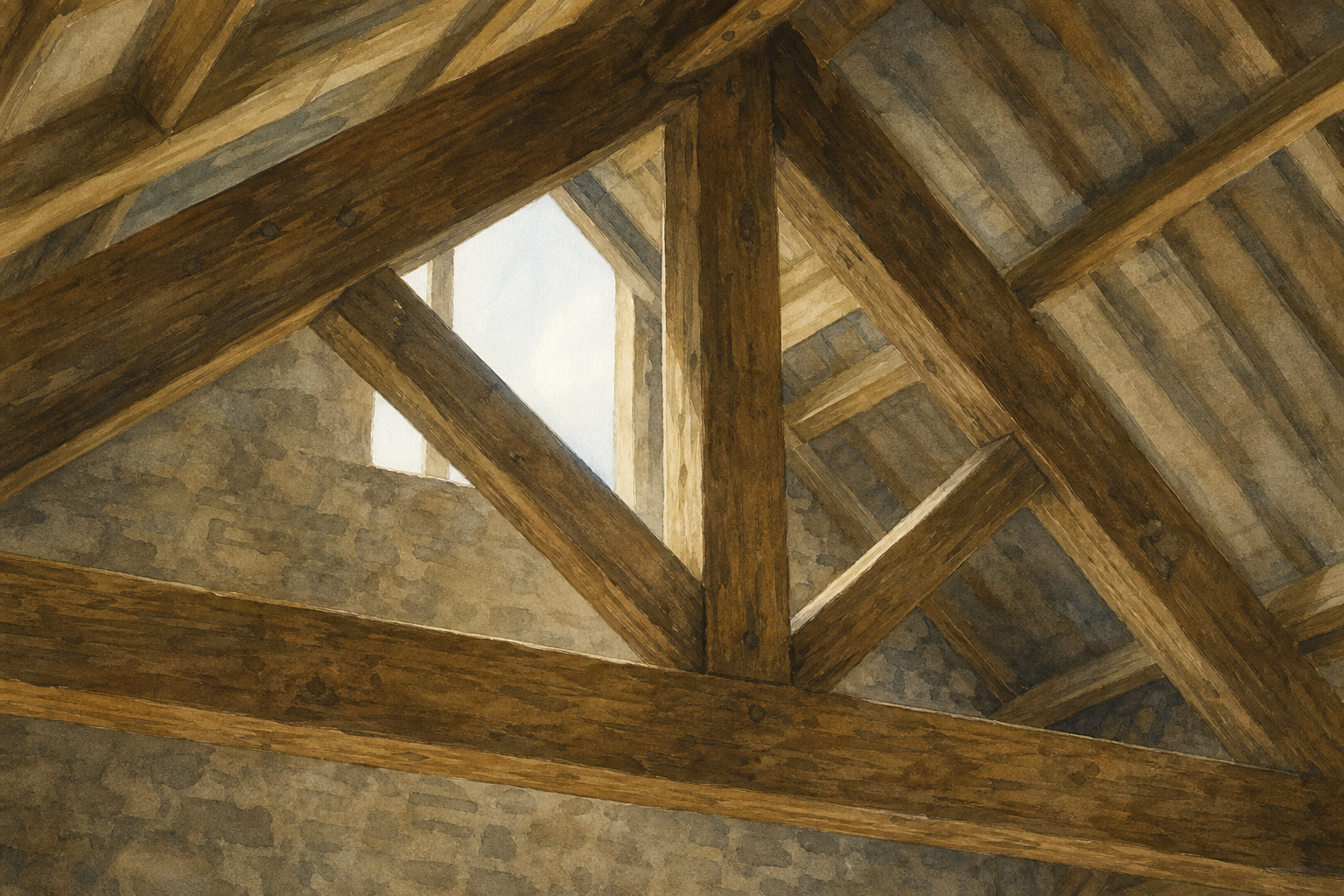 Look at the roof over our classroom, a farm gate and an electricity pylon. Every one is packed with triangles. Why do builders use so many triangles and not squares?
Hands up your best guess.
Keep this light: it is just the curiosity hook, not the investigation. Take two or three guesses and leave the question open. Do not tell them the answer here, they will find it with their own hands in the next step.
If a pupil already says "triangles are stronger", ask "stronger how? What would a square do?" and park it.
2 - What Holds and What Leans ~6 mins
Today's words: rigid means a shape that cannot be pushed out of shape. Bracing means adding an extra strip to stop a shape leaning over.
Which do you think will lean when we push it: the square or the triangle?
| Concept | Why it matters | Example |
|---|---|---|
| Triangle (a rigid shape) — a three-sided frame that cannot be pushed out of shape without breaking a strip or bending a joint | Builders use triangles everywhere because a loose triangle still holds its shape, so the structure does not collapse sideways | Push a loose card triangle from a corner and it will not move; push a loose square and it flops over |
| Bracing — adding one strip across a shape (usually corner to corner) to stop it leaning over | A weak square shape can be rescued cheaply, just one extra strip turns it into two triangles that hold | A garden gate has a diagonal timber across it so it does not droop over time |
What to expect: the loose square leans into a parallelogram every single time; the loose triangle will not move at all. When they pin a diagonal strip across the square, it stops leaning because they have made two triangles.
Misconception to head off: children say the triangle is stronger because it has fewer strips or thicker card. It is not about strength of material, it is about shape, three sides fix the angles, four sides do not.
Keep the board short. The full table is for you, not the class.
3 - Build the Frames ~12 mins
In your group, build two frames with the card strips and split pins:
Join four equal strips into a square. Join three strips into a triangle. Leave every joint loose — do not tighten the pins.
Before the lesson: punch the strip ends yourself if time is short, a hole near each end of every strip. Gather several 15 cm card strips and split pins per group, and punch two or three spare strips per group so a torn hole does not leave anyone short mid-lesson.
Model joining one corner at the front, then let groups build. The pins must stay loose so the joints can pivot, that is the whole point. Circulate and loosen any that have been squeezed tight.
Watch for: groups tightening the pins hard, this hides the effect. Ask them to wiggle each corner before they finish.
4 - Push and Watch ~10 mins
Hold each frame flat on the desk. Press one corner sideways.
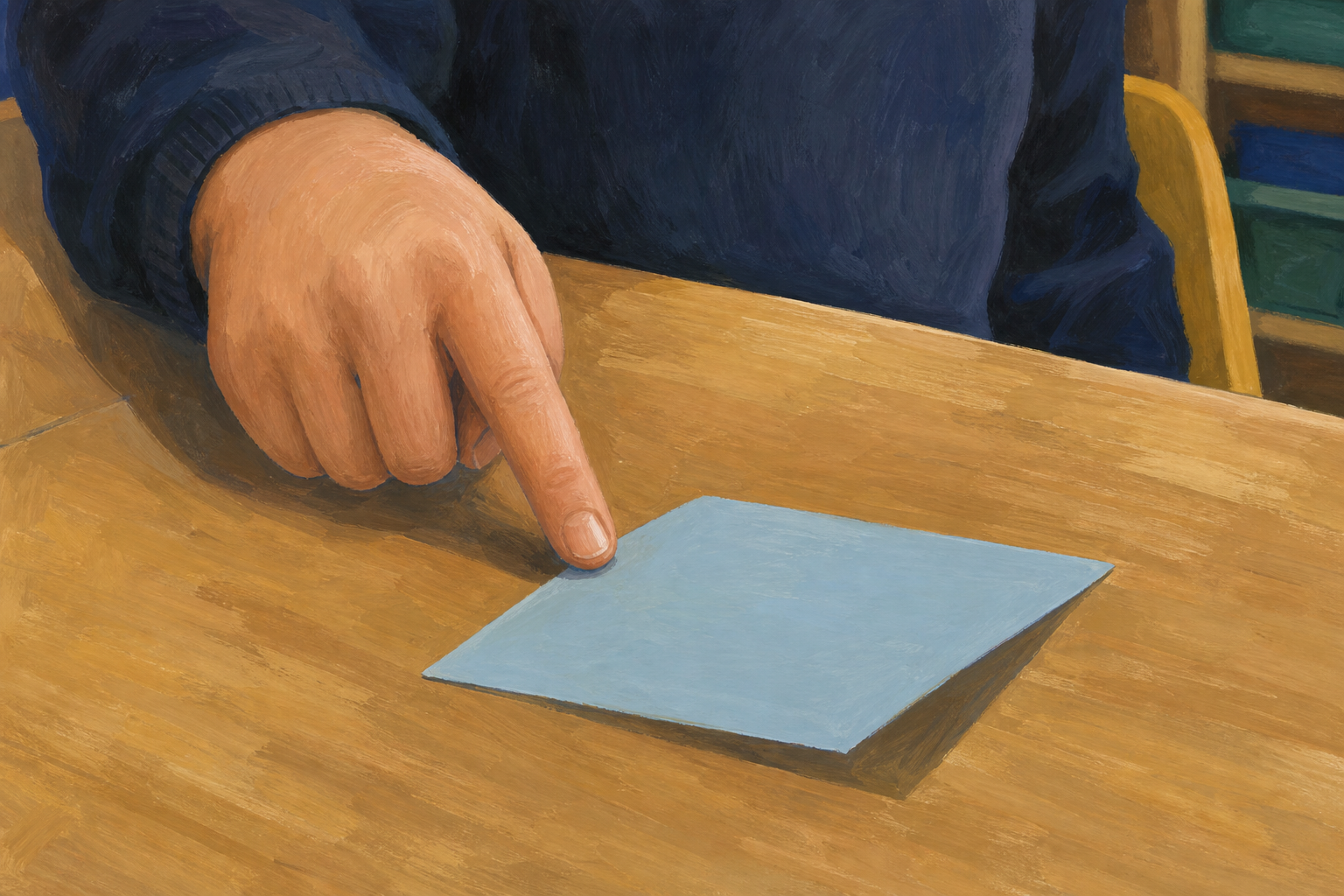 Predict first: what will the square do? What will the triangle do?
Now try both. Watch closely — we will write down what we found in a moment, so just watch carefully for now.
This is the worked cycle, run it aloud at the front with your own two frames before groups push theirs:
- "I wonder which shape will keep its shape when I push it."
- "I predict the triangle will hold and the square will lean."
- "I'm pushing the square corner... watch, it leans right over into a slanted shape."
- "Now the triangle... it will not move at all, no matter how I push."
- "So I think the triangle is rigid because its three sides fix all the angles, and the square is not."
Then let every group push their own two frames and say what happened in their own words. The square becoming a leaning parallelogram is the moment to name, point at it. Writing comes later at step 6, so keep this step about predicting, pushing and watching only.
5 - Brace the Square ~8 mins
Now pin one extra strip across your square, from one corner to the opposite corner.
Push the corner again. What changed?
Give each group one more strip. Once it is pinned corner to corner, the square will no longer lean, because it is now two triangles.
Draw the idea out with a question, not a statement: "Look carefully, how many triangles can you see in your braced square now?" The answer is two, and that is why it holds.
Look-fors as you circulate:
- the diagonal strip pinned firmly at both ends
- pupils noticing the square now holds when pushed
- pupils spotting the two triangles inside
Unlock the full learning experience
You're previewing this lesson. Get full access to this lesson and hundreds more — each one ready to teach, with interactive activities, printable resources and pupil progress tracking built in.
This lesson is copyright of Coding Ireland 2017 - 2025. Unauthorised use, copying or distribution is not allowed.