1 - Introduction
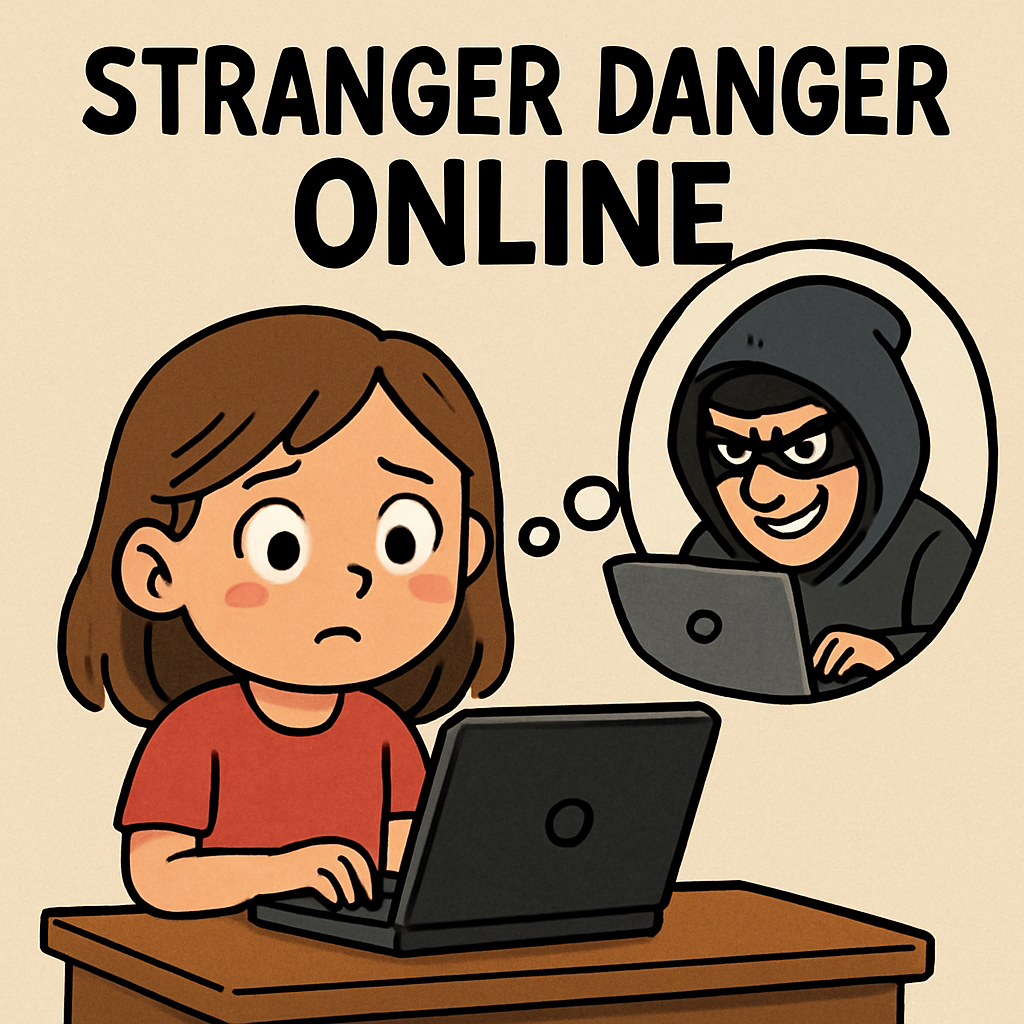 What is Stranger Danger Online?
In real life, you are careful around strangers. Online, it is the same — even in games and apps. People can pretend to be someone they are not, so you cannot always tell who you are really talking to.
Strangers online may ask questions like: “What age are you?”, “What school do you go to?”, “Where do you live?”, or “Can I add you?” They might also say: “Don’t tell anyone” or “This is our secret.” These are warning signs.
Another warning sign is when someone tries to move you to a private chat, like asking for your phone number or another app.
Remember: you do not have to reply. Being safe is more important than being polite online.
Safety Rule #1
THINK: Are they asking for personal information or secrets?
CHECK with a trusted adult if you are unsure.
What to do if a stranger messages you
- Don’t reply.
- Leave the chat or close the message.
- Block and report if you can.
- Tell a trusted adult straight away.
2 - Spotting Strangers in Games
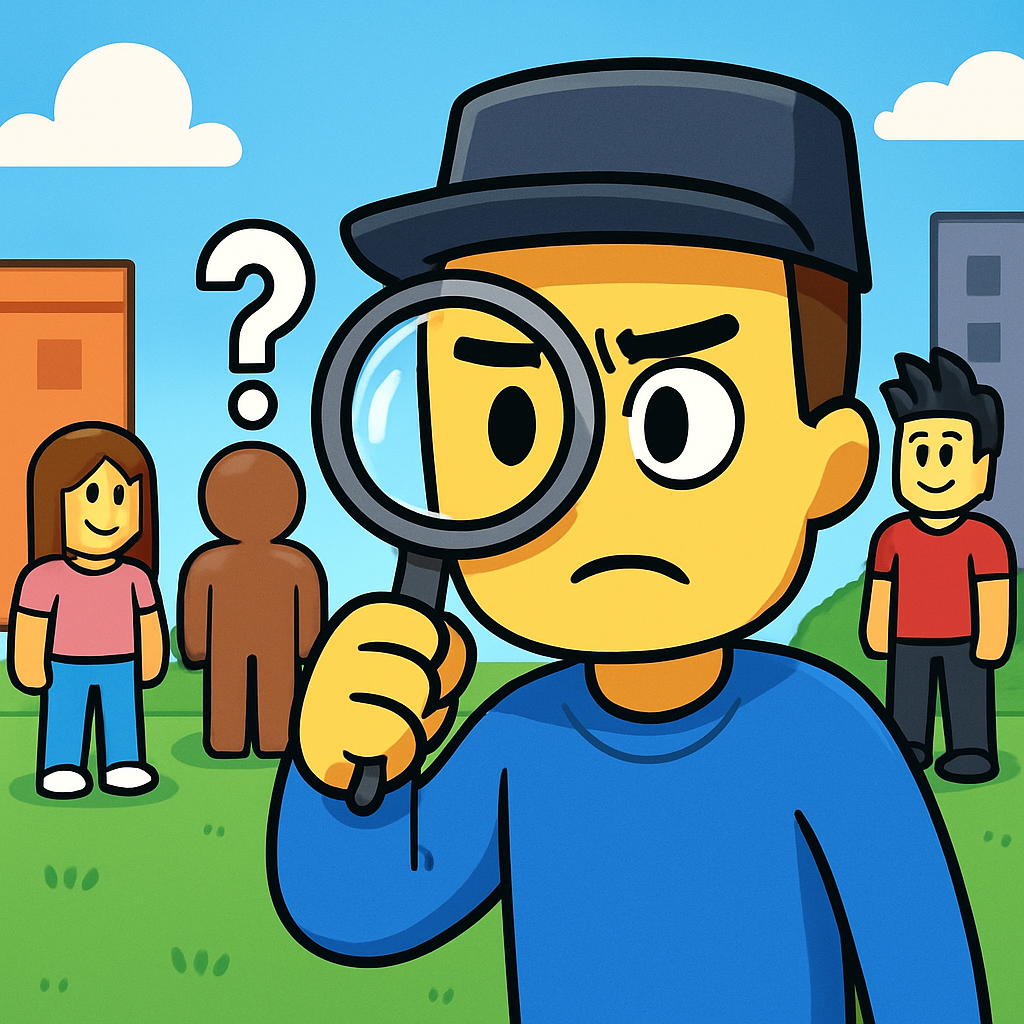 Spotting Strangers in Games
Games like Roblox, Fortnite Creative, and Minecraft can have chats and friend requests. These are fun features — but they can also be where strangers try to talk to you.
Strangers might start with something small, like “Hi” or “Want to be friends?” Then they might ask questions like your age, your school, where you live, or what time you play. Sometimes they try to move the chat to another app. That’s a warning sign.
It is always okay to say no. You don’t have to be polite to strangers online. Your job is to stay safe.
Example: In Roblox, someone with a cool avatar asks to be your friend right away. You don’t know them in real life — stranger alert!
Safety Rule #2
What to do if a stranger tries to friend you
- Don’t accept the friend request.
- Don’t reply to private messages.
- Block and report if the game lets you.
- Tell a trusted adult if something feels weird.
3 - Safe vs Unsafe Chats
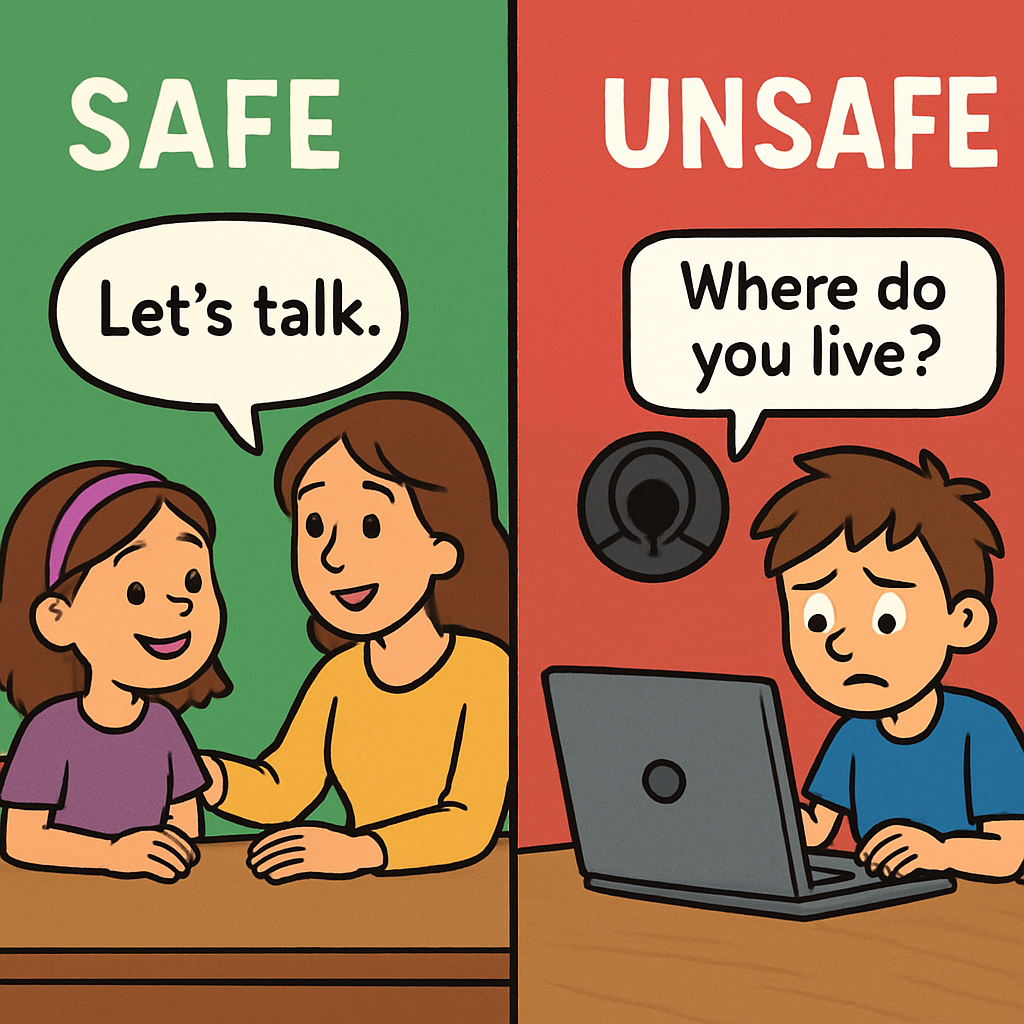 Safe vs Unsafe Chats
Chats in games can be fun — especially with friends you know in real life. But sometimes chats can turn unsafe. The good news is: you are always allowed to leave the chat.
What does a safe chat look like?
Safe chats are usually about the game. They are kind and respectful, and they do not try to keep secrets. Safe chats do not ask for your name, school, phone number, address, passwords, or “secret” messages.
If the chat stays focused on the game and everyone is being respectful, that is usually a good sign. You should still keep your personal information private.
What does an unsafe chat look like?
Unsafe chats often try to tempt you (“free stuff!”), rush you (“quick, now!”), or hide things (“don’t tell anyone”). If someone asks for private information or wants to move you to a private chat, that is a warning sign.
Another warning sign is when someone tries to get you to click a link, join a private server, or share a code. If you are unsure, leave the chat and check with a trusted adult.
Example:
- Safe: “Great build in Minecraft!”
- Unsafe: “Come to my private server for free diamonds.”
Safety Rule #3
- One safe chat line you might see in a game.
- One unsafe chat line you might see in a game.
4 - Quiz
Safe or Unsafe Quiz
Click YES if it’s safe, NO if it’s unsafe. You’ll get feedback after each question. At the end, you’ll see your score and a tip to help you improve.
1 / 7 A Roblox stranger says: “Want free Robux? Click my link.”
5 - Tricky Tricks from Strangers
 Tricky Tricks from Strangers
Sometimes strangers online try to trick you. They might offer “free” prizes, pretend to be important, or try to move you into a private chat. These tricks are designed to make you act fast without thinking.
A common pattern is: they start friendly, then add pressure (“hurry”), then ask you to do something risky (click a link, share a code, or give personal information).
Common tricks strangers use
- Fake prizes: “Click here for free coins!”
- Fake important person: “I’m an admin / I work for the game.”
- Secret trap: “Don’t tell anyone—join my private server.”
- Roleplay trap: “For the story, tell me your details.”
- Account trap: “Send me your login / code so I can upgrade you.”
Example: In Roblox, a “fake admin” says: “I’m the builder! Give me your avatar name for a badge.” Nope! Real game helpers do not ask kids for private details in chat.
Safety Rule #4

Unlock the Full Learning Experience
Get ready to embark on an incredible learning journey! Get access to this lesson and hundreds more in our Digital Skills Curriculum.
This lesson is copyright of Coding Ireland 2017 - 2025. Unauthorised use, copying or distribution is not allowed.