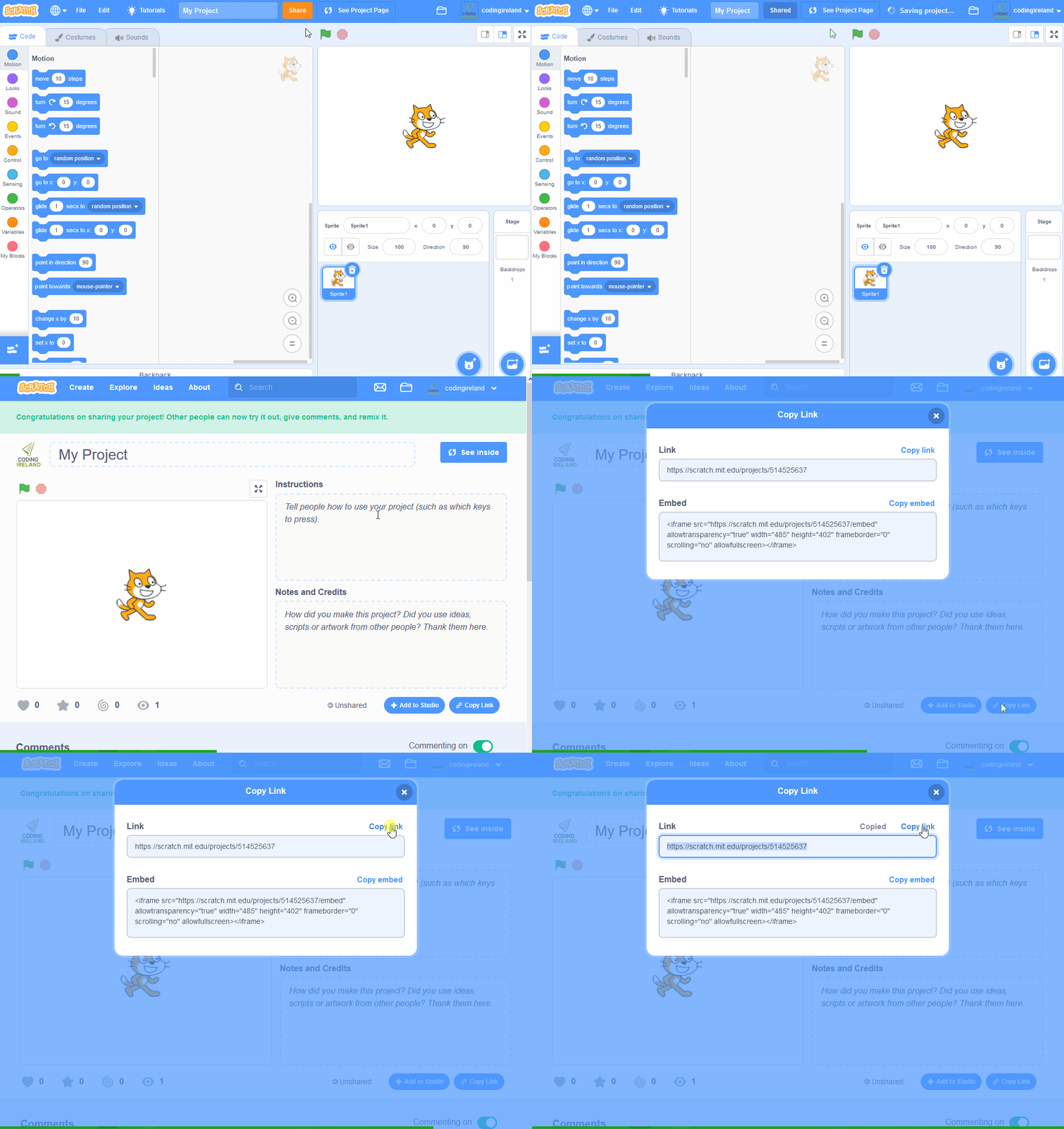
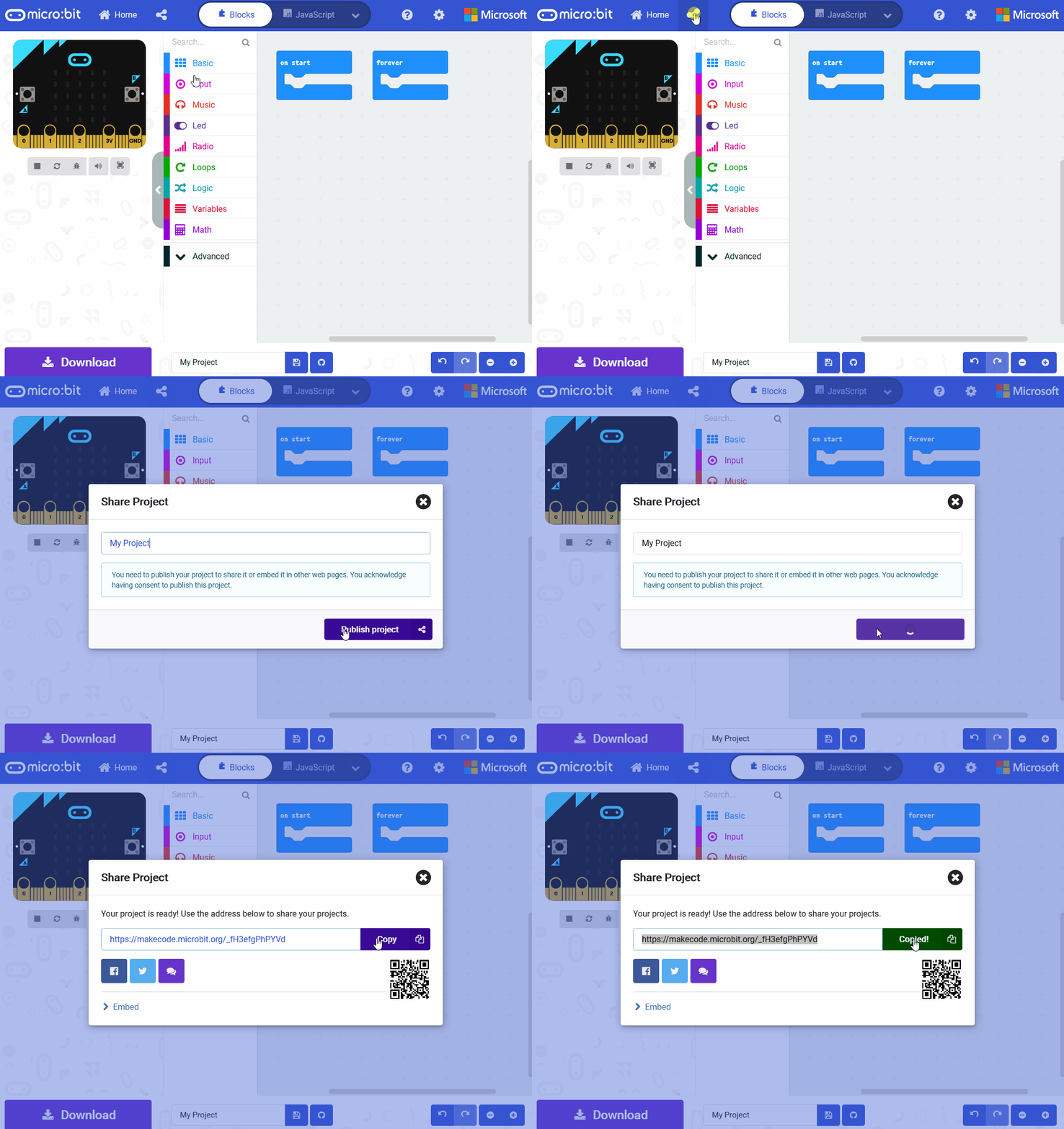
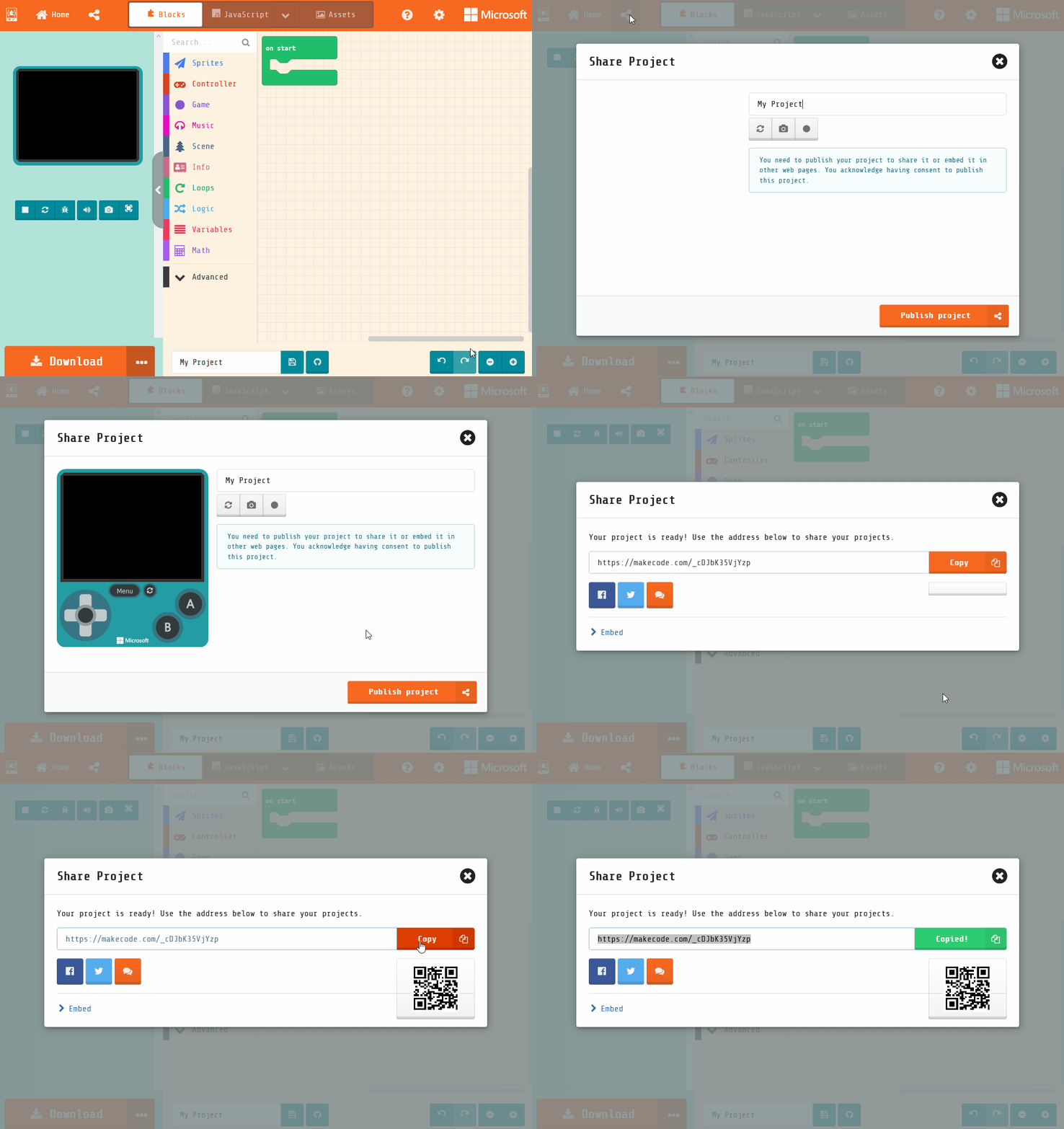
1 - Introduction
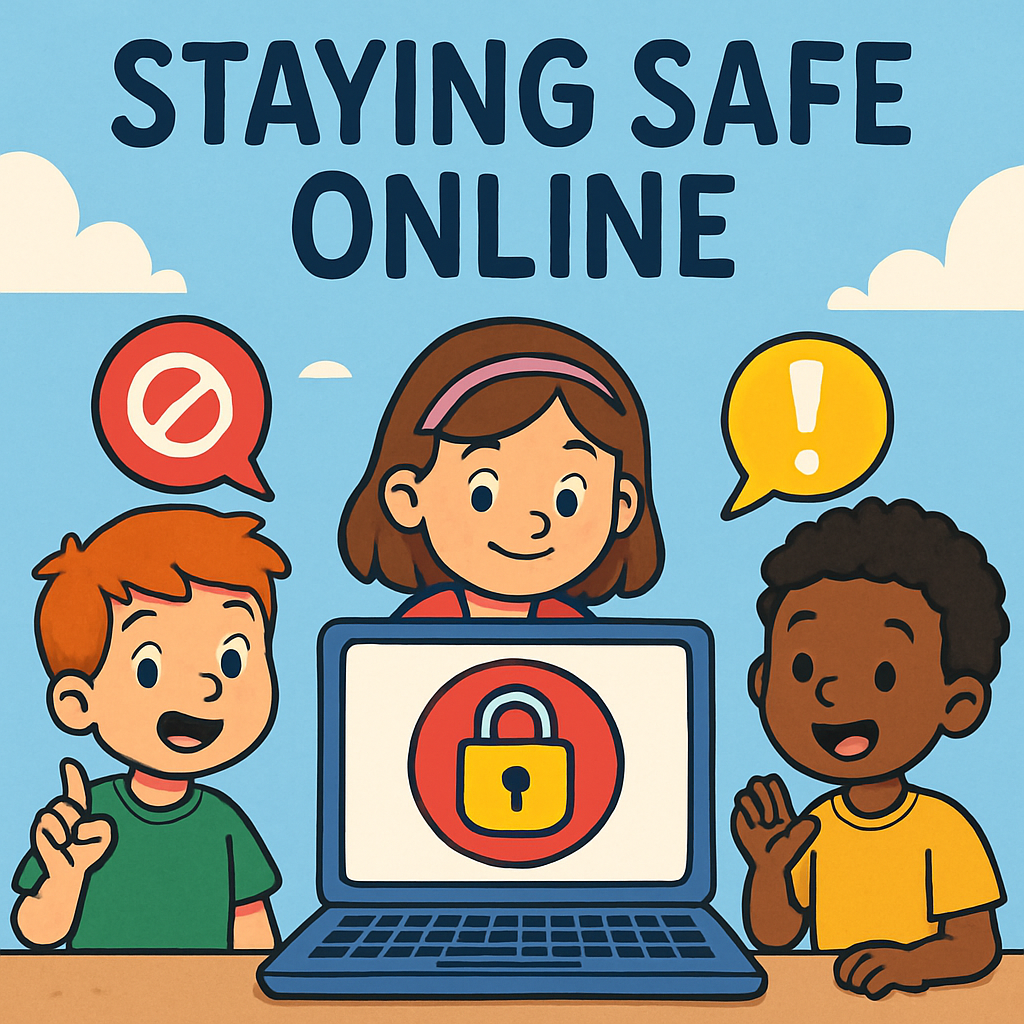
Welcome to Staying Safe Online! Today you’ll learn easy ways to stay safe when you use the internet. You’ll also learn who to talk to if something online makes you feel worried or uncomfortable.
Being safe online means making smart choices when you use a computer, tablet, or phone. It’s a bit like using rules when you cross the road: the rules help you stay safe so you can enjoy yourself.
🛡️ Quick Online Safety Rules 🛡️
- Keep personal information private: Don’t share your full name, address, phone number, school, or passwords.
- Be careful with links: Don’t click on strange pop-ups or messages, even if they look exciting.
- Only chat with people you know in real life: If someone you don’t know messages you, don’t reply—tell an adult.
- Trust your feelings: If something feels weird, scary, or mean, stop and tell a trusted adult.
✨ What Do You Do Online? ✨
Think of two things you do online (like playing a game, watching videos, or chatting). For each one, write if it is safe and explain why.
Examples:
- Playing games with friends is safe if I don’t share personal information. ✅
- Watching videos on trusted kids’ websites is safe. ✅
2 - Golden Rules
🌟 Golden Rules for Staying Safe Online! 🌟
These are like class rules, but for the internet. They help you stay safe, calm, and happy while you play, learn, and chat online. Here are our 8 Golden Rules:
- 🔒 Keep personal information private (full name, address, school, phone number, and passwords).
- 🚫 Don’t click strange links or pop-ups (if you’re not sure, ask an adult).
- 😊 Be kind online (use friendly words—no bullying).
- 👨🏫 Ask a grown-up before downloading apps, games, or files.
- 📱 Log out on shared devices (like a family tablet or school computer).
- 🆘 Tell a trusted adult if something online feels scary, rude, or confusing.
- 📸 Don’t share photos or videos without permission from a parent/guardian.
- 💭 Think before you post: Is it kind? Is it true? Is it safe?
✨ Your Super Worksheet:
🏆 Can you think of 2 more Golden Rules? 🏆
9.
10.
3 - STOP THINK CHECK
🌟 Your Super Safety Routine: STOP – THINK – CHECK 🌟
This is an easy 3-step routine to help you stay safe online. Think of it like a safety shield you can use anytime.
-
STOP
Pause for a moment. Don’t click straight away. Take a breath. 🛑 -
THINK
Ask yourself: Do I know who this is? Does this feel like a trick? 🤔 -
CHECK
Does it feel safe? If not, close it and ask a trusted adult for help. ✅
✨ Practice Time! ✨ Use STOP–THINK–CHECK for these pretend situations.
Situation 1: A pop-up says “Win a free toy! Click here now!”
STOP:
THINK:
CHECK:
Situation 2: Your friend from class sends a funny cat video.
STOP:
THINK:
CHECK:
4 - BLOCK – REPORT – TELL Routine
🌟 BLOCK – REPORT – TELL: Your Brave Shield! 🌟
This is your super power for when something online feels wrong, scary, or mean. It’s easy: just three steps to help make it stop and get support.
-
BLOCK
Stop the person from messaging you. Look for a “block” button in the app or game. 🚫 -
REPORT
Tell the app or website that the message is not okay. Find “report” and use it. 📢 -
TELL
Tell a trusted adult straight away (like a parent/guardian or teacher). 🆘
✨ Practice Time! ✨ Try BLOCK–REPORT–TELL in these pretend situations. Fill in the boxes with what you would do.
Situation 1: Someone in your game sends a mean message calling you names.
BLOCK:
REPORT:
TELL:
Situation 2: A stranger messages you, “Send me your photo!”
BLOCK:
REPORT:
TELL:
5 - Online Safety Facts
Below are some important facts to help you understand why the rules matter. As you read, think about how these connect to the Golden Rules, STOP–THINK–CHECK, and BLOCK–REPORT–TELL.
Key Online Safety Facts:
- Passwords are private. A strong password uses a mix of letters and numbers (and can include words you remember). Never share your password — not even with friends.
- Privacy settings help protect you. Many games and apps can be set to “friends only” so only people you know can see your profile or message you.
- Online-only friends stay online. If you only know someone from the internet, you should not meet them in real life. If an adult ever decides a meeting is needed, a trusted adult must be with you.
- Safe websites have clues. Kids’ websites, school websites, or websites approved by a parent/guardian are best. A padlock 🔒 in the address bar can mean the connection is secure, but you should still use sites you trust.
- Your feelings are an important safety signal. Being online should feel fun and okay. If something feels scary, rude, or “yucky,” it is time to STOP and get help from a trusted adult.

Unlock the Full Learning Experience
Get ready to embark on an incredible learning journey! Get access to this lesson and hundreds more on our learning platform.
This lesson is copyright of Coding Ireland 2017 - 2025. Unauthorised use, copying or distribution is not allowed.