 Have you ever wondered where some of your favourite dances come from? Today, we are going to explore songs and dances from around the world.
- Learn about traditional music and dance from Ireland, Brazil, South Korea, and New Zealand.
- Guess where different dances and artists come from.
- Notice similarities and differences between these cultures through their movements and music.
- Find out how songs and dance connects us to different cultures.
- Learn what countries famous artists and dances come from.
Artists come from all over the world, and their music, art, and performances often reflect their home country and culture.
In this activity, you will see the name of an artist and a list of country options. Read each one carefully and choose the country where you think the artist is from.
Take your time, think about what you know, and enjoy exploring artists from around the world!
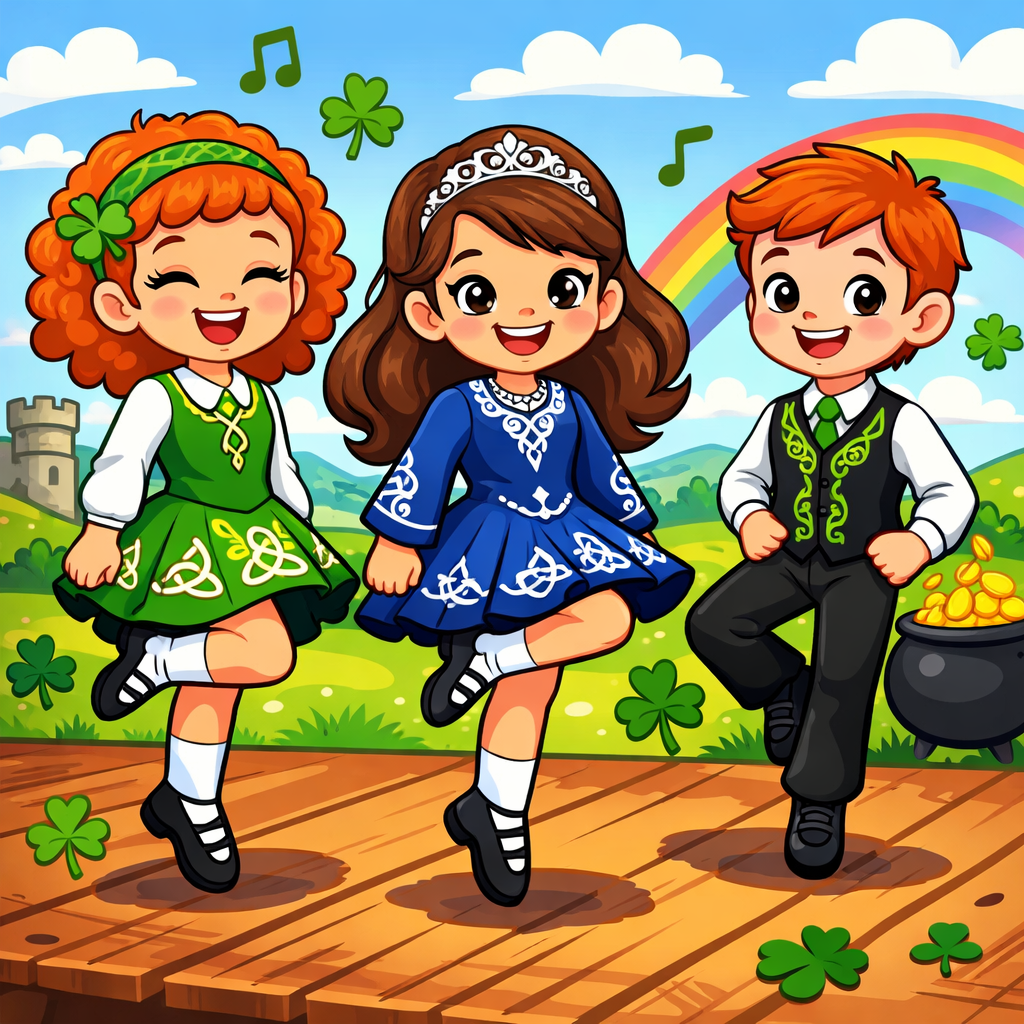 In Ireland, traditional music and dance are an important part of everyday life and special celebrations. Irish music has been played for hundreds of years and is often performed at festivals, weddings, and community gatherings.
Traditional Irish Instruments
- Fiddle – A violin used in lively jigs and reels
- Tin whistle – A small metal flute with a bright sound
- Harp – Ireland’s national symbol and a very old instrument
- Bodhrán – A round hand drum that keeps the rhythm
- Uilleann pipes – Irish bagpipes played while sitting down
Irish Dance
- Step dancing – Fast footwork with arms kept still (like Riverdance)
- Céilí dancing – Group dances performed in circles or lines
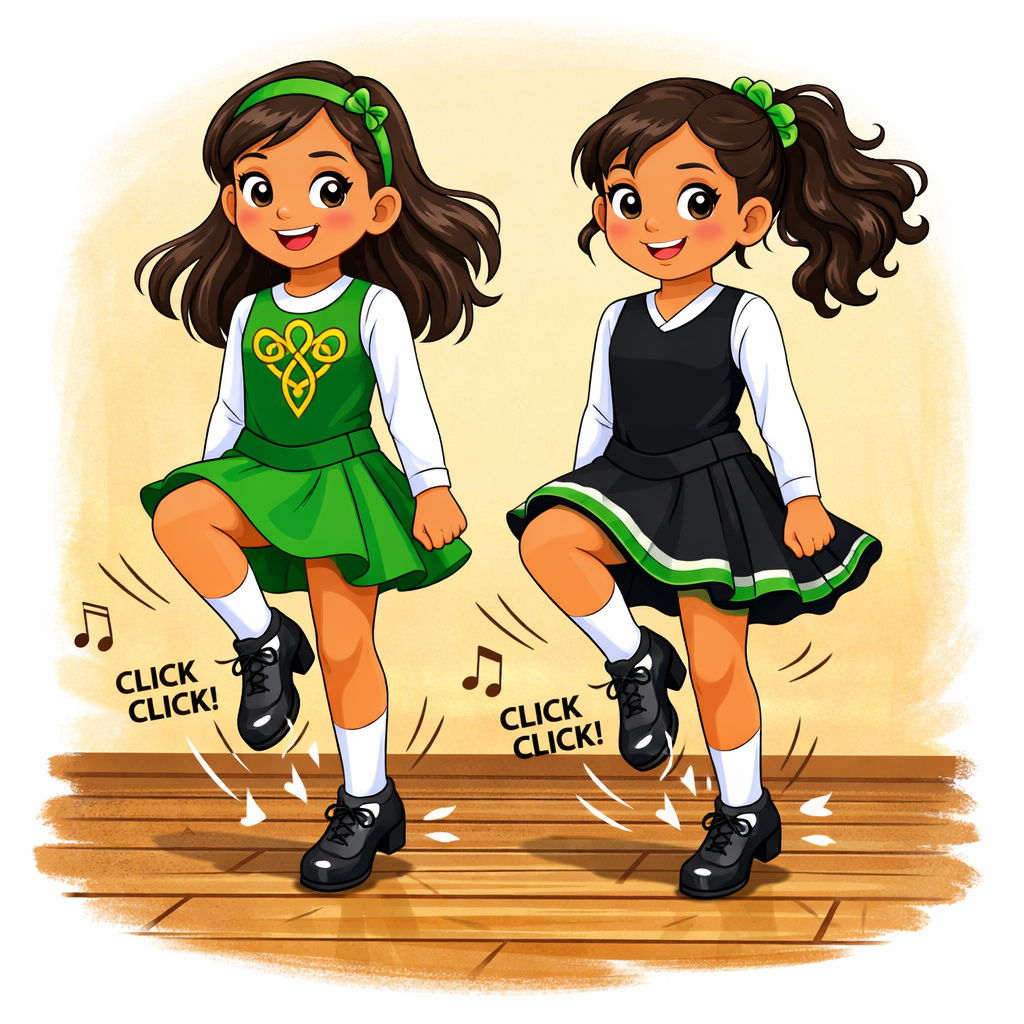 Riverdance is a famous Irish dance show that became popular around the world in the 1990s.
It first appeared during the Eurovision Song Contest in 1994 and amazed audiences with its fast footwork and powerful music.
What makes Riverdance special?
- Very fast and precise foot movements
- Dancers keep their arms still at their sides
- Strong rhythms created by tapping shoes
- Live traditional Irish music, including fiddle and bodhrán
Imagine discovering where exciting dances come from around the world. In this interactive activity, you'll guess the country of origin for ten different dances. It's a fun way to test your knowledge and learn more about global cultures through movement and music.
Get ready to put your detective skills to work—each guess brings you closer to uncovering the stories behind these lively traditions!
Unlock the full learning experience
You're previewing this lesson. Get full access to this lesson and hundreds more — each one ready to teach, with interactive activities, printable resources and pupil progress tracking built in.
This lesson is copyright of Coding Ireland 2017 - 2025. Unauthorised use, copying or distribution is not allowed.