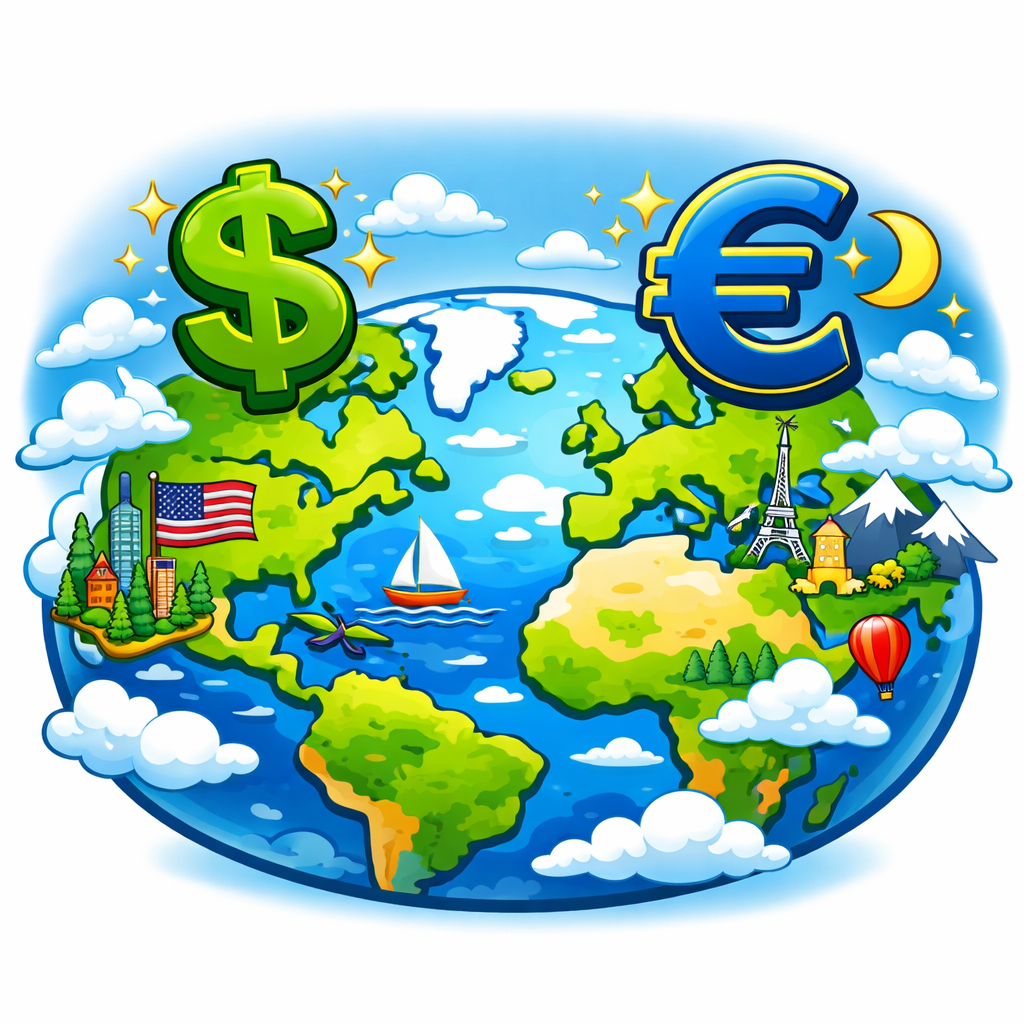
 Have you ever wondered how people in other countries buy their food, clothes, or toys? They use different kinds of money, just like we use euros in Ireland.
In this lesson, you will discover more about shopping and money from around the world.
- Learn about currencies like the euro, dollar, and pound.
- Find out where people shop in Ireland and other countries.
- Explore colourful markets like souks and floating markets.
- Try converting money using exchange rates.
- See how online shopping works with different currencies.
How different countries use their own money to shop, and how to change euros into dollars or pounds.
 Shopping is something people do all over the world. We buy food, clothes, toys, and many other things from shops, markets, and online stores.
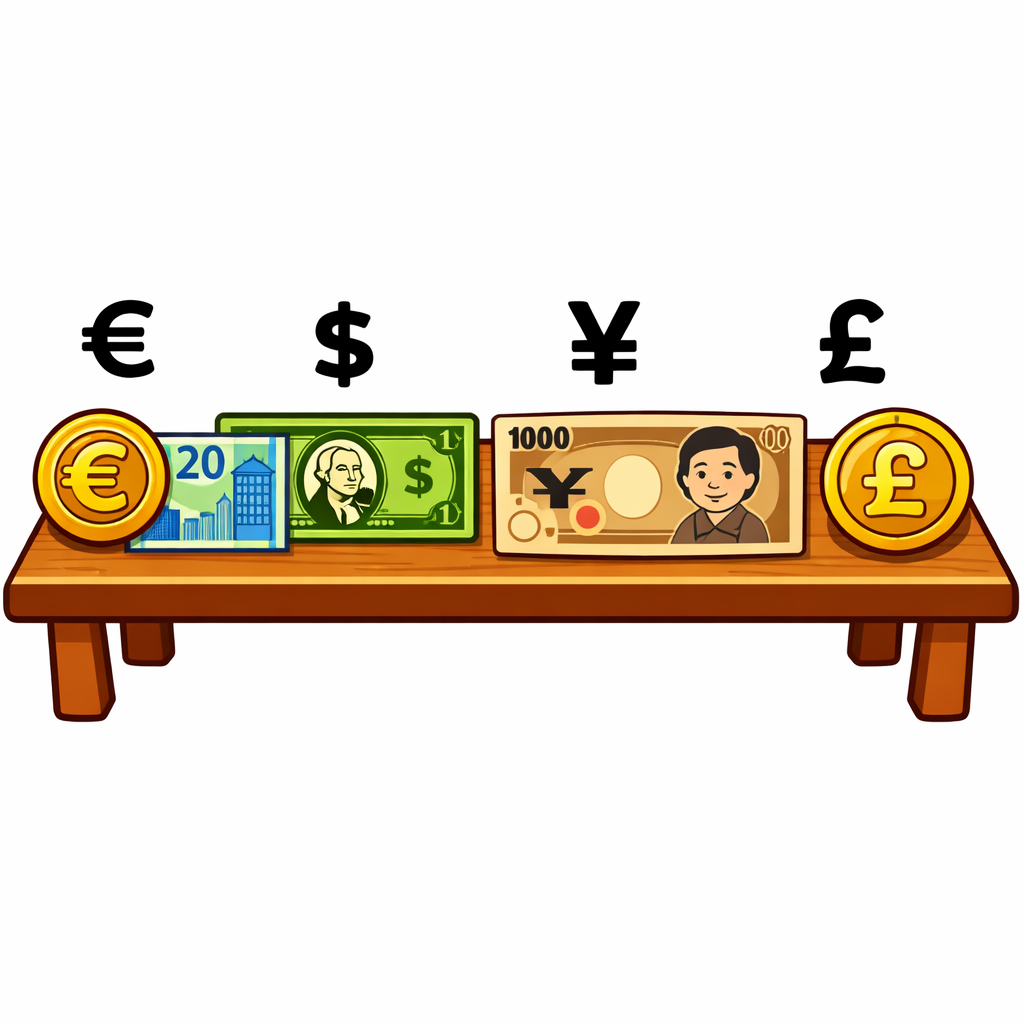
To buy something, we usually use money. Different countries use different types of money called currencies.
- Ireland and many European countries use the Euro (€)
- The United States uses the Dollar ($)
- Japan uses the Yen (¥)
- The United Kingdom uses the Pound (£)
Learning about money helps us understand how people shop in different countries.
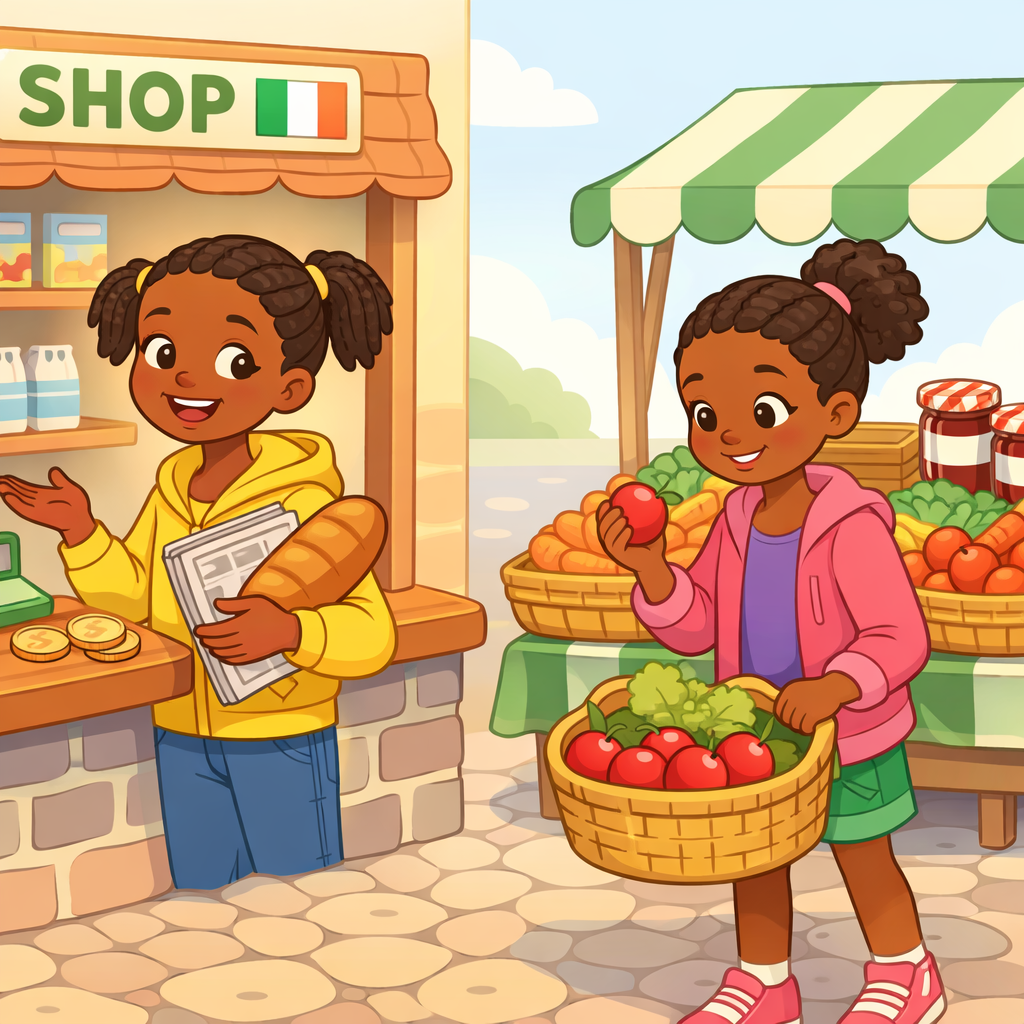 In Ireland, people shop in many different places. You might go to a big supermarket, a small local shop, or even a market.
Supermarkets are large shops like Tesco or SuperValu. They sell lots of different foods, drinks, and household items such as cleaning products and toiletries. You can find everything in one place, which makes shopping easy for families.
Local shops are smaller and often found on street corners or in villages. They sell everyday items like bread, milk, newspapers, and sweets. They are handy if you need something quickly.
Farmers' markets happen on certain days in towns and cities. Here, you can buy fresh fruits, vegetables, cheese, and homemade jams directly from farmers and local makers.
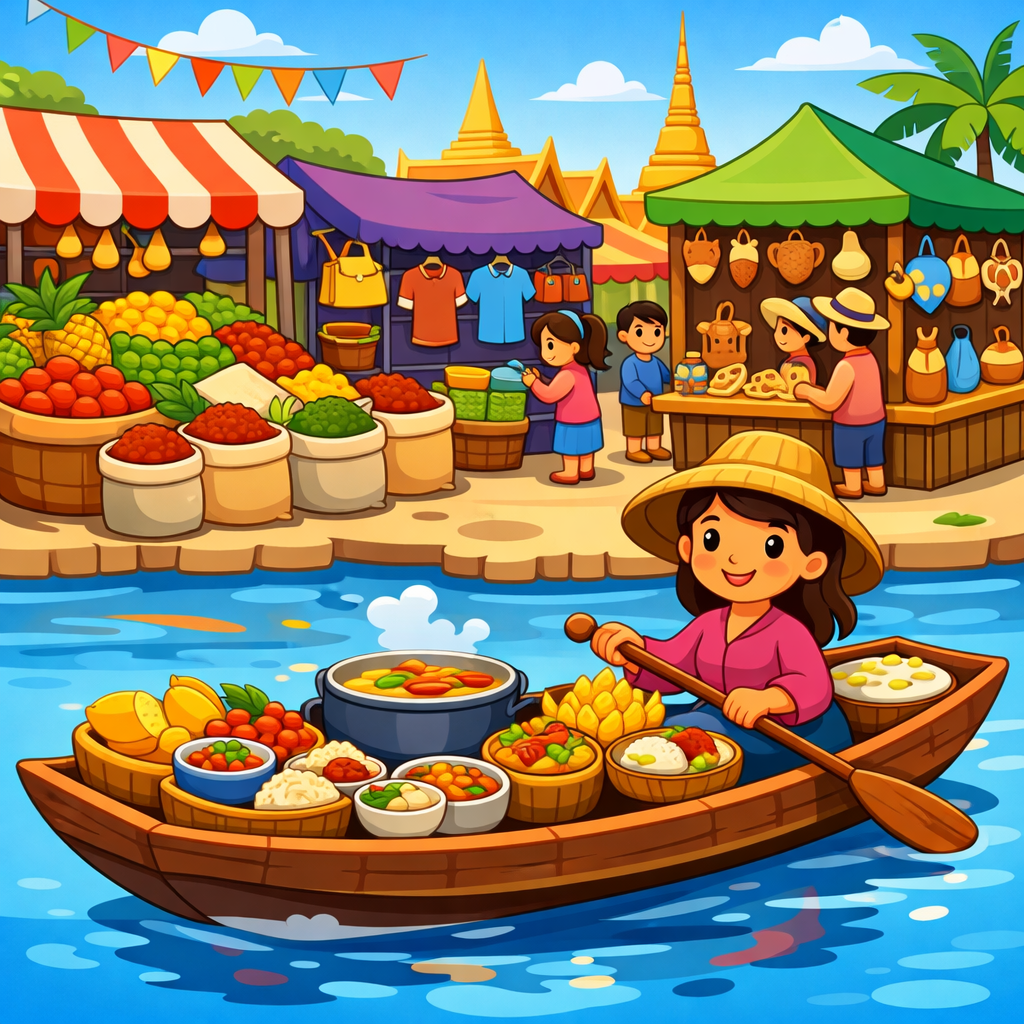 In many countries, people shop at outdoor markets. Markets are busy places where people buy fresh food, clothes, handmade items, and sometimes even toys or spices.
Here are some markets from around the world:
- In Spain, markets like La Boqueria in Barcelona sell fresh fruits, vegetables, seafood, and tasty tapas. People pay with euros (€).
- In Morocco, colourful markets called souks sell spices, clothes, rugs, and crafts. Shoppers use Moroccan dirhams (DH).
- In Thailand, floating markets sell food and flowers from boats on the water. They use Thai baht (฿).
- In India, busy bazaars sell saris, jewellery, and street food. Money used is the rupee (₹).
- In Brazil, markets offer fresh fruits like mangoes and papayas, plus crafts. They use the real (R$).
Different countries use different types of money called currencies.
| Country | Currency | Symbol |
|---|---|---|
| Ireland | Euro | € |
| France | Euro | € |
| Germany | Euro | € |
| United States | Dollar | $ |
| United Kingdom | Pound Sterling | £ |
| Japan | Yen | ¥ |
| Switzerland | Swiss Franc | CHF |
| China | Yuan (Renminbi) | ¥ |
| India | Rupee | ₹ |
| Brazil | Real | R$ |
| South Africa | Rand | R |
| Australia | Australian Dollar | $ |
| Canada | Canadian Dollar | $ |
Even though currencies look different, people around the world use them to buy the things they need every day.
Unlock the full learning experience
You're previewing this lesson. Get full access to this lesson and hundreds more — each one ready to teach, with interactive activities, printable resources and pupil progress tracking built in.
This lesson is copyright of Coding Ireland 2017 - 2025. Unauthorised use, copying or distribution is not allowed.