Mathematics
Intermediate
50 mins
Teacher/Student led
+65 XP

What you need:
IWB/Projector/Large Screen
Metre stick

Estimating Then Measuring: Length

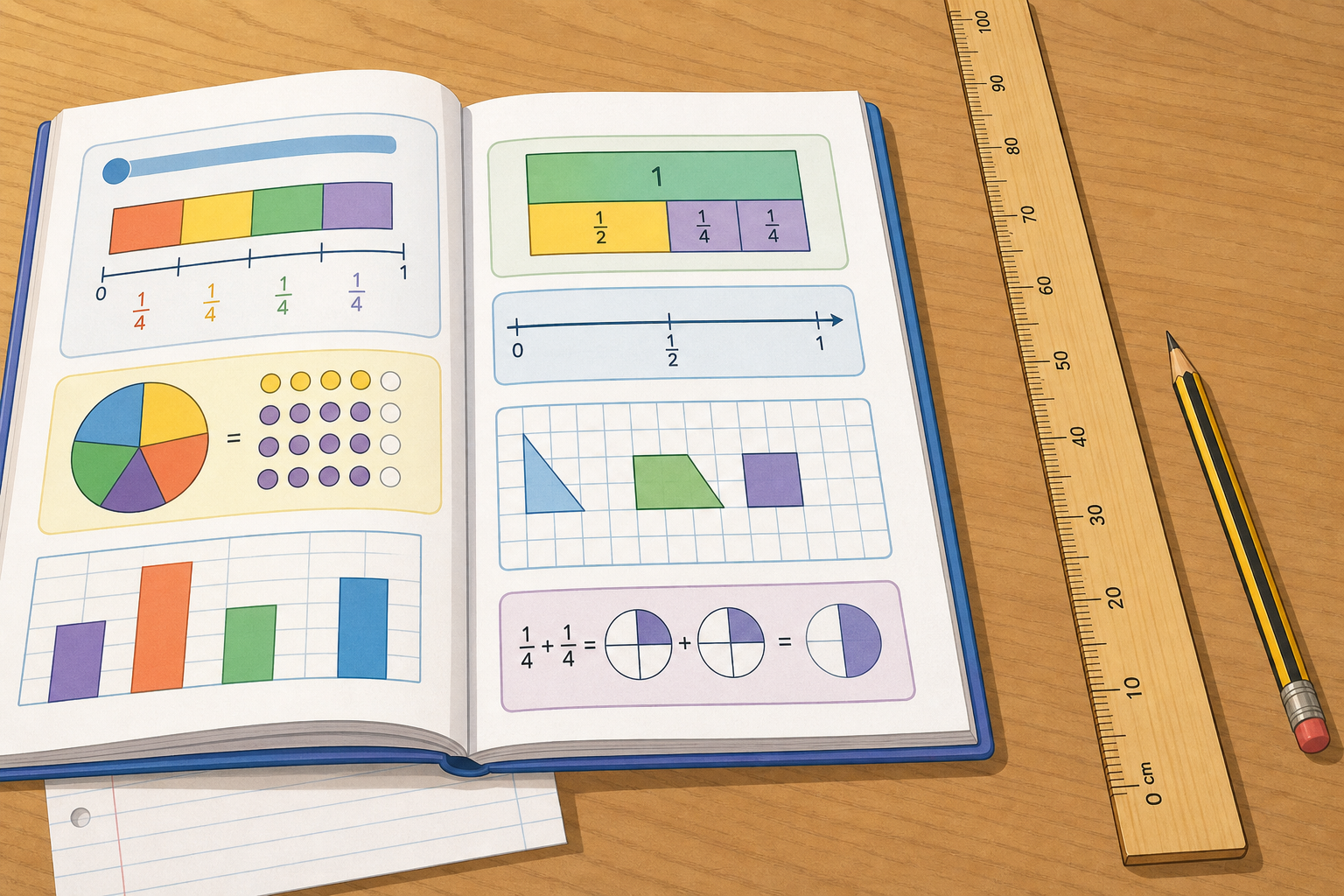
Estimate lengths around the classroom and playground using familiar objects as anchors, then measure to see how close you were and refine your strategy for next time.
Teacher Class Feed

Load previous activity

    1 - Getting Started ~4 mins

    Look at the corridor outside our classroom and the playground beyond the door. Which one is longer? How could we settle it without walking the whole way?

    2 - Watch and Notice ~8 mins

    Illustration for Watch and NoticeWatch as we hold a metre stick up against real things around our room — the board rail, a Maths book, the classroom door. Each time, look for an anchor you already know the length of, picture how many of it would fit, and say your estimate out loud. Then we measure it together to see how close we were.
    3 - Set up Your Estimate Table ~3 mins

    COPYBOOK MOMENT

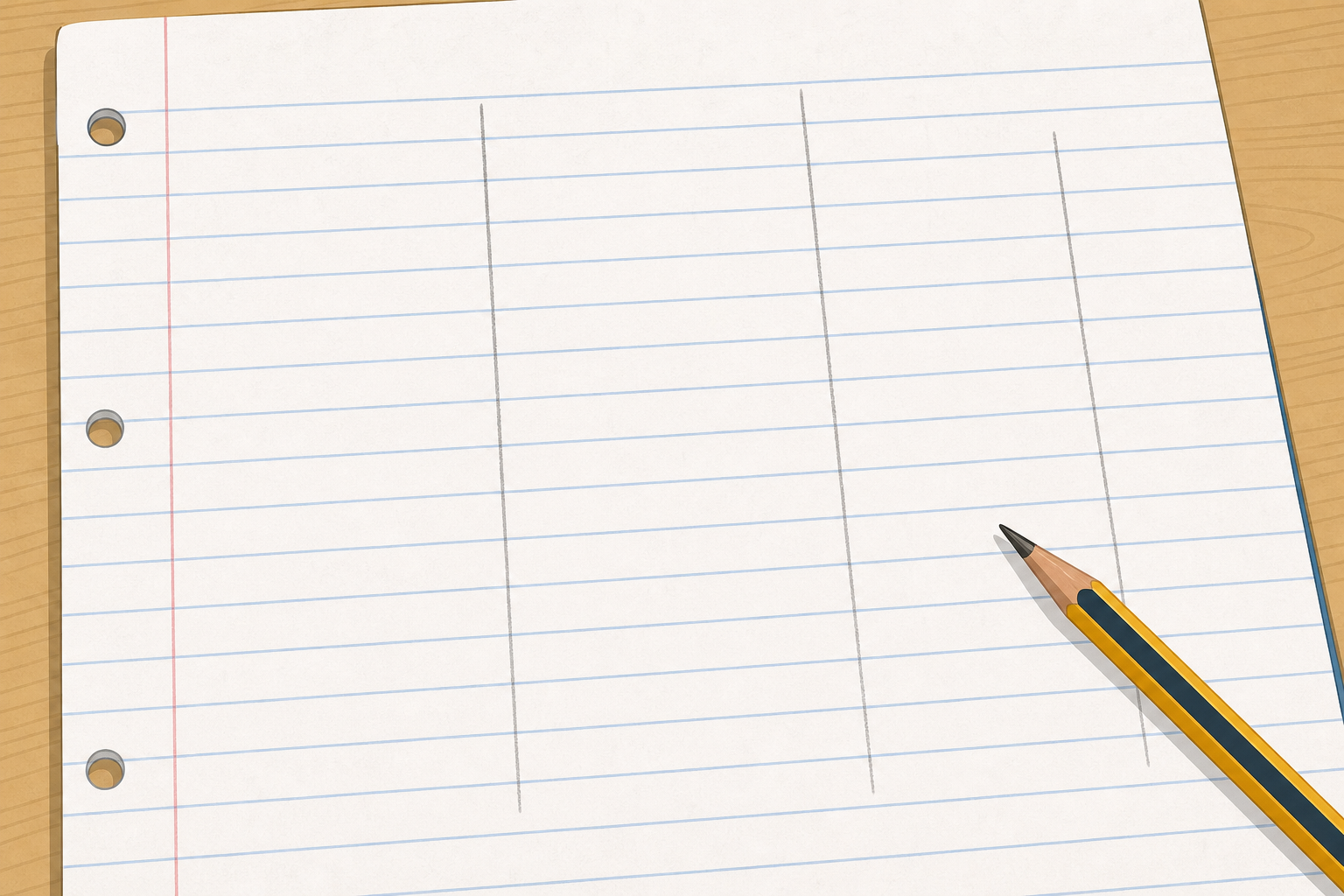
    Illustration for Set Up Your Estimate TableIn your maths copy, draw three columns down the page and write the headings 'Estimate', 'Actual', and 'Difference' across the top. Leave the rows blank for now — you'll fill this table in twice today: first with the classroom lengths we measure together, then with your own yard routes outside. Each time the rule is the same: write your estimate before you measure.

    4 - Try It Together ~12 mins

    Now we try it together with real classroom lengths: the teacher's desk, the width of the door frame, and the distance from the front of the room to the back wall. Write your estimate in your table first, then we measure each one with a metre stick and you fill in the actual and the difference.

    Hands-on Task

    5 - Class Challenge ~15 mins

    Going outside

    Groups of four or five, one metre stick, one copybook and one pencil per group. Take the class to whatever flat space your school has room in — the yard, the hall, or the corridor. Before the lesson, mark three routes with chalk or masking tape: a Short route under one metre, a Medium route around five metres, and a Long route ten to fifteen metres.

    Materials

    • metre stick
    • copybook
    • pencil
    • chalk or masking tape (to mark routes)

    Plan

    1. Before walking each route, write your estimate in the Estimate column of your copybook — centimetres for the Short route, metres for the Medium and Long routes.
    2. Route A (Short, under 1 m): don't pace this one — it's shorter than a full step. Compare the marked line to half a metre stick or your Maths book held lengthways, write your estimate, then check by laying the metre stick alongside.
    3. Route B (Medium, about 5 m): pace it, counting your steps. Convert paces to metres (one pace ≈ 70 cm, so 7 paces ≈ 5 m), write your estimate, then lay the metre stick end-over-end to find the actual length.
    4. Route C (Long, 10–15 m): pace it the same way and convert; write your estimate in metres, then lay the metre stick end-over-end to find the actual length.
    5. Write each actual measurement in the Actual column and work out the difference between your estimate and the actual.
    If you can’t go out: indoor alternative

    If the yard is unusable, run the same Short / Medium / Long structure indoors — masking tape for the Short line, a stretch of the hall or classroom for the Medium, and the full length of the corridor for the Long.

    Pupil practice
    Module 4 · Measures: Length, Mass, Capacity, Area, Volume Measures
    Lesson 46 · Estimating Then Measuring: Length
    Coding Ireland · Online learning platform

    Unlock the full learning experience

    You're previewing this lesson. Get full access to this lesson and hundreds more — each one ready to teach, with interactive activities, printable resources and pupil progress tracking built in.

    Hundreds of curriculum-aligned lessons
    Interactive activities in every lesson
    Printable resources & progress tracking
    Copyright Notice
    This lesson is copyright of Coding Ireland 2017 - 2025. Unauthorised use, copying or distribution is not allowed.
    🍪 Our website uses cookies to make your browsing experience better. By using our website you agree to our use of cookies. Learn more