Beginner
35 mins
Teacher/Student led
+10 XP
What you need:
Chromebook/Laptop/PC

Teacher Class Feed

Load previous activity

    1 - Data Hunt

    Who's up for an adventure?

    Today, we're going to be like detectives, diving into the world of data to see what secrets it holds. Just like an explorer needs a map, you'll need your database skills to navigate through heaps of information.


    2 - What is a Data Hunt?

     A Data Hunt is like a treasure hunt, but the treasure you're looking for is special pieces of information hidden in a database.

    Real-World Example: Have you ever played a scavenger hunt game during a birthday party where you get clues to find hidden gifts? A Data Hunt is similar. You search through lots of data to find the special nuggets of information you're interested in.


    3 - Activity: Data Scavenger Hunt

    If you want to plan your own data scavenger hunt then read on, if you want to use one with more steps and help then move on to the next step. But please do read this step first, you can still learn a lot here. remember, we may feel that we cannot remember exact details and that is OK, we are learning about data so that it will become familiar to us so when we are older and learning about data - we will remember and then it will click into place!

    Materials Needed:
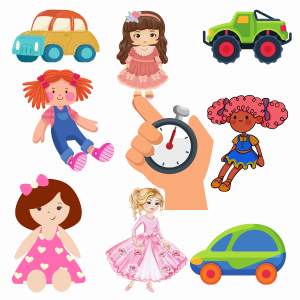
    Small objects like toys, cards, or pebbles to hide around the room
    A stopwatch or timer
    A piece of paper and a pencil

    Steps:
    Hide the small objects in different places around the room.
    Write down clues that will help someone find the hidden objects.
    Give the clues to a classmate and start the timer.
    Your mission is to guide them to find all the objects as quickly as possible using the clues.
    Stop the timer when they've found everything and see how long it took.

    Filtering and Sorting Data
    Filtering and sorting data means organizing your information so it's easier to find what you're looking for. 

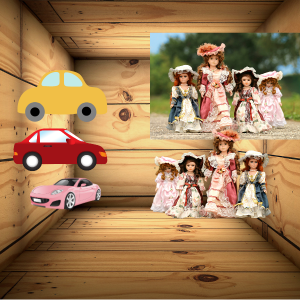
    Real-World Example: Think about a toy box where all the cars are in one corner, and all the dolls are in another. If you want a toy car, you'll find it much faster, right?

    4 - Data Scavenger Hunt Activity - Answered

    Materials Used:
    5 toy cars
    3 toy dolls
    1 stopwatch
    Piece of paper and a pencil

    Steps:
    Hiding the Objects: I chose different hiding spots around the classroom for the toy cars and dolls. Some were under desks, some were on bookshelves, and some were inside cubbies.

    Writing Down Clues: On a piece of paper, I wrote clues like "Where books rest, you'll find your quest" for the bookshelf and "Sit down, look around, what you seek is on the ground" for the one under the desk.

    Starting the Hunt: I handed the clues over to my classmate, Sarah. She was excited to play detective!

    Guiding the Hunt: I started the stopwatch as Sarah began searching. She seemed to struggle a bit with the second clue but eventually found all the hidden toys!

    Stopping the Timer: Sarah found all the objects in 4 minutes and 35 seconds. We stopped the timer as she placed the last toy on the table.

    Applying the Concept of Filtering and Sorting Data The concept of filtering and sorting data is super useful, just like our game. In our scavenger hunt, Sarah could find the toys more quickly because she had clues guiding her—sort of like "filters" that helped her search effectively.

    Real-World Example Recap: Yes, it's just like a toy box! If all the cars are in one corner and all the dolls in another, you can find what you want much faster. Similarly, in databases, when data is well-organized (or "sorted"), it's much easier to find what you're looking for!

    5 - Here are some more examples of clues you could write

    "Up high or down low, where the green plants grow." - This clue could point to a toy hidden near a potted plant, either on a high shelf or on the floor beside it.

    "Where pages turn and candles burn." - This clue would direct the seeker to look near a reading area, perhaps near a faux decorative candle.

    "Quiet as a mouse, you'll find it in the teacher's house." - This clue might point to the teacher's desk area.

    "Near the door but not the floor, what you seek is something more." - This could indicate that the toy is hidden near the entrance but not at ground level, maybe on a coat hook or shelf.

    "Solve some sums, and then you'll find some fun!" - A clue that would lead the seeker to look around a calculator or math textbooks.

    "Where you find the globe, your search will probe." - This clue would lead the seeker to look near a globe, often found in classrooms.

    "In the box where colors lie, look carefully; don't pass by." - This clue would lead the seeker to a crayon or pencil box.

    "Words on a board, written large and broad." - This would direct the seeker to look around the chalkboard or whiteboard.

    "Under the seat, find something neat!" - A simple clue that would lead the seeker to look under their chair.

    "In a bind? Look behind!" - This clue hints at checking behind something, perhaps a book or a poster.



    Unlock the Full Learning Experience

    Get ready to embark on an incredible learning journey! Get access to this lesson and hundreds more on our learning platform.

    Copyright Notice
    This lesson is copyright of Coding Ireland 2017 - 2025. Unauthorised use, copying or distribution is not allowed.
    🍪 Our website uses cookies to make your browsing experience better. By using our website you agree to our use of cookies. Learn more