Teacher Training
Beginner
20 mins
Teacher/Student led
+125 XP

What you need:
Chromebook/Laptop/PC

Assessing Student Progress

In this lesson, you will learn various methods to assess your students' progress in their coding projects. You will gain insights into how to measure their understanding, problem-solving skills, and their ability to apply the concepts learned.

Learning Goals Learning Outcomes

Teacher Class Feed

Load previous activity

    1 - Understanding Assessment in Coding

    It's important to understand that assessment is not just about whether the code works or not. You should also consider the logic behind the code. Is it well-structured? Does it demonstrate problem-solving skills? Does it show that the coder has understood and applied the coding concepts learned?

    Well-structured
    For instance, if a student is tasked with creating a simple calculator program, you should not only check if the calculator performs the basic operations correctly. You should also look at how the student has structured their code.

    Problem-solving skills
    Furthermore, you should also assess the student's problem-solving skills. Did they understand the problem at hand? Did they come up with a logical solution? Did they test their code thoroughly to ensure it works as expected? These are all important aspects of problem-solving in coding.

    Understanding of concepts
    Finally, you should assess whether the student has applied the coding concepts learned. For instance, if they have learned about loops, did they use loops appropriately in their code? If they have learned about conditional statements, did they use these statements correctly? This will help you gauge their understanding of the coding concepts learned.

    2 - Formative Assessment

    Formative assessment is a crucial part of the learning process, especially when it comes to coding. It's not just about the final product, but the journey to get there. This step involves assessing students' coding skills during the learning process. This can be done through various methods:

    • Observing students while they code: This allows you to see their thought process and how they approach problem-solving.
    • Asking questions: This can help gauge their understanding of the concepts they're using in their code.
    • Having students explain their code and logic: This not only helps you understand their thought process, but also reinforces their own understanding of the concepts.

    Through formative assessment, you can identify areas of improvement early on and adjust your teaching methods accordingly to better suit your students' needs.

    3 - Summative Assessment

    Summative assessment is a method of evaluating student learning at the end of a specific instructional periodβ€”usually at the end of a lesson, course, term, or school year. In the context of coding, this could involve assessing a student's final project, their performance on coding tests/quizzes, or their presentation of a piece of software they've developed.

    When conducting a summative assessment, you should consider the following:

    • Code Quality: Is the code well-structured and easy to read? Does it follow good coding practices?
    • Functionality: Does the code work as expected? Does it meet the project requirements?
    • Problem Solving: Does the code demonstrate a good understanding of the problem and an effective approach to solving it?
    • Application of Concepts: Does the code show that the student has been able to apply the concepts they've learned in the course?

    Remember, the goal of summative assessment is not just to grade the students, but also to gauge their understanding and application of the coding concepts taught, and to provide feedback that can help them improve in the future.

    4 - Peer Assessment in Beginner Coding Projects

    Peer assessment is a powerful tool in the learning process, especially in beginner coding projects like Scratch, Microbit, and Python. It involves students assessing each other's coding projects. This method not only helps students learn from each other but also develops their ability to critically analyse and give constructive feedback. Here's how you can implement it:

    • Set Clear Expectations: Before starting the peer assessment, explain to your students what they should be looking for in their peers' work. This could be the functionality of the code, the logic used, or the problem-solving approach. For Scratch and Microbit projects, they could also look at the creativity and interactivity of the project. For Python projects, they could focus on the efficiency and readability of the code.
    • Provide a Rubric: It's important to provide a clear rubric or guidelines for peer assessment. This ensures that the assessment is objective and fair. The rubric could include criteria like code efficiency, readability, and adherence to coding standards. For Scratch and Microbit projects, the rubric could include criteria like creativity, interactivity, and user experience.
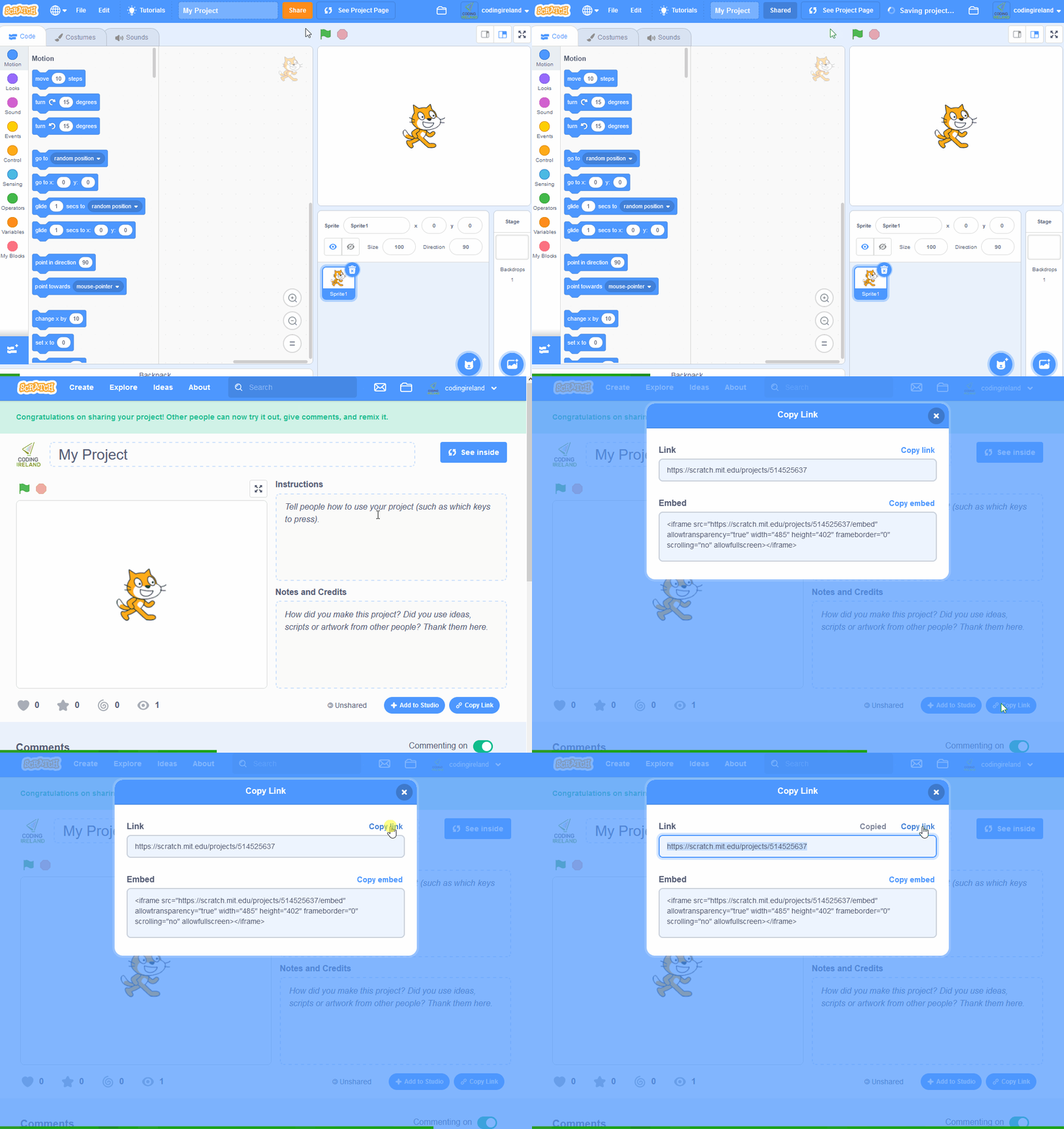
    • Encourage Constructive Feedback: Teach your students how to give constructive feedback. They should not only point out areas for improvement but also highlight the good parts of the code. Encourage them to be specific in their feedback, for example, 'I like how you used the broadcast feature in Scratch to create interaction between the sprites' or 'Your use of loops in the Python code made it more efficient'.
    • Facilitate Reflection: After the peer assessment, encourage students to reflect on the feedback they received and how they can improve their coding skills. This reflection could be done through a group discussion or a reflective writing activity.

    5 - Self-Assessment in Coding

    Self-assessment is a crucial part of the learning process, especially in coding. It encourages students to reflect on their own work and learning process. This step involves students evaluating their own code, identifying what they did well, and where they can improve. This can be facilitated by providing a self-assessment checklist or guide. The checklist might include questions like:

    • Did I understand the problem correctly?
    • Did I plan my code before writing it?
    • Is my code clean and easy to read?
    • Did I test my code thoroughly?
    • Did I meet the project requirements?

    By answering these questions, students can gain a deeper understanding of their own learning process and improve their coding skills.

    Unlock the Full Learning Experience

    Get ready to embark on an incredible learning journey! Get access to this lesson and hundreds more in our Digital Skills Curriculum.

    Copyright Notice
    This lesson is copyright of Coding Ireland 2017 - 2025. Unauthorised use, copying or distribution is not allowed.
    πŸͺ Our website uses cookies to make your browsing experience better. By using our website you agree to our use of cookies. Learn more