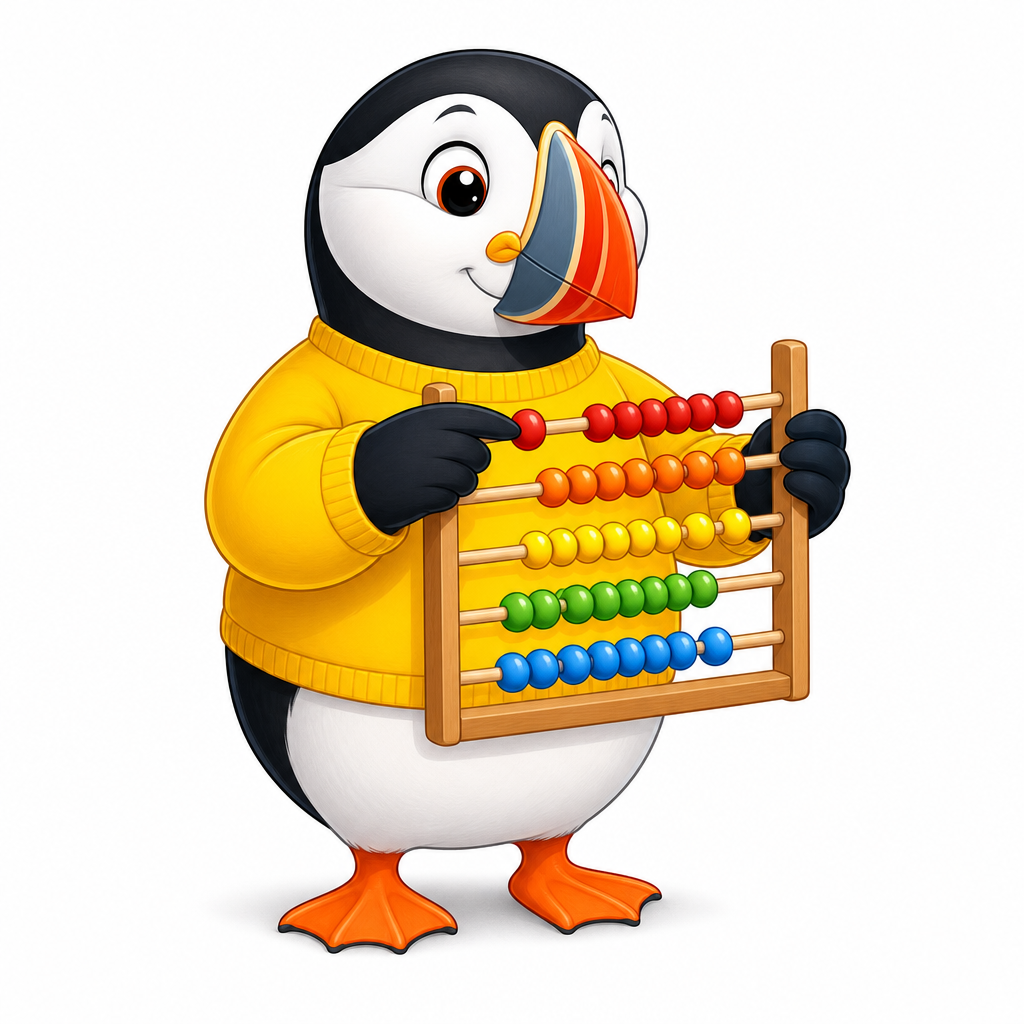
Niamh the Atlantic puffin, the class guide

Maths for Senior Infants

This course builds a strong foundation in early mathematics for senior infants through practical, play-based activities. Students develop number sense to 20, master counting forwards and backwards, explore part-whole relationships and bonds to ten, and investigate repeating and growing patterns. They sort and combine 2D and 3D shapes, compare measures of length, weight and capacity, tell time through daily routines and seasons, handle coins up to 20c in shop scenarios, share equally using halves, and collect and represent data in simple pictograms and tallies. Its distinctive emphasis on concrete, sensory experiences and real-world connections makes abstract concepts meaningful and memorable.
Read more
Everything you need for Maths, all year.

A complete year of Maths, delivered by teacher-led interactive-whiteboard lessons, a printed pupil Activity Book, and a Teacher Resource Book, built to the NCCA Primary Mathematics Curriculum.

Interactive whiteboard lessons
Pupil Activity Book Mathematics 123learn Niamh the Atlantic puffin Look inside
Teacher Resource Book Mathematics 123learn Teacher resource books and materials Look inside

Explore the Course

Click any lesson with to preview it

Settle the class into the maths-box routine and re-secure sorting by a rule, one-to-one matching, and 0 to 5 as amounts, numerals and ordered sets. Everything stays oral and play so every pupil starts the year feeling like a mathematician.

Back to the Maths Box, Sorting by Colour
Same Things, New Rule, Sorting Two Ways
A Cup for Every Teddy, Matching One-to-one
Counting 1, 2 and 3
Counting 4 and 5, a Whole Hand
Zero, the Empty Plate
More, Fewer or the Same?
Number Stairs, Ordering 0 to 5
Numeral Meets Set, Matching 0 to 5
Our Sorting and Counting Show, Module Review

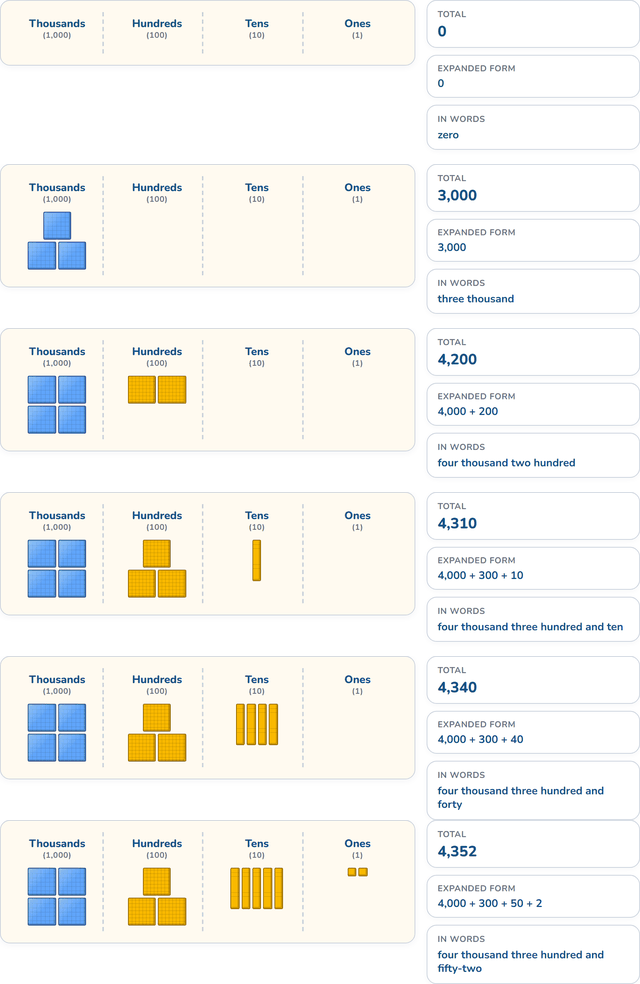
The heart of the Senior Infants year: each of 6 to 10 is met, made, counted, written and found in the child's own world, then the whole family is ordered, compared and seen at a glance. Every number is built in egg boxes, frames, fingers and beads before its numeral is traced.

The Number 6, the Egg Box
Writing 6
The Number 7, a Rainbow of Colours
Writing 7 and Lining up 0 to 7
The Number 8, Spider Legs
Writing 8
The Number 9, a Basket of Conkers
Writing 9
The Number 10, Ten in the Bed
Writing 10, Two Numerals Together
Count Walk, Counting Our School
The Washing Line, Ordering 0 to 10
One More, One Less
Tower Race, More, Fewer, the Same to 10
Quick Eyes, Seeing Small Sets Fast
The Number Show, 6 to 10 in Review

Numbers to 10 become flexible: every set can be broken into parts and put back together, six to nine are seen as five and a bit, and ten becomes the friend every number wants to make. It stays oral and concrete, combining and partitioning language only, with symbols saved for 1st Class.

Snap, a Whole Breaks Into Parts
All the Ways to Break 5
Five on One Hand
Six and Seven, Five and a Bit
Eight and Nine on the Frame
Ten Fills the Frame
Ten Little Fingers
How Many More Make Ten?
The Part-whole House, Bonds of 10
Doubles, the Ladybird's Wings
The Hiding Game, Find the Missing Part
Shop-corner Stories, Putting Parts Together
Five Little Ducks, Stories Where Some Go Away
Ten Is Our Friend, Module Review

The count stretches to 20, forwards, backwards and counting on from any start. Numerals to 20 are met, pegged and ordered on the line but nothing is written beyond tracing: this is oral counting made strong, with the number line as the picture that holds it together.

Off We Go to Twenty, Counting Past Ten
Eleven and Twelve, Ten and Some More
The Teens on the Line, 13, 14 and 15
Sixteen to Twenty, the Line Is Full
Counting Claps and Hops
Counting on, No Need to Start at One
Zoom to the Moon, Counting Back
The Missing Number, Before, After and Between
Guess Then Count, the Big Handful
The Counting Show to Twenty, Module Review

Repeating patterns come back stronger, read aloud, copied, extended, fixed and carried into new materials, and patterns that grow by one more each time arrive for the first time. Everything is built in cubes, beads, claps and stamps, pushing from what comes next towards what is the rule.

Pattern Hunt, Patterns All Around Us
Copy My Pattern
What Comes Next?
Body Patterns, Clap, Stamp and Hop
New Pattern Families, AAB and ABB
Three Friends, Patterns with Three Things
Same Pattern, New Things
Pattern Doctor, Spot the Mistake
Growing Patterns, Peter's Hammers
The Pattern Party, Module Review

Solids come first, held, rolled, stacked and printed, and flat shapes are discovered living on their faces. Then shapes start to move, turning, sliding and flipping without changing what they are, and position words say exactly where things sit. Mostly hands and eyes, with the interactive kept for sorting and picture-building.

The Feely Bag, Meeting the Solids Again
Roll or Slide? the Ramp Test
Stack and Build, the Tower Test
Solid Hunt, Shapes in Our World
Face Prints, Flat Shapes Live on Solids
The Circle and the Square
The Triangle and the Rectangle
Shape Pictures, Build It from Shapes
Shape Hunt in the Yard
Turning Shapes, Round and Round
Slide It, Flip It
Where Is Teddy? Position Words
Follow the Way, Journeys and Turns
The Shape Show, Module Review

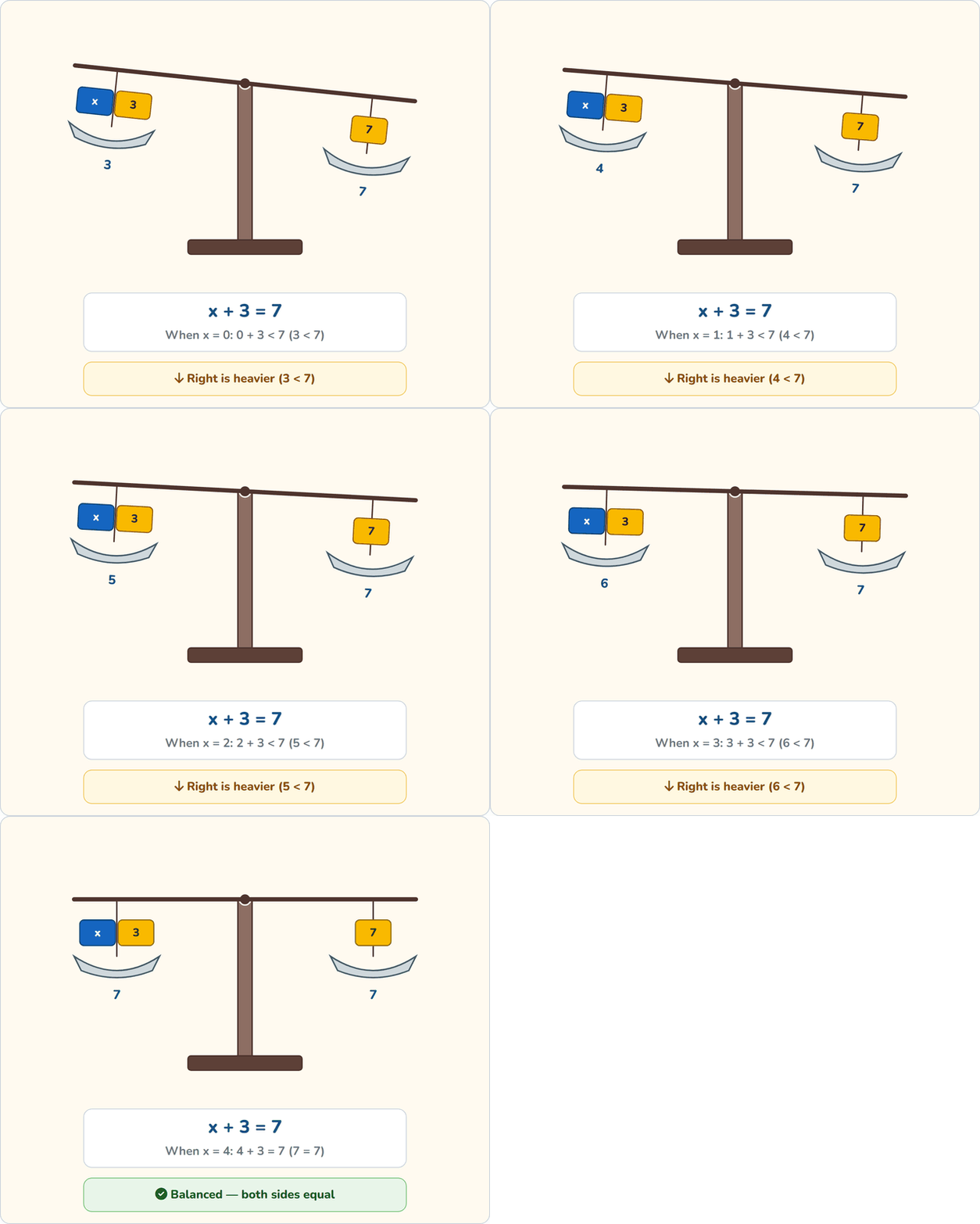
Direct comparison grows into ordering three and more objects, and comparing by eye grows into counting non-standard units, cubes, handspans, steps and cupfuls. The balance settles the arguments our eyes cannot, including the surprise that big is not always heavy.

Long and Short, Line Them up
The Three Bears, Ordering by Size
Tall and Short, How Tall Are We?
How Many Cubes Long?
Handspans and Giant Steps
Heavy and Light, the Feel Test
The Balance Decides, Big Is Not Always Heavy
Full and Empty
Which Holds More? Cupfuls Count
Guess Then Check, Measuring
Wide and Narrow, Thick and Thin
The Measuring Show, Module Review

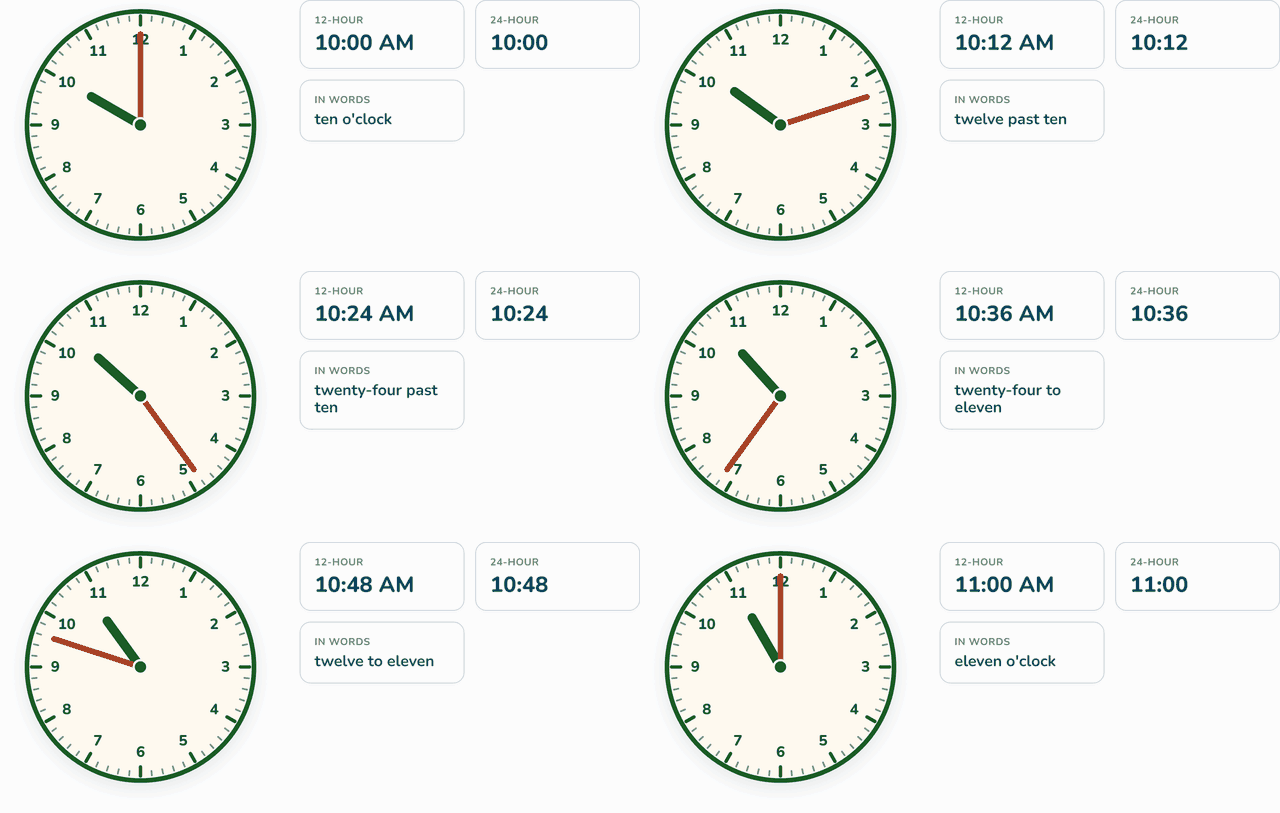
Time at Senior Infants is lived, not read from a clock: the day gets its order, the week gets its seven names, the year turns through four seasons, and how long becomes something to feel and compare with sand timers and counted claps. The clock face waits for 1st Class.

First, Next, Last, Our Day in Order
Day and Night
The Days of the Week
Today, Yesterday and Tomorrow
School Days and Home Days
The Seasons, the Year Goes Round
Season Detectives, What We Wear, What We Do
How Long Does It Take? the Sand Timer
Which Takes Longer?
The Time Show, Module Review

The shop corner opens for real business: money is for swapping, the little coins 1c, 2c, 5c and 10c get names, faces and worths, and prices to 10c are read from tags and paid coin by coin in play, with the 20c coin met at the end. Everything is buying, selling and counting cents aloud, no written sums.

The Shop Corner Opens, What Is Money for?
Meet 1c and 2c
The 5c Coin, Five Cents in One
The 10c Coin, Ten Cents in One
Price Tags, Pay Just Enough
Two Coins in My Purse
Meet the 20c Coin
Grand Shop Day, Module Review

Halving arrives the way infants meet it in life, sharing fairly between two. One thing is cut into two fair parts, paper folds into matching halves, and little sets deal out one for you, one for me, all in the language of fair and not fair. No fraction symbols and no quarters, just halves you can hold.

Fair or Not Fair?
Half a Pizza, Two Fair Parts
Fold It in Half, Matching Halves
Half of a Little Set
Halves Everywhere, Half Full, Half Way
The Fair-shares Picnic, Module Review

The year closes with the class finding things out for itself: ask a question we can count, collect the answers, sort and count them, and show them so anyone can read them, cube towers first, then tally marks, then pictograms where one picture means one answer. Reading the chart matters as much as building it.

What Do We Want to Find Out?
Sort the Answers, Count Each Set
Cube Towers That Tell
A Mark for Each, the Tally Chart
One Picture for Each, Our First Pictogram
We Are the Chart, a Living Pictogram
Survey Day, Ask, Count, Tell
Data Walk, Counting the Yard
How Many More? Reading the Rows
Our Class Found Out, Module Review

Settle the class into the maths-box routine and re-secure sorting by a rule, one-to-one matching, and 0 to 5 as amounts, numerals and ordered sets. Everything stays oral and play so every pupil starts the year feeling like a mathematician.

Back to the Maths Box, Sorting by Colour
Same Things, New Rule, Sorting Two Ways
A Cup for Every Teddy, Matching One-to-one
Counting 1, 2 and 3
Counting 4 and 5, a Whole Hand
Zero, the Empty Plate
More, Fewer or the Same?
Number Stairs, Ordering 0 to 5
Numeral Meets Set, Matching 0 to 5
Our Sorting and Counting Show, Module Review

The heart of the Senior Infants year: each of 6 to 10 is met, made, counted, written and found in the child's own world, then the whole family is ordered, compared and seen at a glance. Every number is built in egg boxes, frames, fingers and beads before its numeral is traced.

The Number 6, the Egg Box
Writing 6
The Number 7, a Rainbow of Colours
Writing 7 and Lining up 0 to 7
The Number 8, Spider Legs
Writing 8
The Number 9, a Basket of Conkers
Writing 9
The Number 10, Ten in the Bed
Writing 10, Two Numerals Together
Count Walk, Counting Our School
The Washing Line, Ordering 0 to 10
One More, One Less
Tower Race, More, Fewer, the Same to 10
Quick Eyes, Seeing Small Sets Fast
The Number Show, 6 to 10 in Review

Numbers to 10 become flexible: every set can be broken into parts and put back together, six to nine are seen as five and a bit, and ten becomes the friend every number wants to make. It stays oral and concrete, combining and partitioning language only, with symbols saved for 1st Class.

Snap, a Whole Breaks Into Parts
All the Ways to Break 5
Five on One Hand
Six and Seven, Five and a Bit
Eight and Nine on the Frame
Ten Fills the Frame
Ten Little Fingers
How Many More Make Ten?
The Part-whole House, Bonds of 10
Doubles, the Ladybird's Wings
The Hiding Game, Find the Missing Part
Shop-corner Stories, Putting Parts Together
Five Little Ducks, Stories Where Some Go Away
Ten Is Our Friend, Module Review

The count stretches to 20, forwards, backwards and counting on from any start. Numerals to 20 are met, pegged and ordered on the line but nothing is written beyond tracing: this is oral counting made strong, with the number line as the picture that holds it together.

Off We Go to Twenty, Counting Past Ten
Eleven and Twelve, Ten and Some More
The Teens on the Line, 13, 14 and 15
Sixteen to Twenty, the Line Is Full
Counting Claps and Hops
Counting on, No Need to Start at One
Zoom to the Moon, Counting Back
The Missing Number, Before, After and Between
Guess Then Count, the Big Handful
The Counting Show to Twenty, Module Review

Repeating patterns come back stronger, read aloud, copied, extended, fixed and carried into new materials, and patterns that grow by one more each time arrive for the first time. Everything is built in cubes, beads, claps and stamps, pushing from what comes next towards what is the rule.

Pattern Hunt, Patterns All Around Us
Copy My Pattern
What Comes Next?
Body Patterns, Clap, Stamp and Hop
New Pattern Families, AAB and ABB
Three Friends, Patterns with Three Things
Same Pattern, New Things
Pattern Doctor, Spot the Mistake
Growing Patterns, Peter's Hammers
The Pattern Party, Module Review

Solids come first, held, rolled, stacked and printed, and flat shapes are discovered living on their faces. Then shapes start to move, turning, sliding and flipping without changing what they are, and position words say exactly where things sit. Mostly hands and eyes, with the interactive kept for sorting and picture-building.

The Feely Bag, Meeting the Solids Again
Roll or Slide? the Ramp Test
Stack and Build, the Tower Test
Solid Hunt, Shapes in Our World
Face Prints, Flat Shapes Live on Solids
The Circle and the Square
The Triangle and the Rectangle
Shape Pictures, Build It from Shapes
Shape Hunt in the Yard
Turning Shapes, Round and Round
Slide It, Flip It
Where Is Teddy? Position Words
Follow the Way, Journeys and Turns
The Shape Show, Module Review

Direct comparison grows into ordering three and more objects, and comparing by eye grows into counting non-standard units, cubes, handspans, steps and cupfuls. The balance settles the arguments our eyes cannot, including the surprise that big is not always heavy.

Long and Short, Line Them up
The Three Bears, Ordering by Size
Tall and Short, How Tall Are We?
How Many Cubes Long?
Handspans and Giant Steps
Heavy and Light, the Feel Test
The Balance Decides, Big Is Not Always Heavy
Full and Empty
Which Holds More? Cupfuls Count
Guess Then Check, Measuring
Wide and Narrow, Thick and Thin
The Measuring Show, Module Review

Time at Senior Infants is lived, not read from a clock: the day gets its order, the week gets its seven names, the year turns through four seasons, and how long becomes something to feel and compare with sand timers and counted claps. The clock face waits for 1st Class.

First, Next, Last, Our Day in Order
Day and Night
The Days of the Week
Today, Yesterday and Tomorrow
School Days and Home Days
The Seasons, the Year Goes Round
Season Detectives, What We Wear, What We Do
How Long Does It Take? the Sand Timer
Which Takes Longer?
The Time Show, Module Review

The shop corner opens for real business: money is for swapping, the little coins 1c, 2c, 5c and 10c get names, faces and worths, and prices to 10c are read from tags and paid coin by coin in play, with the 20c coin met at the end. Everything is buying, selling and counting cents aloud, no written sums.

The Shop Corner Opens, What Is Money for?
Meet 1c and 2c
The 5c Coin, Five Cents in One
The 10c Coin, Ten Cents in One
Price Tags, Pay Just Enough
Two Coins in My Purse
Meet the 20c Coin
Grand Shop Day, Module Review

Halving arrives the way infants meet it in life, sharing fairly between two. One thing is cut into two fair parts, paper folds into matching halves, and little sets deal out one for you, one for me, all in the language of fair and not fair. No fraction symbols and no quarters, just halves you can hold.

Fair or Not Fair?
Half a Pizza, Two Fair Parts
Fold It in Half, Matching Halves
Half of a Little Set
Halves Everywhere, Half Full, Half Way
The Fair-shares Picnic, Module Review

The year closes with the class finding things out for itself: ask a question we can count, collect the answers, sort and count them, and show them so anyone can read them, cube towers first, then tally marks, then pictograms where one picture means one answer. Reading the chart matters as much as building it.

What Do We Want to Find Out?
Sort the Answers, Count Each Set
Cube Towers That Tell
A Mark for Each, the Tally Chart
One Picture for Each, Our First Pictogram
We Are the Chart, a Living Pictogram
Survey Day, Ask, Count, Tell
Data Walk, Counting the Yard
How Many More? Reading the Rows
Our Class Found Out, Module Review

What Students Will Learn

Learning Goals

  1. Develop confidence in counting, recognising, ordering and representing numbers from 0 to 20
  2. Understand part-whole relationships and number bonds to 10 using concrete materials and stories
  3. Recognise, copy, continue and create repeating and growing patterns
  4. Identify and describe 2D and 3D shapes, explore their properties and use them to build and move
  5. Compare, order and measure length, weight, capacity and time using direct comparison and non-standard units

Learning Outcomes

  1. Sort objects by one or two attributes such as colour or size and explain the rule used.
  2. Count, read, write and order numbers from 0 to 20 accurately.
  3. Identify and complete repeating patterns including AB, AAB and ABB sequences and growing patterns.
  4. Recognise and name 2D shapes and 3D solids, describe their properties and combine them to make pictures or models.
  5. Use non-standard units to compare and order objects by length, weight and capacity.
  6. Identify and sequence the days of the week, seasons and daily events using words such as first, next, yesterday and tomorrow.
  7. Recognise 1c, 2c, 5c, 10c and 20c coins and use them to pay exact prices up to 20c in role-play shopping.
  8. Find and name halves of shapes, sets of objects and quantities using the language of fair shares.
  9. Collect data through simple surveys, record results in tally charts and pictograms, and answer questions such as ‘how many more?’.

Ready to bring this course to your school?

Get in touch to discuss pricing and ordering for your school.

Ready to get started?
Pricing & Ordering Contact Us
🍪 Our website uses cookies to make your browsing experience better. By using our website you agree to our use of cookies. Learn more