This course builds a secure foundation in second-class mathematics through place value to 199, addition and subtraction with renaming, and early algebra including patterns, number sentences and the meaning of equality. Pupils explore fractions, 2-D and 3-D shapes, symmetry, position, measures in centimetres, metres, kilograms and litres, time to the quarter hour, money up to two euro, and the full data-handling cycle from question to bar chart. Clear strategies, concrete materials and visual models develop confidence, flexibility and conceptual understanding across the curriculum.
Read more
Everything you need for Maths, all year.

A complete year of Maths, delivered by teacher-led interactive-whiteboard lessons, a printed pupil Activity Book, and a Teacher Resource Book, built to the NCCA Primary Mathematics Curriculum.

Interactive whiteboard lessons
Pupil Activity Book Mathematics 123learn Roibín the robin Look inside
Teacher Resource Book Mathematics 123learn Teacher resource books and materials Look inside

Explore the Course

Click any lesson with to preview it

Re-anchor tens and units to 99 and make renaming the big idea: ten units trade for one ten, a ten breaks back into ten units, one number can be built many ways. Pupils compare, order, find ten more and ten less, and place numbers on an empty number line.

Tens and Units to 99, Re-anchor
The Hundred Square, Every Number Has an Address
Renaming, Ten Units Become One Ten
Renaming Back, One Ten Breaks Into Ten Units
One Number, Many Builds
Comparing Numbers, Tens First
Ordering Numbers Within 99
Ten More, Ten Less, One Row on the Hundred Square
Placing Numbers on the Empty Number Line
Place-value Round-up

From secure facts within 20 to two-digit addition within 99, finishing at renaming. Pupils build a toolkit of strategies and end by choosing the right strategy for a story sum, with the meaning of plus, equals and a missing part voiced throughout.

Addition Facts We Own, Bonds to 10 and Counting on
Doubles and Near-doubles
Make Ten to Cross Over
Adding Tens
Adding Tens to Any Number
Adding Units, Tens Untouched
Two-digit Plus Two-digit, No Renaming
Crossing the Ten, the Units Spill Over
Two-digit Plus Two-digit, with Renaming
Addition Bingo, Strategies in Play
The Hundred Square Adds Too, Rows Then Steps
Secret Friends, Adding Three Numbers
Story Sums, Choose Your Strategy
Addition Round-up

From secure subtraction facts within 20 to two-digit subtraction within 99, finishing at renaming. Pupils meet subtraction's two faces, take-away and difference, count up across a small gap, and use fact families to check any answer.

Subtraction Facts We Own, Take Away Within 20
Fact Families, Four Sentences, One Story
Back Through Ten
Taking Away Units, Tens Untouched
Subtracting Tens
Two-digit Minus Two-digit, No Renaming
Not Enough Units, Break a Ten
Two-digit Minus Two-digit, with Renaming
Difference, Count up to Find the Gap
The Hundred Square Subtracts Too, Rows up, Steps Back
Story Subtractions, Take Away or Difference?
Subtraction Round-up

The hundred square ends at 100 and the counting does not. Pupils trade ten tens for one hundred, meet the hundreds column, and learn to count past 100, then read, write, build, partition, compare and place numbers to 199.

One Hundred, Ten Tens Trade up
Counting Past One Hundred
Reading and Writing Numbers to 199
Building Numbers, Hundreds, Tens and Units
Partitioning to 199, Split It and Build It Back
Comparing and Ordering to 199
The Empty Line Past 100, New Benchmarks
Hundreds-door Round-up

Patterns get rules and number sentences get meaning. Pupils name the unit of a repeating pattern, grow and shrink shape patterns, read skip-count sequences and say their rules, then treat the equals sign as a balance and hunt missing numbers within 20.

Repeating Patterns, Find the Unit
Growing Patterns, the Staircase
Shrinking Patterns, Down the Stairs
Number Sequences, 2s, 5s and 10s on the Hundred Square
What's My Rule?
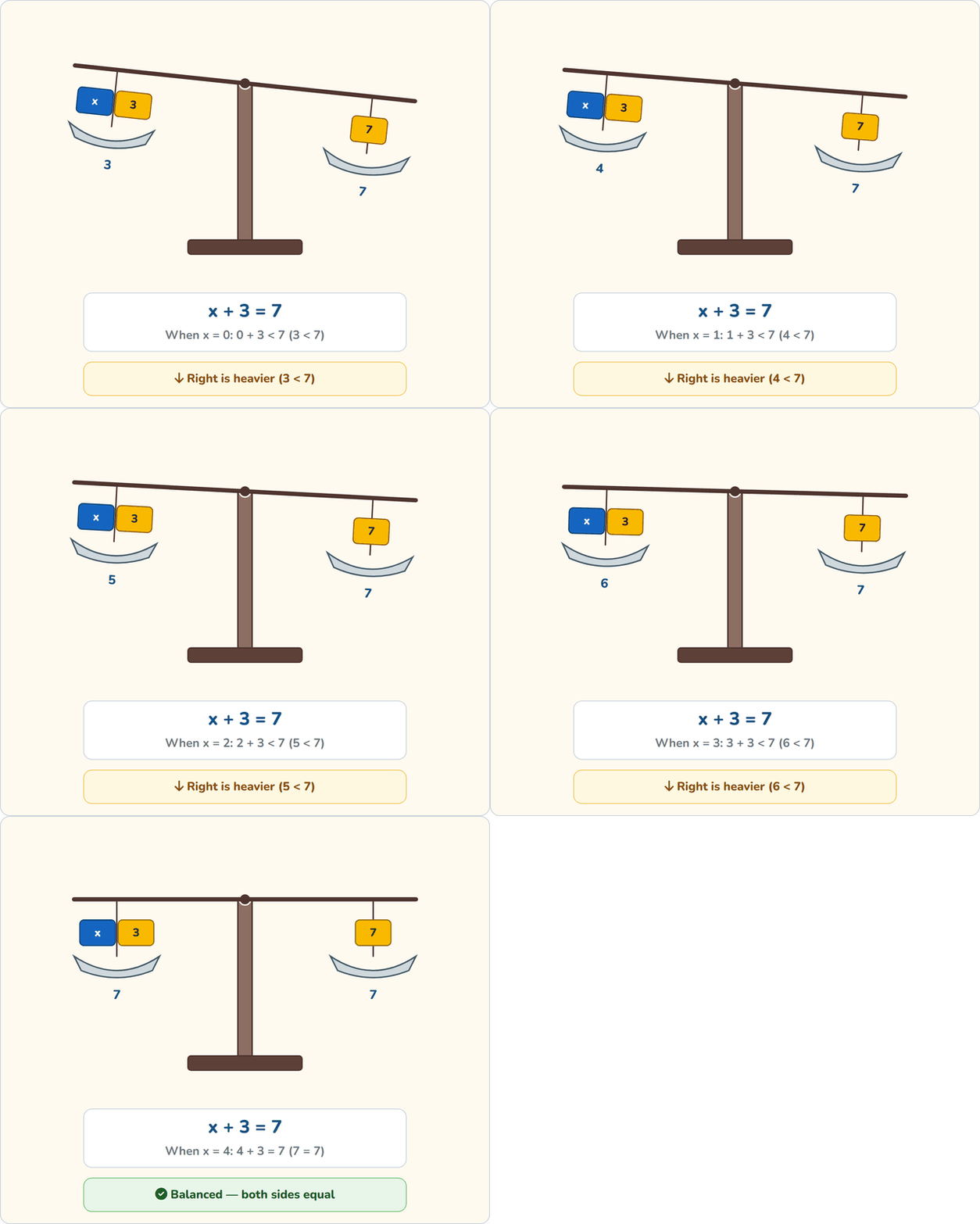
The Equals Sign, a Balance, Not an Answer
True or False? Judge the Sentence
Missing Numbers, the Empty Box
Missing Numbers in Take-away Sentences
Algebra Round-up, Rules and Balances Together

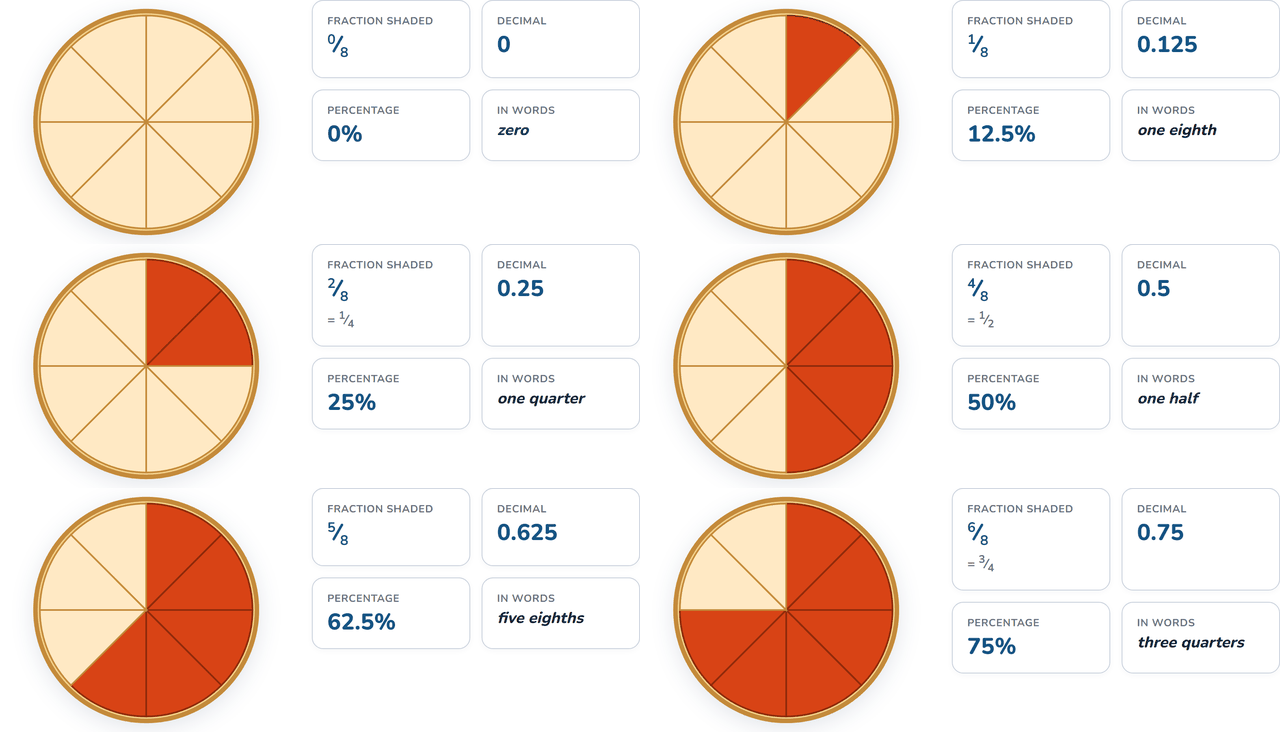
Fair shares grow into named fractions. Pupils re-anchor the half, meet the quarter, learn to write one-half and one-quarter, and discover the block's big equivalence, that two quarters make one half. Halving and quartering small amounts turns the idea into a tool for sharing.

Halves, Fair Shares, Two Equal Parts
Half of an Amount, Halving a Set
Writing One Half, the Fraction One Over Two
Quarters, Four Equal Parts
A Quarter of an Amount, Quartering a Set
Writing One Quarter, the Fraction One Over Four
Two Quarters Make One Half
Three Quarters and the Whole
Halves and Quarters of Amounts, Sharing for Real
Fractions Round-up

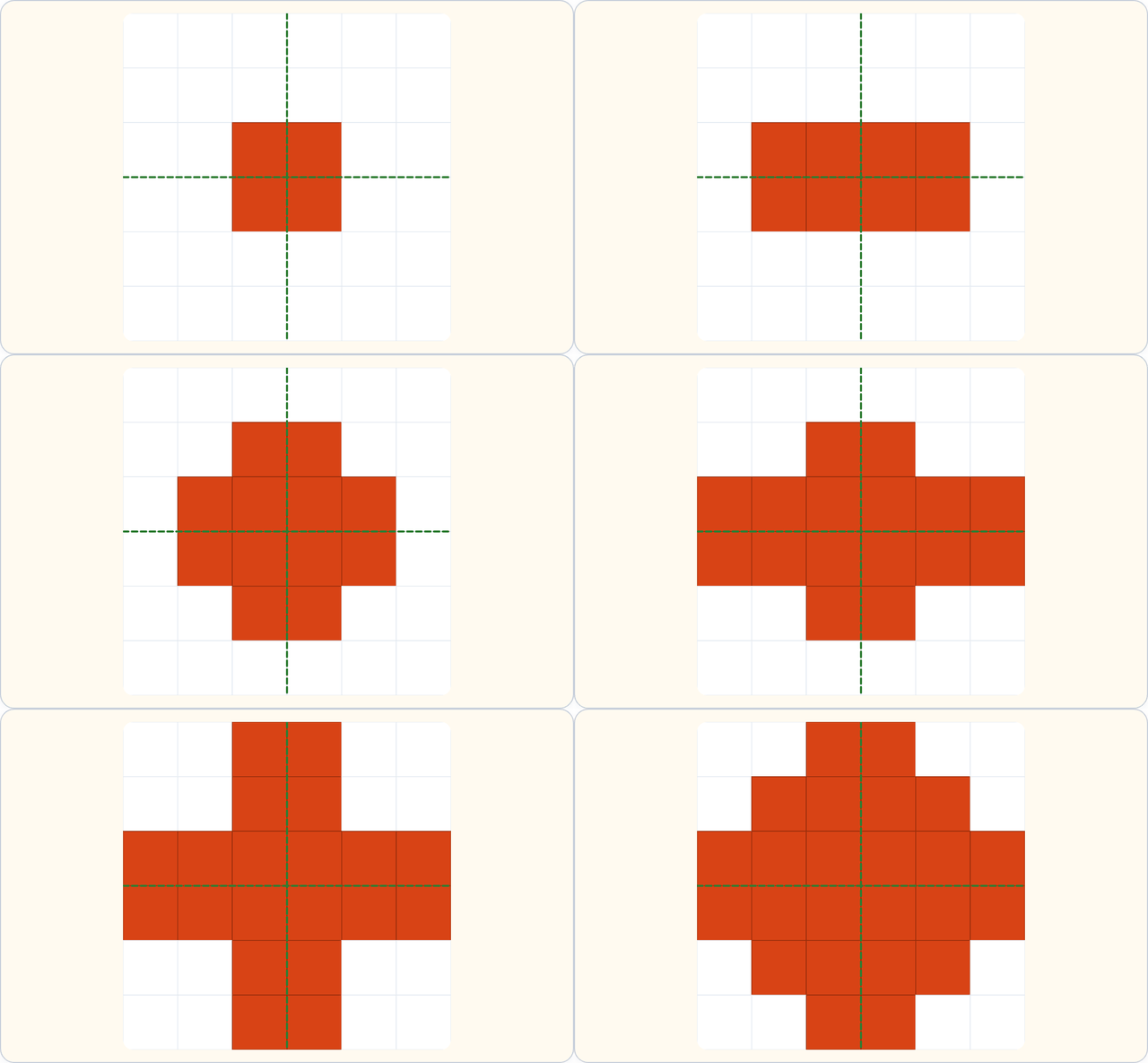
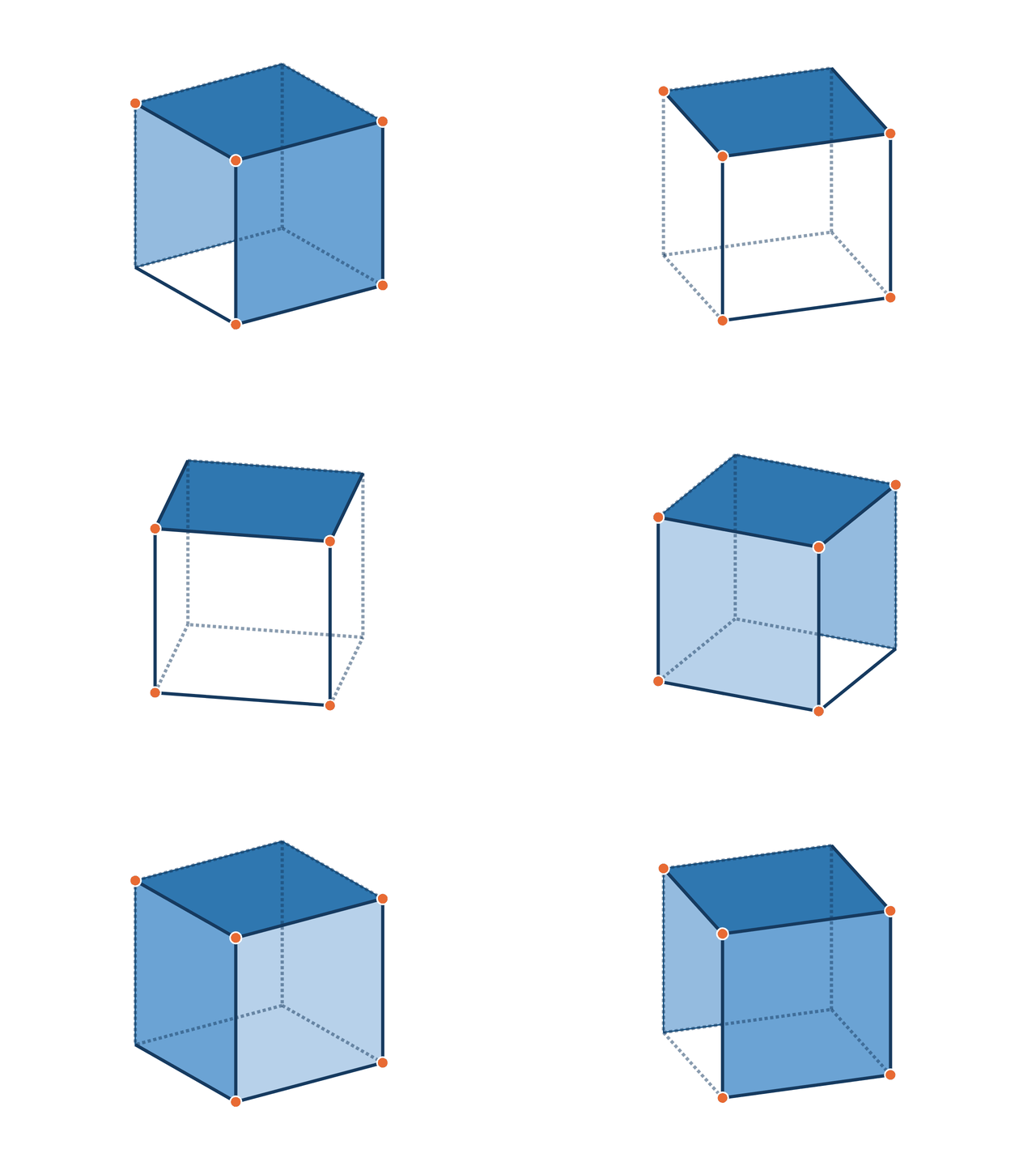
Pupils examine and sort 2-D and 3-D shapes by their properties, then set shapes moving: folding to find lines of symmetry, sliding, flipping and turning, and completing symmetrical pictures. The block closes on location, describing position and reading a simple grid.

2-D Shapes, Sides and Corners
More 2-D Shapes, Pentagons, Hexagons and Ovals
Sorting 2-D Shapes Two Ways
3-D Shapes, Faces and Corners
The Flat Faces Hiding in Solids
Building and Tiling with Shapes
Lines of Symmetry, the Fold That Matches
Finding Lines of Symmetry, Shapes and Letters
Making Symmetrical Pictures, Complete the Other Half
Slides, Flips and Turns, Moving a Shape
Turns, Quarter Turns and Half Turns
Position and Direction, Saying Where
A Simple Grid, Every Square Has an Address
Shape and Space Round-up

Pupils move from comparing directly to measuring with fair, standard units, and meet the estimate-then-measure habit that runs through every one. A first gentle look at area by covering with square tiles closes the measuring picture. The ruler joins the desk kit for this block.

Comparing and Ordering Length
Why We Need a Fair Unit, the Centimetre
Measuring in Centimetres with a Ruler
The Metre, Measuring Longer Lengths
Estimate Then Measure, Length
Heavier and Lighter, Comparing Weight
The Kilogram, Weighing
Estimate Then Weigh
Comparing Capacity, Which Holds More
The Litre, Measuring Capacity
Covering and Counting, a First Look at Area
Measures Round-up

Pupils extend clock reading past o'clock and half past to the quarter hours, then meet the calendar as a grid where each row is a week and each column a day, learning to find and order dates and count how many days something lasts.

O'clock and Half Past, Re-anchor
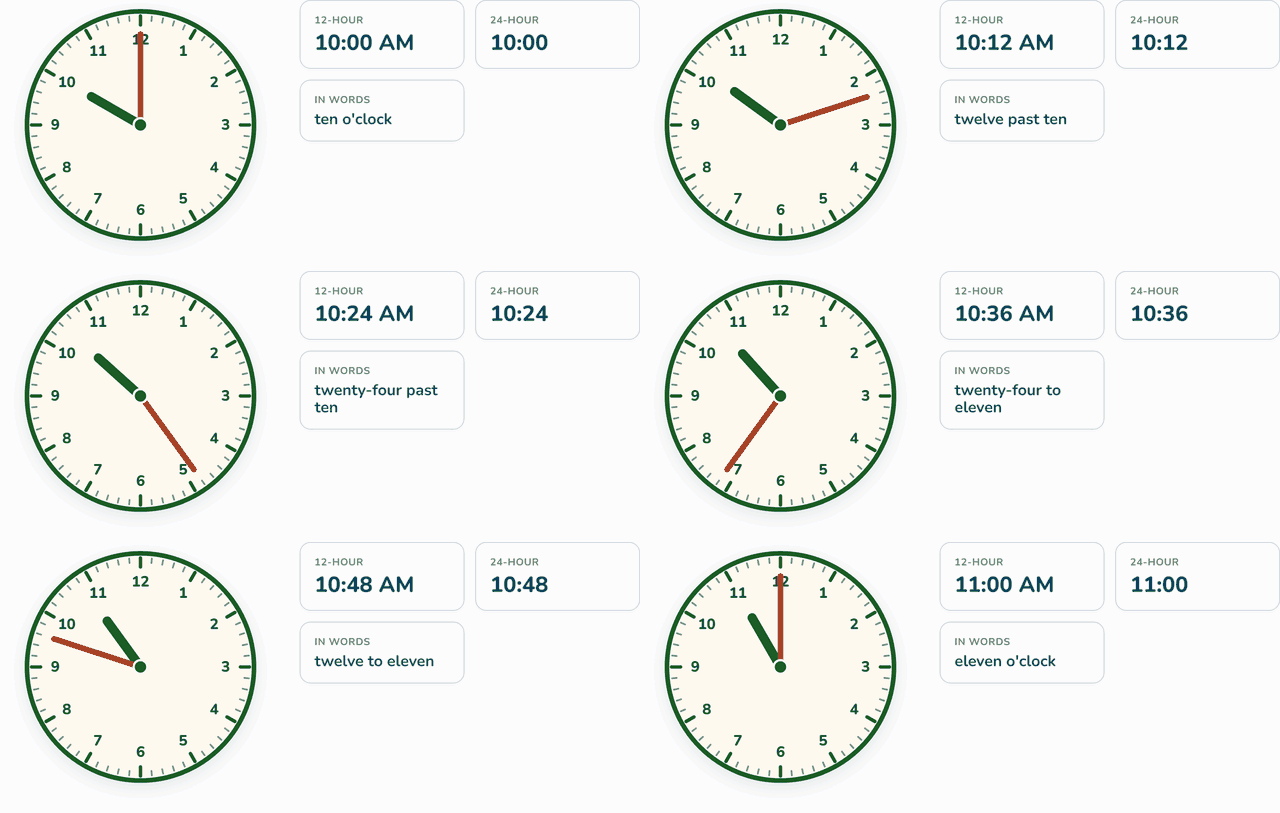
Quarter Past, a Quarter Turn of the Minute Hand
Quarter to, Three Quarters of the Way Round
The Four Quarter-hour Times Together
Setting the Time, Building Any of the Four
Time in Our School Day
Reading a Calendar, a Month at a Glance
Dates and Ordering
How Many Days? Measuring Time on the Calendar
Time Round-up

Money puts numbers to work in the class shop and the club stall. Pupils meet every coin from 1c to the two-euro coin, learn one euro is a hundred cent, build amounts many ways, total a mixed purse, write euro and cent together, add prices within two euro, and find change by counting up.

Meet All Our Coins, 1c to Two Euro
Euro and Cent, One Euro Is a Hundred Cent
The Same Amount, Made Many Ways
Counting a Mixed Purse
Euro and Cent Together
Adding Two Prices, Totals to Two Euro
Which Coins Will Pay It?
Giving Change, Counting up to One Euro
Giving Change, Counting up to Two Euro
Money Round-up, the Class Shop

Data lets the class answer its own questions with evidence, carried from a good question to a chart that gives the answer. Pupils pose a tidy question, tally and total, then show the data three ways, reading and comparing the charts to close Stage 2 data.

What Shall We Find Out? Posing a Question Sample
Tallying and Totalling Sample
Reading a Tally Chart
From Tally to Pictogram, One for One
A Picture Worth Two
Reading a Scaled Pictogram
The Bar Chart, Bars up a Scale
Reading and Comparing a Bar Chart
From Question to Chart, the Whole Cycle
Data Round-up

Re-anchor tens and units to 99 and make renaming the big idea: ten units trade for one ten, a ten breaks back into ten units, one number can be built many ways. Pupils compare, order, find ten more and ten less, and place numbers on an empty number line.

Tens and Units to 99, Re-anchor
The Hundred Square, Every Number Has an Address
Renaming, Ten Units Become One Ten
Renaming Back, One Ten Breaks Into Ten Units
One Number, Many Builds
Comparing Numbers, Tens First
Ordering Numbers Within 99
Ten More, Ten Less, One Row on the Hundred Square
Placing Numbers on the Empty Number Line
Place-value Round-up

From secure facts within 20 to two-digit addition within 99, finishing at renaming. Pupils build a toolkit of strategies and end by choosing the right strategy for a story sum, with the meaning of plus, equals and a missing part voiced throughout.

Addition Facts We Own, Bonds to 10 and Counting on
Doubles and Near-doubles
Make Ten to Cross Over
Adding Tens
Adding Tens to Any Number
Adding Units, Tens Untouched
Two-digit Plus Two-digit, No Renaming
Crossing the Ten, the Units Spill Over
Two-digit Plus Two-digit, with Renaming
Addition Bingo, Strategies in Play
The Hundred Square Adds Too, Rows Then Steps
Secret Friends, Adding Three Numbers
Story Sums, Choose Your Strategy
Addition Round-up

From secure subtraction facts within 20 to two-digit subtraction within 99, finishing at renaming. Pupils meet subtraction's two faces, take-away and difference, count up across a small gap, and use fact families to check any answer.

Subtraction Facts We Own, Take Away Within 20
Fact Families, Four Sentences, One Story
Back Through Ten
Taking Away Units, Tens Untouched
Subtracting Tens
Two-digit Minus Two-digit, No Renaming
Not Enough Units, Break a Ten
Two-digit Minus Two-digit, with Renaming
Difference, Count up to Find the Gap
The Hundred Square Subtracts Too, Rows up, Steps Back
Story Subtractions, Take Away or Difference?
Subtraction Round-up

The hundred square ends at 100 and the counting does not. Pupils trade ten tens for one hundred, meet the hundreds column, and learn to count past 100, then read, write, build, partition, compare and place numbers to 199.

One Hundred, Ten Tens Trade up
Counting Past One Hundred
Reading and Writing Numbers to 199
Building Numbers, Hundreds, Tens and Units
Partitioning to 199, Split It and Build It Back
Comparing and Ordering to 199
The Empty Line Past 100, New Benchmarks
Hundreds-door Round-up

Patterns get rules and number sentences get meaning. Pupils name the unit of a repeating pattern, grow and shrink shape patterns, read skip-count sequences and say their rules, then treat the equals sign as a balance and hunt missing numbers within 20.

Repeating Patterns, Find the Unit
Growing Patterns, the Staircase
Shrinking Patterns, Down the Stairs
Number Sequences, 2s, 5s and 10s on the Hundred Square
What's My Rule?
The Equals Sign, a Balance, Not an Answer
True or False? Judge the Sentence
Missing Numbers, the Empty Box
Missing Numbers in Take-away Sentences
Algebra Round-up, Rules and Balances Together

Fair shares grow into named fractions. Pupils re-anchor the half, meet the quarter, learn to write one-half and one-quarter, and discover the block's big equivalence, that two quarters make one half. Halving and quartering small amounts turns the idea into a tool for sharing.

Halves, Fair Shares, Two Equal Parts
Half of an Amount, Halving a Set
Writing One Half, the Fraction One Over Two
Quarters, Four Equal Parts
A Quarter of an Amount, Quartering a Set
Writing One Quarter, the Fraction One Over Four
Two Quarters Make One Half
Three Quarters and the Whole
Halves and Quarters of Amounts, Sharing for Real
Fractions Round-up

Pupils examine and sort 2-D and 3-D shapes by their properties, then set shapes moving: folding to find lines of symmetry, sliding, flipping and turning, and completing symmetrical pictures. The block closes on location, describing position and reading a simple grid.

2-D Shapes, Sides and Corners
More 2-D Shapes, Pentagons, Hexagons and Ovals
Sorting 2-D Shapes Two Ways
3-D Shapes, Faces and Corners
The Flat Faces Hiding in Solids
Building and Tiling with Shapes
Lines of Symmetry, the Fold That Matches
Finding Lines of Symmetry, Shapes and Letters
Making Symmetrical Pictures, Complete the Other Half
Slides, Flips and Turns, Moving a Shape
Turns, Quarter Turns and Half Turns
Position and Direction, Saying Where
A Simple Grid, Every Square Has an Address
Shape and Space Round-up

Pupils move from comparing directly to measuring with fair, standard units, and meet the estimate-then-measure habit that runs through every one. A first gentle look at area by covering with square tiles closes the measuring picture. The ruler joins the desk kit for this block.

Comparing and Ordering Length
Why We Need a Fair Unit, the Centimetre
Measuring in Centimetres with a Ruler
The Metre, Measuring Longer Lengths
Estimate Then Measure, Length
Heavier and Lighter, Comparing Weight
The Kilogram, Weighing
Estimate Then Weigh
Comparing Capacity, Which Holds More
The Litre, Measuring Capacity
Covering and Counting, a First Look at Area
Measures Round-up

Pupils extend clock reading past o'clock and half past to the quarter hours, then meet the calendar as a grid where each row is a week and each column a day, learning to find and order dates and count how many days something lasts.

O'clock and Half Past, Re-anchor
Quarter Past, a Quarter Turn of the Minute Hand
Quarter to, Three Quarters of the Way Round
The Four Quarter-hour Times Together
Setting the Time, Building Any of the Four
Time in Our School Day
Reading a Calendar, a Month at a Glance
Dates and Ordering
How Many Days? Measuring Time on the Calendar
Time Round-up

Money puts numbers to work in the class shop and the club stall. Pupils meet every coin from 1c to the two-euro coin, learn one euro is a hundred cent, build amounts many ways, total a mixed purse, write euro and cent together, add prices within two euro, and find change by counting up.

Meet All Our Coins, 1c to Two Euro
Euro and Cent, One Euro Is a Hundred Cent
The Same Amount, Made Many Ways
Counting a Mixed Purse
Euro and Cent Together
Adding Two Prices, Totals to Two Euro
Which Coins Will Pay It?
Giving Change, Counting up to One Euro
Giving Change, Counting up to Two Euro
Money Round-up, the Class Shop

Data lets the class answer its own questions with evidence, carried from a good question to a chart that gives the answer. Pupils pose a tidy question, tally and total, then show the data three ways, reading and comparing the charts to close Stage 2 data.

What Shall We Find Out? Posing a Question Sample
Tallying and Totalling Sample
Reading a Tally Chart
From Tally to Pictogram, One for One
A Picture Worth Two
Reading a Scaled Pictogram
The Bar Chart, Bars up a Scale
Reading and Comparing a Bar Chart
From Question to Chart, the Whole Cycle
Data Round-up

What Students Will Learn

Learning Goals

  1. Develop deep understanding of place value to 199, including partitioning, renaming, comparing, ordering and positioning numbers on empty number lines and hundred squares.
  2. Master addition and subtraction within 99 using a range of mental strategies, fact families, renaming and the difference method, applying them to story problems.
  3. Explore early algebra through repeating and growing patterns, number sequences, the meaning of the equals sign, and solving for missing numbers in number sentences.
  4. Build conceptual understanding of halves and quarters as fair shares, fractions of amounts, and equivalence between two quarters and one half.
  5. Investigate 2-D and 3-D shapes, symmetry, transformations, position, direction, simple grids, and measures of length, weight, capacity, area and time.

Learning Outcomes

  1. Identify the place value of digits in numbers up to 199 and partition them into hundreds, tens and units.
  2. Add and subtract two-digit numbers within 99, with and without renaming, using strategies such as make ten, doubles and counting on.
  3. Recognise, extend and describe repeating, growing and shrinking patterns and complete number sequences counting in 2s, 5s and 10s.
  4. Identify halves and quarters of shapes and amounts, write them using fraction notation and recognise that two quarters equal one half.
  5. Measure length in centimetres and metres, weight in kilograms and capacity in litres, then estimate and compare these quantities.
  6. Tell and show time to the nearest quarter hour on an analogue clock and read dates on a calendar.
  7. Recognise all euro and cent coins, count mixed amounts up to two euro, add prices and calculate change by counting on.
  8. Pose a clear survey question, collect and record data using tallies, then create and interpret pictograms and bar charts.

Ready to bring this course to your school?

Get in touch to discuss pricing and ordering for your school.

Ready to get started?
Pricing & Ordering Contact Us
🍪 Our website uses cookies to make your browsing experience better. By using our website you agree to our use of cookies. Learn more