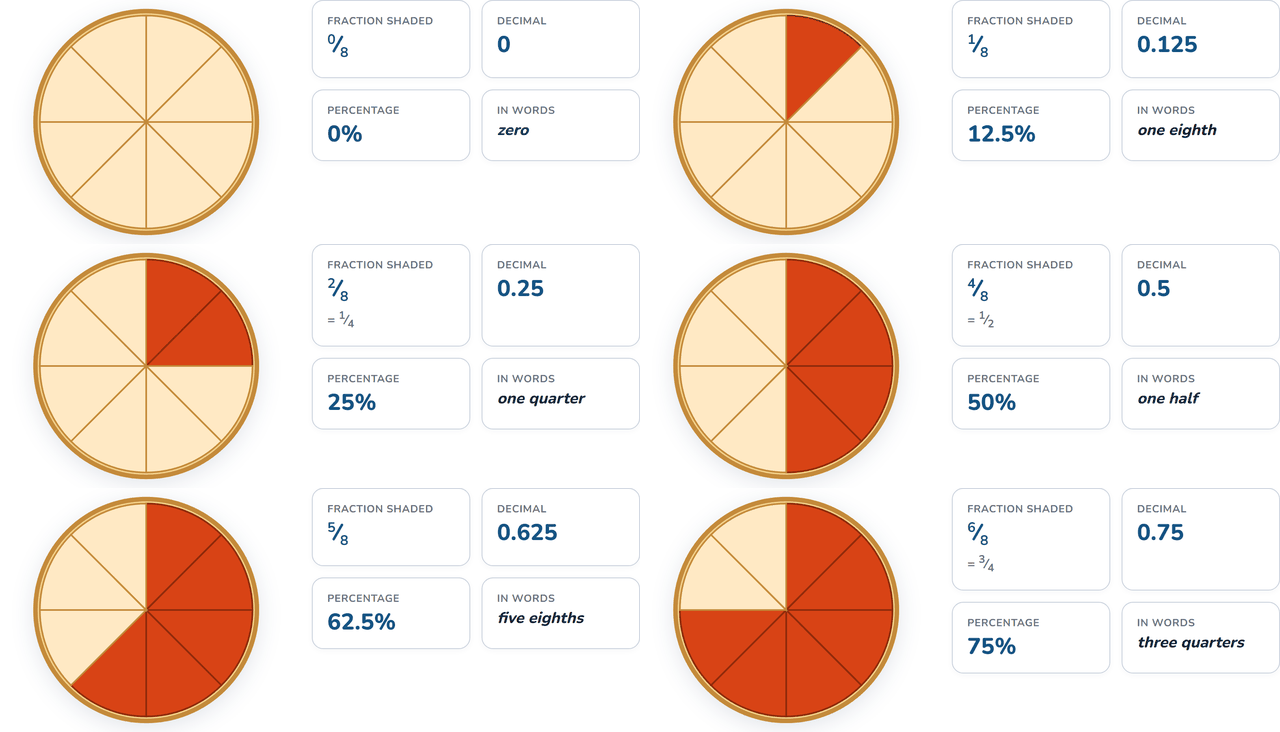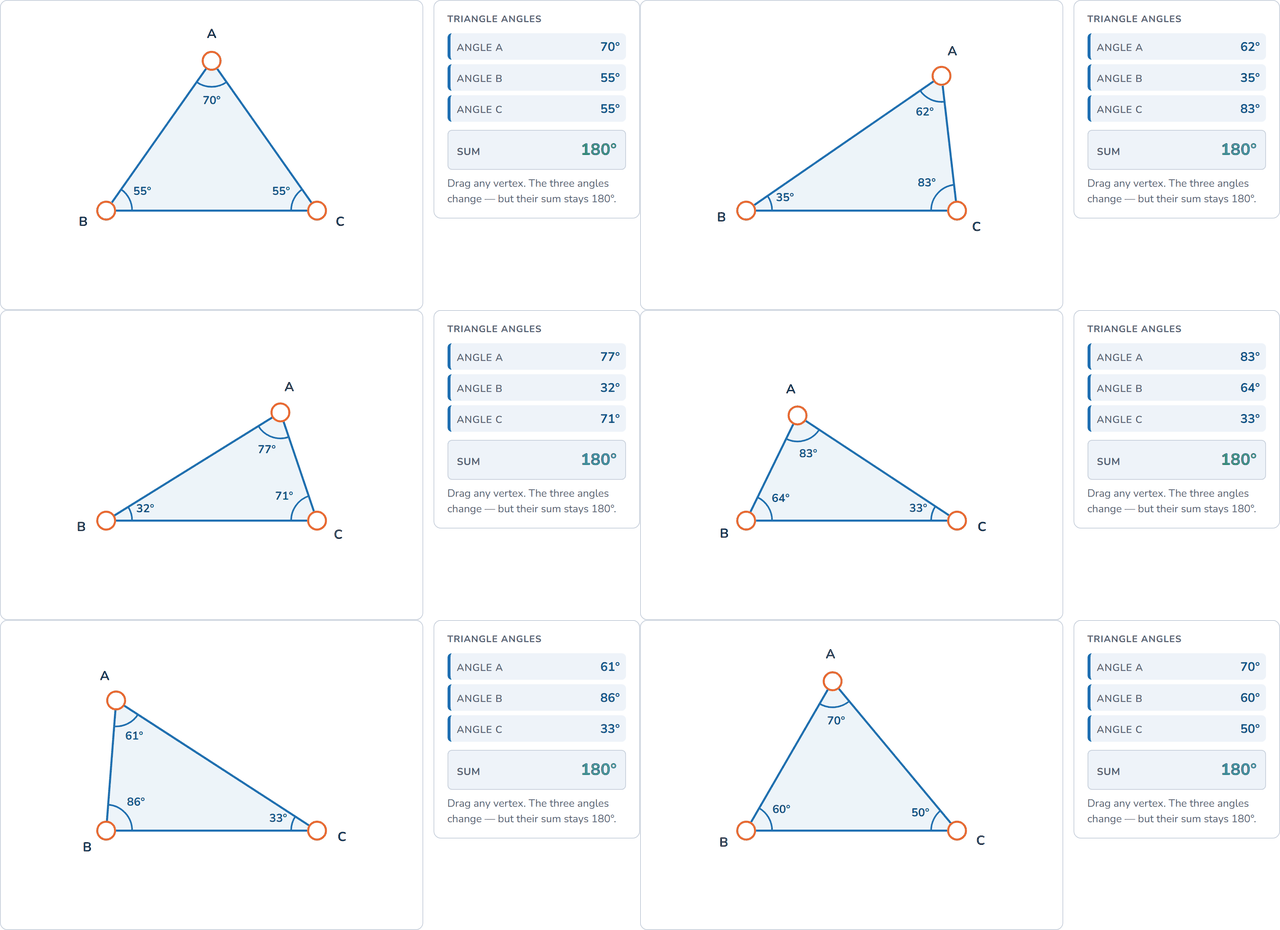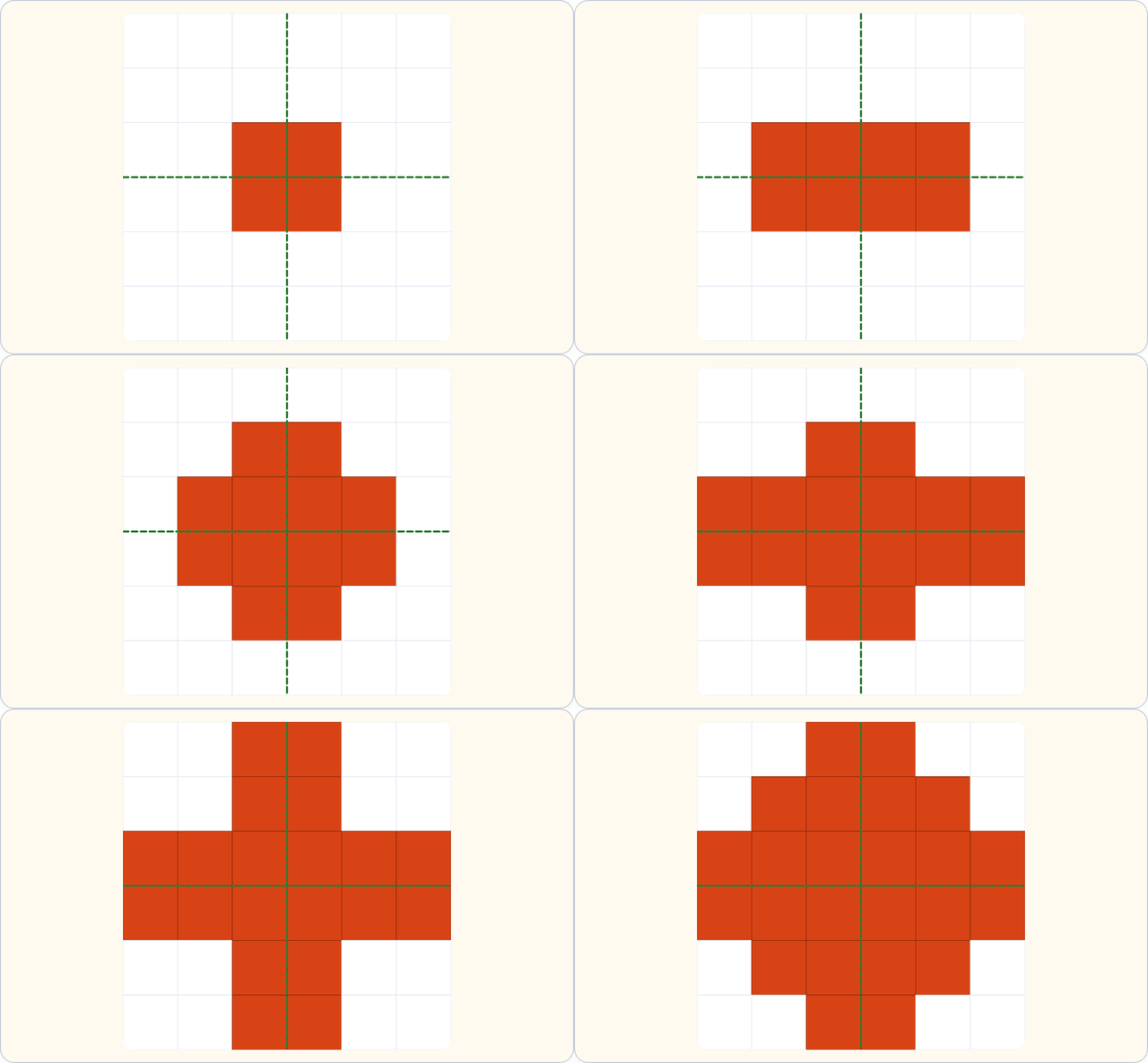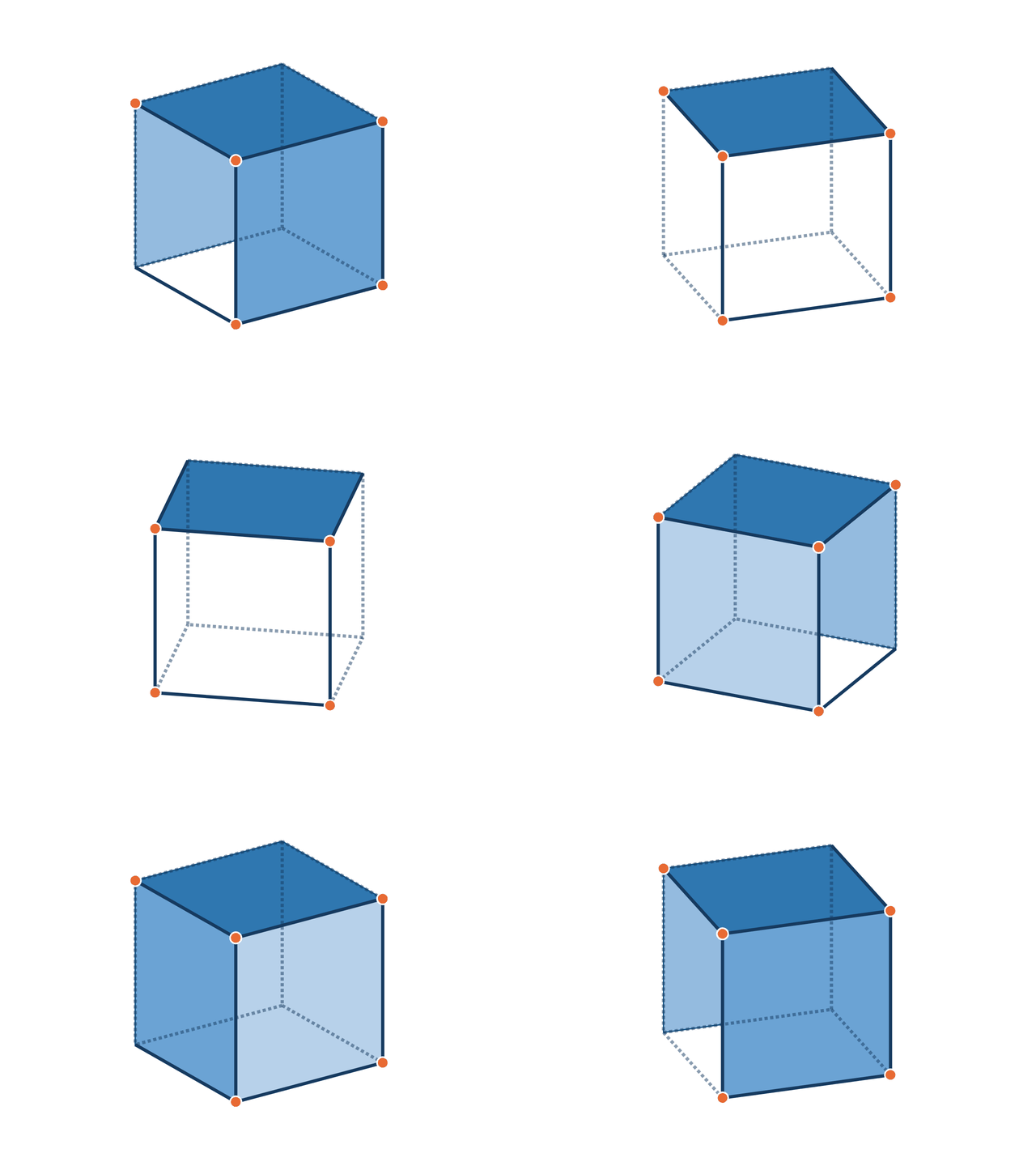
This course provides comprehensive coverage of the Irish primary mathematics curriculum for 6th class. Pupils develop deep understanding of place value, decimals and negative numbers before mastering operations, fractions, decimals, percentages, ratio and proportion. They explore measures, shape, angles, transformations, coordinate geometry, data handling, probability and early algebra through patterns, expressions and equations. Practical investigations, real-life problem-solving and end-of-year modelling projects build computational fluency, reasoning and mathematical confidence.
Read more
Everything you need for Maths, all year.

A complete year of Maths, delivered by teacher-led interactive-whiteboard lessons, a printed pupil Activity Book, and a Teacher Resource Book, built to the NCCA Primary Mathematics Curriculum.

Interactive whiteboard lessons
Pupil Activity Book Mathematics 123learn Síle the owl Look inside
Teacher Resource Book Mathematics 123learn Teacher resource books and materials

Explore the Course

Click any lesson with to preview it

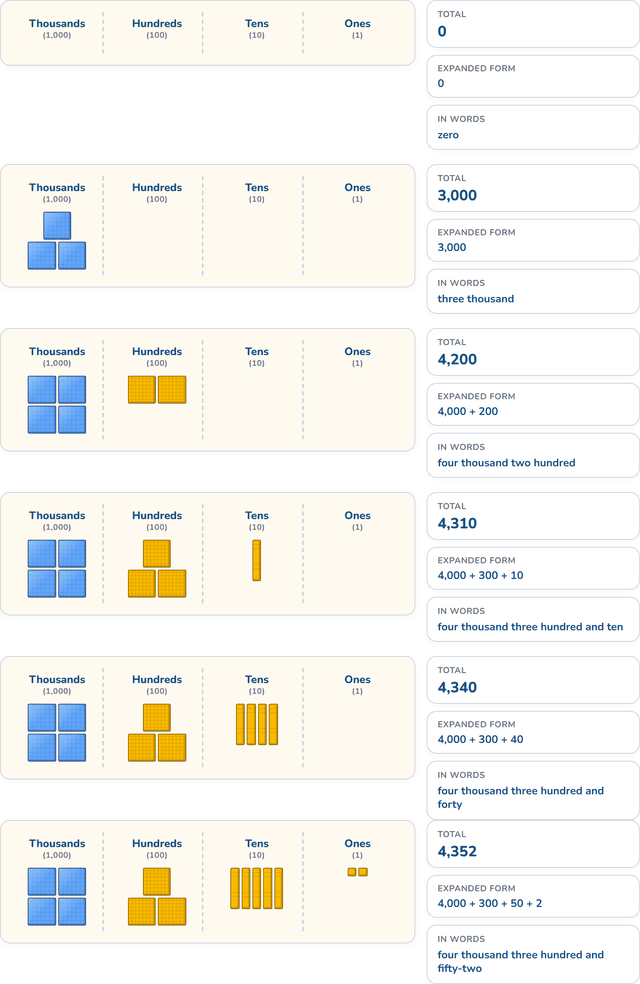
Extend place value to decimals to thousandths and large whole numbers, comparing, ordering and expressing numbers in related terms with confidence.

Reading and Writing Numbers to Millions Sample Activity Book Extension Sheet Teacher Resources
Place Value of Decimals to Thousandths Sample Activity Book Extension Sheet Teacher Resources
Modelling Thousandths with Blocks Sample Activity Book Extension Sheet Teacher Resources
Comparing and Ordering Decimals to Thousandths
Rounding Decimals to Nearest Whole, Tenth and Hundredth
Rounding Whole Numbers to Estimate in Context
Multiplying and Dividing Decimals by 10, 100, 1000
Decimals on the Number Line to Thousandths
Expressing Quantities in Related Place-value Terms
Negative Numbers in Context and on the Number Line
Comparing and Ordering Positive and Negative Integers
Place Value Problem-solving and Review

Select and apply efficient strategies across the four operations with whole numbers and decimals, including multi-step problems.

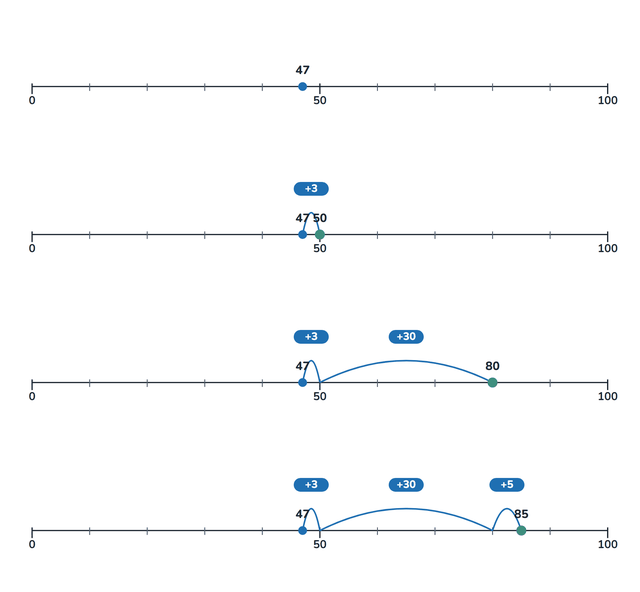
Mental Strategies for Addition and Subtraction
Addition and Subtraction of Decimals to Thousandths
Multiplying Multi-digit Whole Numbers
Long Multiplication Strategies and Estimation
Multiplying Decimals by Whole Numbers
Mental Strategies for Multiplication and Division
Dividing by Single-digit Divisors with Remainders
Long Division by Two-digit Divisors
Dividing Decimals in Context
Order of Operations with Brackets
Factors, Multiples, Primes and Composites
Divisibility Rules and Tests
Square Numbers and Number Patterns
Multi-step Word Problems and Operation Choice

Achieve fluent equivalence between fractions, decimals and percentages and apply each form flexibly in problem contexts.

Equivalent Fractions and Simplest Form
Comparing and Ordering Fractions with Unlike Denominators
Adding and Subtracting Fractions with Unlike Denominators
Adding and Subtracting Mixed Numbers
Finding a Fraction of a Quantity
Fraction Word Problems in Real-life Contexts
Converting Fractions to Decimals
Converting Decimals to Fractions
Percentages as Fractions and Decimals
Finding a Percentage of a Quantity
Fraction-decimal-percentage Equivalence Mastery
Problem-solving with Discounts and Increases
Fractions, Decimals and Percentages Review

Investigate proportionality and ratios of quantities, sharing and scaling amounts to solve practical problems.

Introducing Ratio as Comparison of Quantities
Equivalent Ratios and Simplifying Ratios
Sharing a Quantity in a Given Ratio
Direct Proportion and the Unitary Method
Recipes, Mixtures and Scaling Quantities
Ratio, Proportion and Percentage Links
Ratio and Proportion Problem-solving

Calculate measures in fractional and decimal form, deriving and applying formulae for perimeter, area and volume with increasing precision; build fluency in converting between metric units.

Choosing and Converting Metric Units of Length
Perimeter of Regular and Irregular Shapes
Area of Rectangles and Compound Shapes
Area of Triangles
Estimating and Measuring the Area of Irregular Shapes
Relationship Between Area Units (Cm² to M²)
Reading Scales and Measuring Instruments Accurately
Volume of Cubes and Cuboids
Relationship Between Capacity and Volume (Litres and Cm³)
Converting Units of Mass and Capacity
Decimal and Fractional Measures in Problems
Measurement Investigation with Precision
Measures Problem-solving and Review

Interpret and calculate time across formats and zones, and make informed judgements about transactions and financial plans.

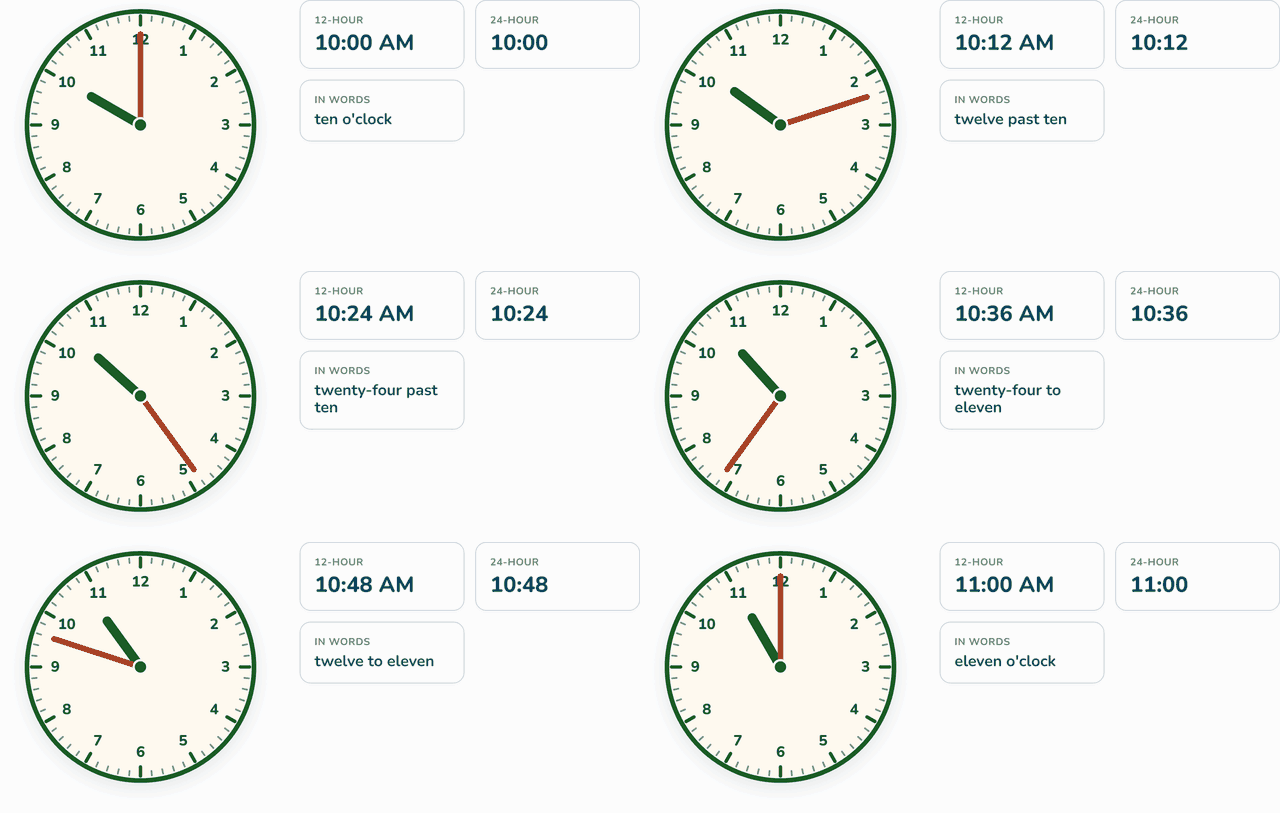
12-hour and 24-hour Time Calculations
Elapsed Time Across Hours and Days
Timetables, Schedules and Time Zones
Converting Between Units of Time
Calendars, Durations and Problem-solving
Operations with Money in Decimal Form
Profit, Loss and Best-value Shopping
Calculating Discounts, VAT and Percentages of Price
Budgeting, Saving and Simple Financial Plans
Time and Money Problem-solving Review

Construct 2D and 3D shapes to given conditions and formally measure, construct and reason about angles.

Classifying Triangles and Quadrilaterals by Properties
Constructing Triangles from Given Measurements
Measuring Angles Accurately with a Protractor
Constructing Angles with a Protractor
Angles on a Line, at a Point and Vertically Opposite
Angle Sum of a Triangle
Angle Sum of a Quadrilateral
Constructing Circles and Exploring Their Parts
Nets and Construction of 3D Solids
Properties and Faces, Edges, Vertices of Polyhedra
Angle-related Problem-solving
Shape and Angle Construction Review

Describe location on the full four-quadrant co-ordinate plane, interpret scale maps and create scale drawings, and perform transformations including enlargement.

Plotting Points in the First Quadrant
The Full Four-quadrant Co-ordinate Plane
Plotting and Reading Points with Negative Co-ordinates
Translating Shapes on the Co-ordinate Plane
Reflection in the Axes and Lines of Symmetry
Rotation of Shapes About a Point
Combining Transformations
Enlargement and Scale Factor
Interpreting Scale Maps and Distances
Creating Simple Scale Drawings

Pose questions, collect and represent data selectively, analyse measures of centre, and express probability in different forms to make predictions.

Posing Statistical Questions and Collecting Data
Frequency Tables and Grouped Data
Constructing and Interpreting Bar and Multiple Bar Charts
Trend Graphs and Reading Line Graphs
Pie Charts and Proportional Representation
The Mean as a Measure of Centre
Mode, Range and Choosing a Measure
Comparing Data Sets and Drawing Inferences
Critically Evaluating Graphs and Misleading Data
Probability Scale and the Language of Chance
Expressing Probability as Fraction, Decimal and Percentage
Experimental Probability, Predictions and Review

Generalise patterns and properties of operations, and represent and solve situations using letter-symbol expressions and equations.

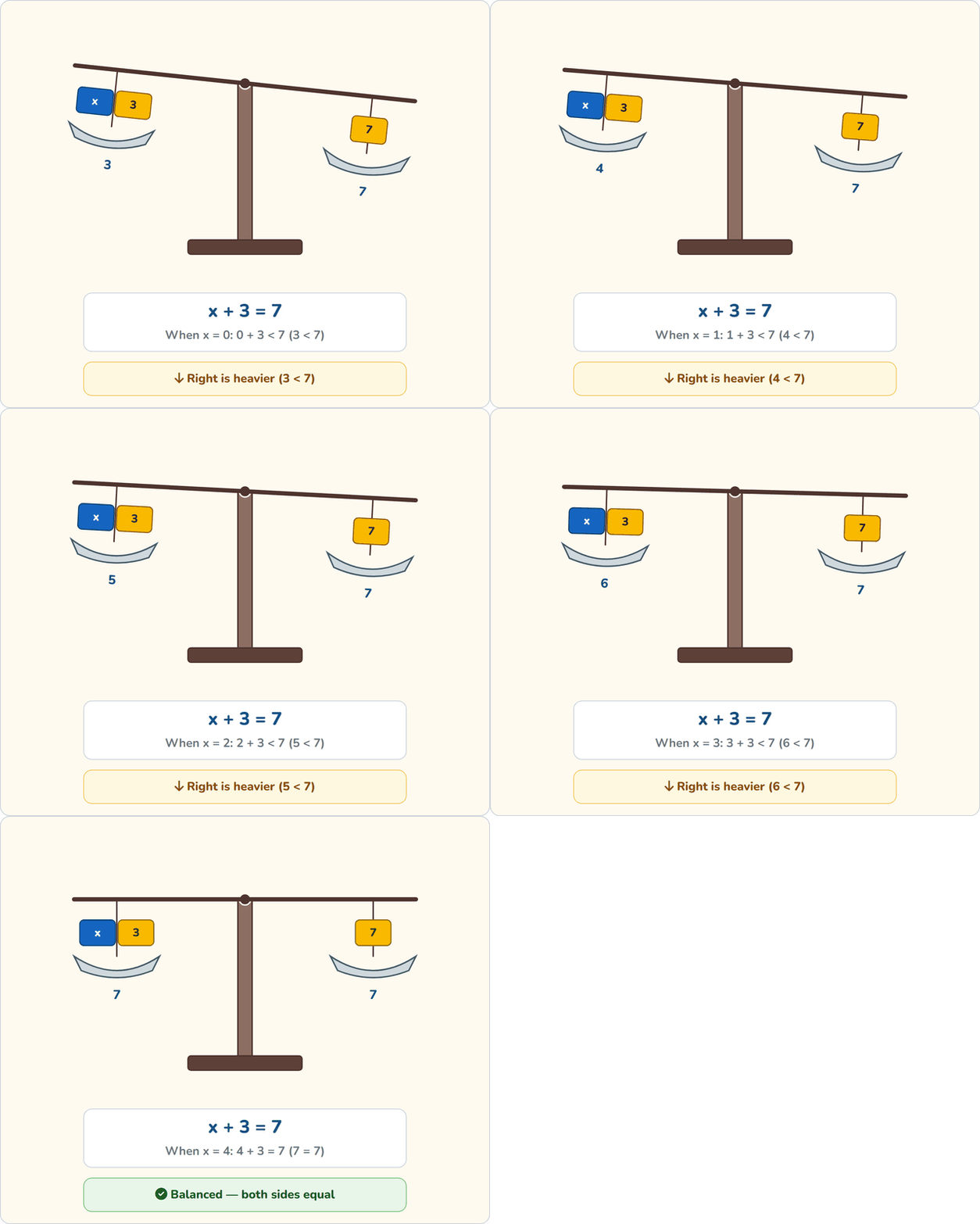
Generalising Number Patterns and Sequences Sample Activity Book Extension Sheet Teacher Resources
Rules for Patterns Using Words and Tables Sample Activity Book Extension Sheet Teacher Resources
Properties of Operations and the Distributive Law Sample Activity Book Extension Sheet Teacher Resources
Introducing Letter-symbols as Variables
Writing Expressions from Word Situations
Substituting Values Into Expressions
Simplifying Simple Expressions
Solving One-step Equations
Solving Two-step Equations
Representing Situations as Equations
Algebra Problem-solving and End-of-year Review

Close primary maths with a five-strand recap, two open-ended modelling projects, a journal self-review and a class maths fair.

End-of-primary Strands Recap: Five-strand IWB Tour
Big Modelling Project: How Big Is Our School Yard, Really?
Design-and-cost Project: an End-of-primary Celebration on a Budget
Maths Journal Review and Self-assessment
End-of-primary Maths Fair

Extend place value to decimals to thousandths and large whole numbers, comparing, ordering and expressing numbers in related terms with confidence.

Reading and Writing Numbers to Millions Sample Activity Book Extension Sheet Teacher Resources
Place Value of Decimals to Thousandths Sample Activity Book Extension Sheet Teacher Resources
Modelling Thousandths with Blocks Sample Activity Book Extension Sheet Teacher Resources
Comparing and Ordering Decimals to Thousandths
Rounding Decimals to Nearest Whole, Tenth and Hundredth
Rounding Whole Numbers to Estimate in Context
Multiplying and Dividing Decimals by 10, 100, 1000
Decimals on the Number Line to Thousandths
Expressing Quantities in Related Place-value Terms
Negative Numbers in Context and on the Number Line
Comparing and Ordering Positive and Negative Integers
Place Value Problem-solving and Review

Select and apply efficient strategies across the four operations with whole numbers and decimals, including multi-step problems.

Mental Strategies for Addition and Subtraction
Addition and Subtraction of Decimals to Thousandths
Multiplying Multi-digit Whole Numbers
Long Multiplication Strategies and Estimation
Multiplying Decimals by Whole Numbers
Mental Strategies for Multiplication and Division
Dividing by Single-digit Divisors with Remainders
Long Division by Two-digit Divisors
Dividing Decimals in Context
Order of Operations with Brackets
Factors, Multiples, Primes and Composites
Divisibility Rules and Tests
Square Numbers and Number Patterns
Multi-step Word Problems and Operation Choice

Achieve fluent equivalence between fractions, decimals and percentages and apply each form flexibly in problem contexts.

Equivalent Fractions and Simplest Form
Comparing and Ordering Fractions with Unlike Denominators
Adding and Subtracting Fractions with Unlike Denominators
Adding and Subtracting Mixed Numbers
Finding a Fraction of a Quantity
Fraction Word Problems in Real-life Contexts
Converting Fractions to Decimals
Converting Decimals to Fractions
Percentages as Fractions and Decimals
Finding a Percentage of a Quantity
Fraction-decimal-percentage Equivalence Mastery
Problem-solving with Discounts and Increases
Fractions, Decimals and Percentages Review

Investigate proportionality and ratios of quantities, sharing and scaling amounts to solve practical problems.

Introducing Ratio as Comparison of Quantities
Equivalent Ratios and Simplifying Ratios
Sharing a Quantity in a Given Ratio
Direct Proportion and the Unitary Method
Recipes, Mixtures and Scaling Quantities
Ratio, Proportion and Percentage Links
Ratio and Proportion Problem-solving

Calculate measures in fractional and decimal form, deriving and applying formulae for perimeter, area and volume with increasing precision; build fluency in converting between metric units.

Choosing and Converting Metric Units of Length
Perimeter of Regular and Irregular Shapes
Area of Rectangles and Compound Shapes
Area of Triangles
Estimating and Measuring the Area of Irregular Shapes
Relationship Between Area Units (Cm² to M²)
Reading Scales and Measuring Instruments Accurately
Volume of Cubes and Cuboids
Relationship Between Capacity and Volume (Litres and Cm³)
Converting Units of Mass and Capacity
Decimal and Fractional Measures in Problems
Measurement Investigation with Precision
Measures Problem-solving and Review

Interpret and calculate time across formats and zones, and make informed judgements about transactions and financial plans.

12-hour and 24-hour Time Calculations
Elapsed Time Across Hours and Days
Timetables, Schedules and Time Zones
Converting Between Units of Time
Calendars, Durations and Problem-solving
Operations with Money in Decimal Form
Profit, Loss and Best-value Shopping
Calculating Discounts, VAT and Percentages of Price
Budgeting, Saving and Simple Financial Plans
Time and Money Problem-solving Review

Construct 2D and 3D shapes to given conditions and formally measure, construct and reason about angles.

Classifying Triangles and Quadrilaterals by Properties
Constructing Triangles from Given Measurements
Measuring Angles Accurately with a Protractor
Constructing Angles with a Protractor
Angles on a Line, at a Point and Vertically Opposite
Angle Sum of a Triangle
Angle Sum of a Quadrilateral
Constructing Circles and Exploring Their Parts
Nets and Construction of 3D Solids
Properties and Faces, Edges, Vertices of Polyhedra
Angle-related Problem-solving
Shape and Angle Construction Review

Describe location on the full four-quadrant co-ordinate plane, interpret scale maps and create scale drawings, and perform transformations including enlargement.

Plotting Points in the First Quadrant
The Full Four-quadrant Co-ordinate Plane
Plotting and Reading Points with Negative Co-ordinates
Translating Shapes on the Co-ordinate Plane
Reflection in the Axes and Lines of Symmetry
Rotation of Shapes About a Point
Combining Transformations
Enlargement and Scale Factor
Interpreting Scale Maps and Distances
Creating Simple Scale Drawings

Pose questions, collect and represent data selectively, analyse measures of centre, and express probability in different forms to make predictions.

Posing Statistical Questions and Collecting Data
Frequency Tables and Grouped Data
Constructing and Interpreting Bar and Multiple Bar Charts
Trend Graphs and Reading Line Graphs
Pie Charts and Proportional Representation
The Mean as a Measure of Centre
Mode, Range and Choosing a Measure
Comparing Data Sets and Drawing Inferences
Critically Evaluating Graphs and Misleading Data
Probability Scale and the Language of Chance
Expressing Probability as Fraction, Decimal and Percentage
Experimental Probability, Predictions and Review

Generalise patterns and properties of operations, and represent and solve situations using letter-symbol expressions and equations.

Generalising Number Patterns and Sequences Sample Activity Book Extension Sheet Teacher Resources
Rules for Patterns Using Words and Tables Sample Activity Book Extension Sheet Teacher Resources
Properties of Operations and the Distributive Law Sample Activity Book Extension Sheet Teacher Resources
Introducing Letter-symbols as Variables
Writing Expressions from Word Situations
Substituting Values Into Expressions
Simplifying Simple Expressions
Solving One-step Equations
Solving Two-step Equations
Representing Situations as Equations
Algebra Problem-solving and End-of-year Review

Close primary maths with a five-strand recap, two open-ended modelling projects, a journal self-review and a class maths fair.

End-of-primary Strands Recap: Five-strand IWB Tour
Big Modelling Project: How Big Is Our School Yard, Really?
Design-and-cost Project: an End-of-primary Celebration on a Budget
Maths Journal Review and Self-assessment
End-of-primary Maths Fair

Curriculum Mapping

See exactly how this course maps to official curriculum specifications

Curriculum Area
Outcomes
Algebra
Patterns, rules and relationships
ALG.PRR.1 ALG.PRR.2 ALG.PRR.3a ALG.PRR.3b ALG.PRR.4a ALG.PRR.4b
Expressions and equations
ALG.EXP.2 ALG.EXP.3 ALG.EXP.4
Data and chance
Data
DAT.DAT.1 DAT.DAT.2 DAT.DAT.3 DAT.DAT.4a DAT.DAT.4b
Chance
DAT.CHN.3 DAT.CHN.4a DAT.CHN.4b
Measures
Measuring
MEA.MSR.1 MEA.MSR.2 MEA.MSR.3a MEA.MSR.3b MEA.MSR.4a MEA.MSR.4b
Time
MEA.TIM.1 MEA.TIM.2a MEA.TIM.2b MEA.TIM.3a MEA.TIM.3b MEA.TIM.4
Money
MEA.MON.1 MEA.MON.2 MEA.MON.3 MEA.MON.4
Number
Uses of number
NUM.USE.1
Numeration and counting
NUM.NCT.1a NUM.NCT.1b NUM.NCT.2
Place value and base ten
NUM.PVT.1 NUM.PVT.2a NUM.PVT.2b NUM.PVT.3 NUM.PVT.4
Sets and operations
NUM.OPS.1 NUM.OPS.2 NUM.OPS.3 NUM.OPS.4
Fractions
NUM.FRC.1 NUM.FRC.2a NUM.FRC.2b NUM.FRC.3a NUM.FRC.3b NUM.FRC.4a NUM.FRC.4b
Shape and space
Spatial awareness and location
SHA.SAL.1a SHA.SAL.1b SHA.SAL.2a SHA.SAL.2b SHA.SAL.3a SHA.SAL.3b SHA.SAL.4a SHA.SAL.4b
Shape
SHA.SHP.1 SHA.SHP.2 SHA.SHP.3a SHA.SHP.3b SHA.SHP.4a SHA.SHP.4b
Transformation
SHA.TRN.1 SHA.TRN.2 SHA.TRN.3 SHA.TRN.4a SHA.TRN.4b

The curriculum does not include official reference codes for individual learning outcomes, so we have assigned a code scheme to make it easier to identify and track coverage.

What Students Will Learn

Learning Goals

  1. Master place value, decimals to thousandths, and negative numbers to read, write, compare, round and operate with confidence across all scales
  2. Develop computational fluency in mental and written strategies for addition, subtraction, multiplication and division with whole numbers and decimals
  3. Build deep understanding of fractions, decimals, percentages, ratio and proportion and fluently convert between equivalent forms to solve real-life problems
  4. Apply accurate measurement skills across length, area, volume, mass, capacity and time while solving practical problems involving metric units and money
  5. Use properties of 2D and 3D shapes, angles, coordinates, transformations, scale, data handling, probability and early algebra to model, reason and solve increasingly complex problems

Learning Outcomes

  1. Read, write and compare whole numbers up to millions and decimals to thousandths using place-value columns and charts.
  2. Add, subtract, multiply and divide decimals to thousandths, including using long multiplication and division strategies.
  3. Convert between fractions, decimals and percentages and solve problems involving finding fractions or percentages of quantities.
  4. Use ratio and the unitary method to share quantities, scale recipes and solve direct proportion problems.
  5. Calculate perimeter, area of rectangles, triangles and compound shapes, and volume of cubes and cuboids in metric units.
  6. Perform calculations with 12-hour and 24-hour time, elapsed time, timetables, money, profit, loss, discounts and budgets.
  7. Classify 2D and 3D shapes, measure and construct angles with a protractor, and use angle sum properties of triangles and quadrilaterals.
  8. Plot and read coordinates in all four quadrants, perform translations, reflections, rotations and enlargements, and interpret scale drawings.
  9. Collect, organise and interpret data using frequency tables, bar charts, line graphs and pie charts, and calculate mean, mode and range.
  10. Generalise number patterns, write and simplify algebraic expressions, substitute values, and solve one-step and two-step equations.

What You'll Need

Required Equipment

Equipment used in some of the lessons in this course. Items can be shared among students.

IWB/Projector/Large Screen
Polydron

Ready to bring this course to your school?

Get in touch to discuss pricing and ordering for your school.

Ready to get started?
Pricing & Ordering Contact Us
🍪 Our website uses cookies to make your browsing experience better. By using our website you agree to our use of cookies. Learn more